
Roof Maintenance Guide for Cincinnati
Cincinnati's freeze-thaw winters, humid summers, and hail-prone storm seasons age a roof faster than almost any maintenance-free climate — but most expensive failures start small and announce themselves early. This season-by-season guide covers what to inspect each spring and fall, why attic ventilation and insulation decide whether you get ice dams, when gutter upsizing solves chronic overflow, and which jobs are safe to DIY versus worth a professional. Includes a quick seasonal checklist and answers to the questions Cincinnati homeowners ask most.
Roof Maintenance Guide for Cincinnati Homeowners
Cincinnati roofs live a harder life than most. Our region swings from humid 90-degree summers to single-digit winter cold snaps, and — most damaging of all — cycles across the freezing line dozens of times each winter. Every one of those freeze-thaw cycles works water into tiny gaps in shingles, flashing, and masonry, expands it as ice, and pries the gap a little wider. Add spring storm seasons that regularly bring high winds and hail through the I-75 corridor, and a roof here simply ages faster than the same roof would in a milder climate.
The good news: most expensive roof failures are slow-motion events that start small and announce themselves early — if you're looking. This guide walks through what to check season by season, what you can safely do yourself, and when to bring in a professional.
Spring: Post-Winter Recovery
Winter is when Cincinnati roofs take their damage; spring is when you find it — ideally before the heavy rains of April and May find it for you.
Inspect for winter damage
You can do a meaningful inspection from the ground with binoculars — no ladder required. Look for:
Missing, cracked, or lifted shingles, especially along ridges and edges where wind grabs first
Granule loss — check your gutter downspout outflows for piles of sandy granules; heavy shedding means shingles are reaching the end of their protective life
Flashing gaps around chimneys, vents, and valleys — the joints, not the fields, are where most leaks start
Sagging gutter sections or separated downspouts from ice loading
Inside, check the attic on the next hard rain: water stains on the decking, damp insulation, or daylight through the boards are the early warnings that turn a $400 repair into a $4,000 one if ignored.
Clean gutters — and check their size
Clogged gutters back water up under the shingle edge and against the fascia, and over time that rots the roof line from the outside in. Clean them in spring and again after the fall leaf drop. One thing many Cincinnati homeowners don't realize: many older homes here still carry undersized 5" gutters. If yours regularly overflow in our spring downpours even when clean, upsizing to a 6" system solves the capacity problem permanently — it's one of the most common upgrades we do, like this 6" gutter upgrade in Mason and this Fairfield 6" system.
After spring storms: check even if it "seems fine"
The Cincinnati area sits in a hail-prone corridor, and hail damage is frequently invisible from the ground — bruised shingles that fail two years later. After any storm with hail or high winds, walk the property looking for dented gutters, downspouts, or window wraps (soft metal shows hail before shingles do). If the metal took hits, the roof did too, and it's worth a professional inspection. Storm damage is also where homeowner's insurance may apply — we regularly work insurance replacements, like this West Chester siding insurance replacement, and documenting damage promptly matters for a claim.
Summer: Heat, Humidity, and Ventilation
Ohio summers attack a roof from below as much as above. A poorly ventilated attic in July can exceed 130°F, and that trapped heat cooks shingles from underneath while driving your cooling bills up.
Ventilation is the whole game
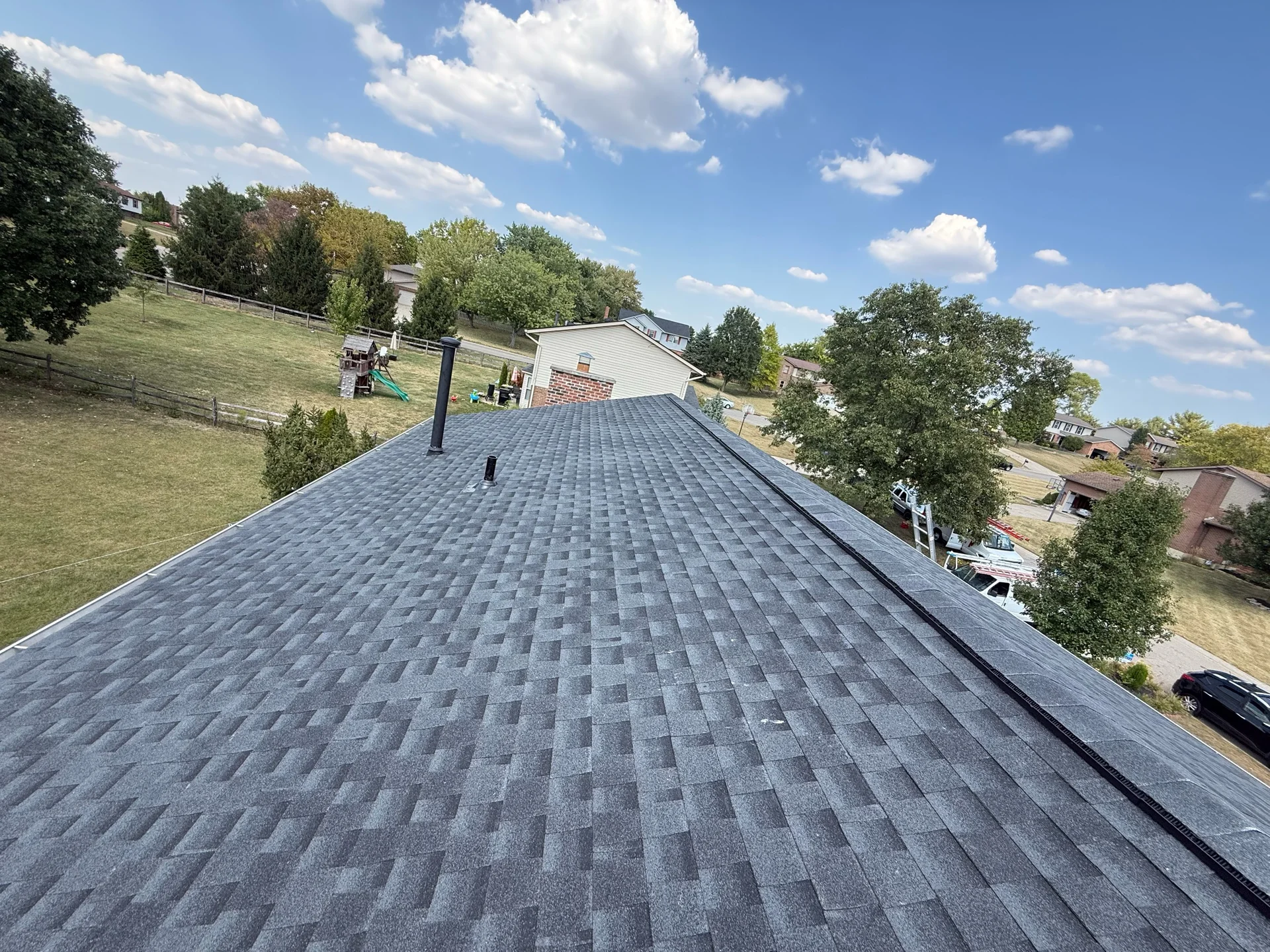
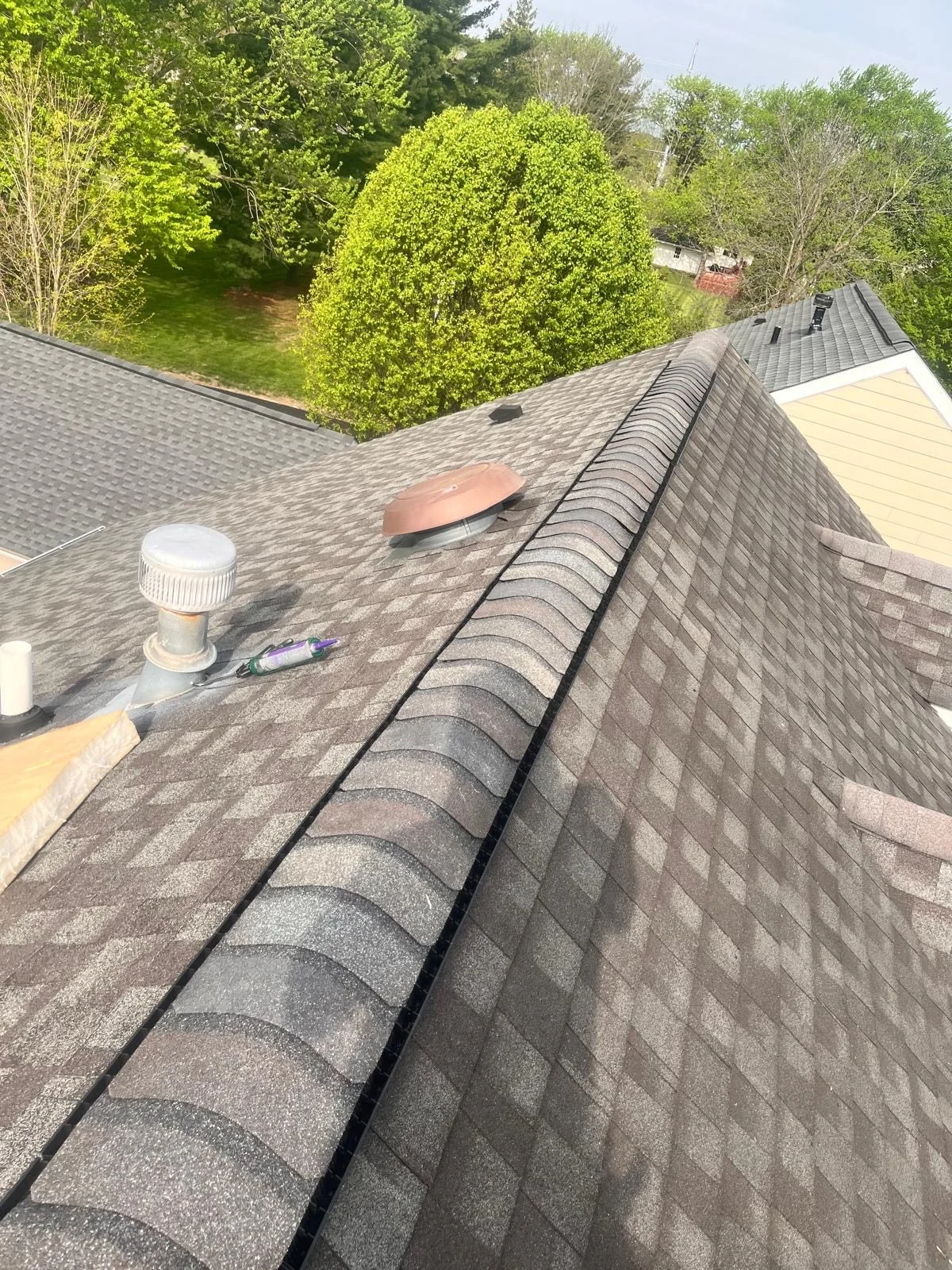
Proper attic airflow — intake at the soffits, exhaust at the ridge or roof vents — keeps the attic near outdoor temperature, protects shingles from premature aging, and controls the humidity that Ohio summers push into every attic. If your upstairs rooms are noticeably hotter than the rest of the house, ventilation is the first suspect. We covered the mechanics in depth in our attic ventilation article, and you can see real examples in projects like this Centerville ridge vent replacement and this Maineville energy upgrade with deck air vents.
UV wear
Summer sun fades, dries, and eventually cracks shingle surfaces. There's no maintenance task that stops UV — but when replacement time comes, modern architectural shingles handle it far better than older 3-tab products, and lighter colors run cooler. Check south- and west-facing slopes for curling or cracking; they age fastest.
Fall: The Most Important Season on This List
If you do serious roof maintenance once a year, do it in fall. Everything winter will do to your roof is determined by the condition it's in when the first freeze arrives.
Shingles and sealing
Re-inspect for anything summer loosened, and have any suspect flashing resealed now — caulk and sealants can't be properly applied in freezing temperatures, so a gap found in January often has to wait, leaking, for a warm spell.
Insulation: your ice dam insurance
Ice dams — the destructive ice ridges at the roof edge — aren't really a roof problem; they're an attic problem. Heat escaping through thin insulation melts the snow at the top of the roof; the meltwater runs down and refreezes at the cold eave, building a dam that forces water backward under the shingles. The fix is keeping the roof deck uniformly cold: adequate insulation (the Department of Energy recommends R-49 or better for our region — roughly 16–18 inches of blown insulation) plus the ventilation covered above. Fall is the time to check depth and top it up.
Final gutter clean
After the leaves finish dropping, clean the gutters one last time. Gutters that enter winter clogged become gutters full of ice — heavy enough to tear away from the fascia and a ready-made foundation for ice dams.
Winter: Watch and Manage
Snow load and roof raking
Most Cincinnati snowfalls are no structural concern, but heavy, wet accumulations are worth managing. A roof rake — used gently, from the ground, pulling snow off the lower few feet of the roof — removes the raw material ice dams are built from. Never chip at ice on the roof itself; you'll destroy shingles trying, and ladder work over ice is how homeowners get hurt. If a dam has already formed and water is entering the house, that's a professional call, same day.
Know the warning signs
Icicles are the tell most people misread. A few small ones are normal; thick icicles rows along the entire eave mean heat is escaping your attic and melting snow — the ice dam process in progress, and a sign your insulation or ventilation needs attention come spring.
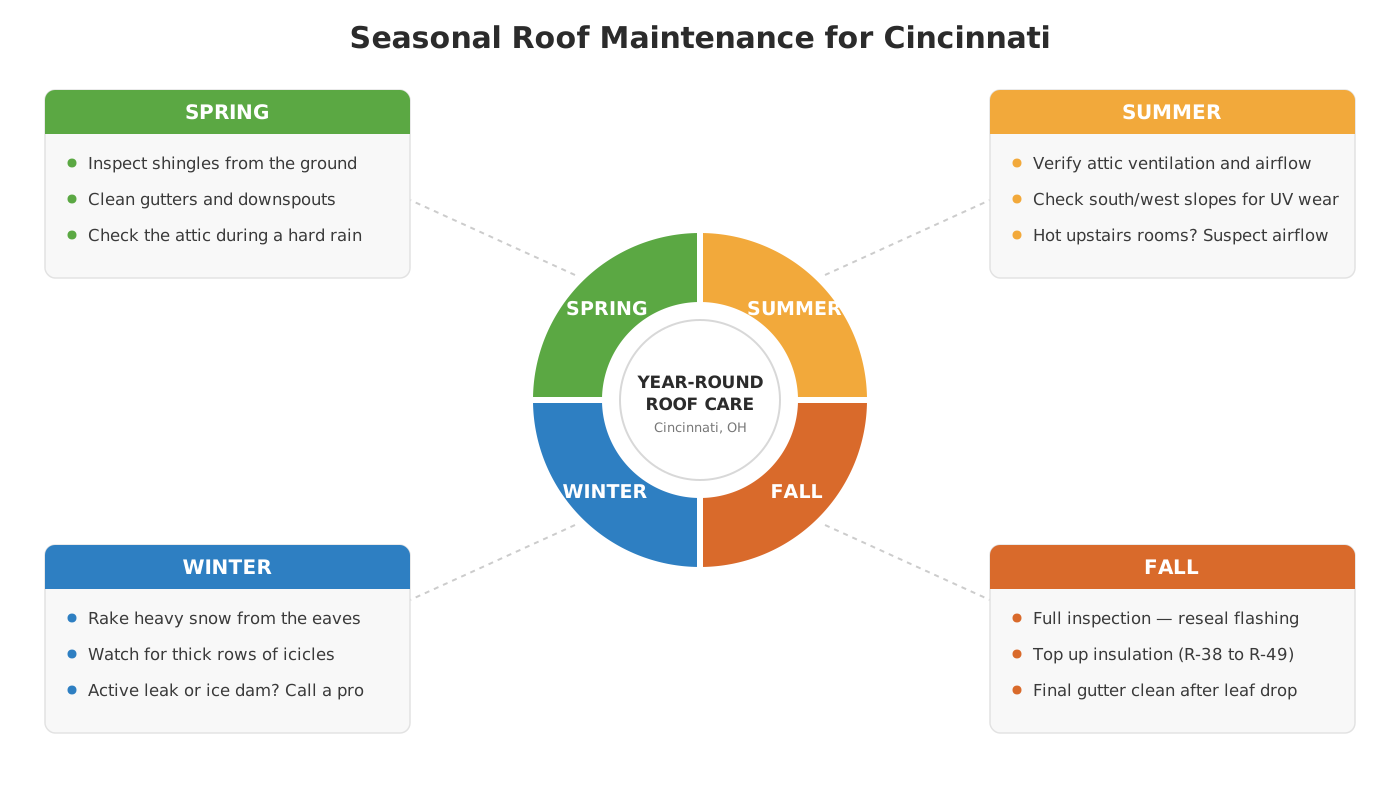
Your Quick Seasonal Checklist
Frequently Asked Questions
How often should a Cincinnati roof be professionally inspected?
Once a year — fall is ideal — plus after any significant hail or wind event. Annual inspections routinely catch flashing and sealant failures years before they become interior leaks.
How long do asphalt shingle roofs last in Cincinnati?
Architectural shingles are generally rated 25–30 years, but our freeze-thaw climate and ventilation quality make the real difference. A well-ventilated roof reaches its rated life; a poorly ventilated one can fail a decade early. That's why we treat ventilation as part of every roof, not an add-on.
Can I inspect my roof myself?
From the ground with binoculars, absolutely — and the attic check is the most valuable one you can do. We'd discourage walking the roof itself: beyond the fall risk, foot traffic damages shingles, especially in heat or cold.
When is a roof worth repairing versus replacing?
Isolated damage on a roof under ~15 years old usually favors repair. Widespread granule loss, curling across multiple slopes, or repeated leaks on an older roof usually mean repairs are just buying time expensively. An honest inspection will tell you which side of the line you're on.
The Bottom Line
Cincinnati's climate doesn't forgive neglected roofs — but it rewards attentive ones. A homeowner who cleans gutters twice a year, checks insulation and ventilation, and acts on small findings early will typically get years more life from the same roof, at a fraction of the cost of reacting to failures.
When you'd rather have professional eyes on it, schedule a free inspection — we'll tell you honestly what needs attention now, what can wait, and what's fine.
Our Work