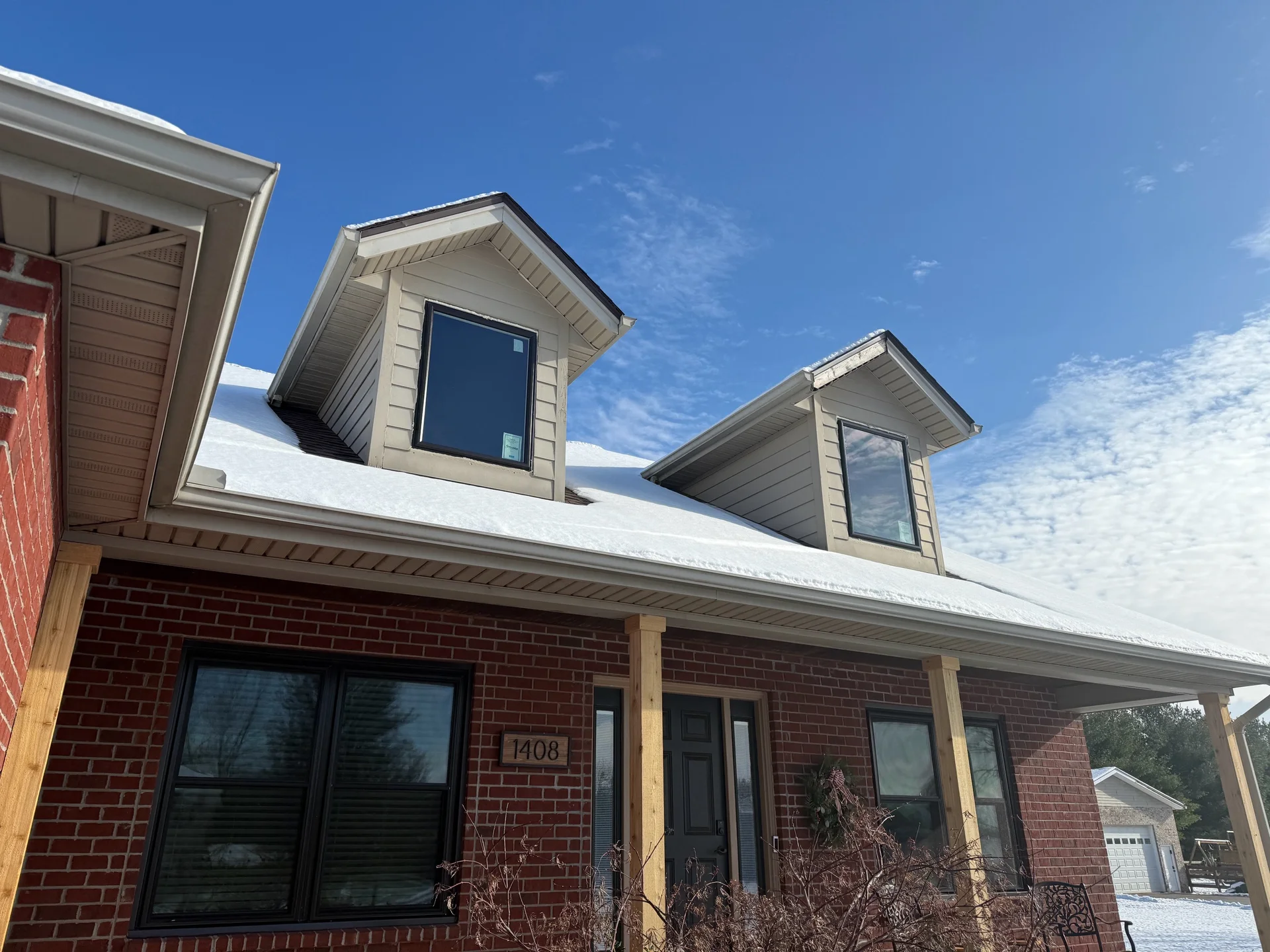
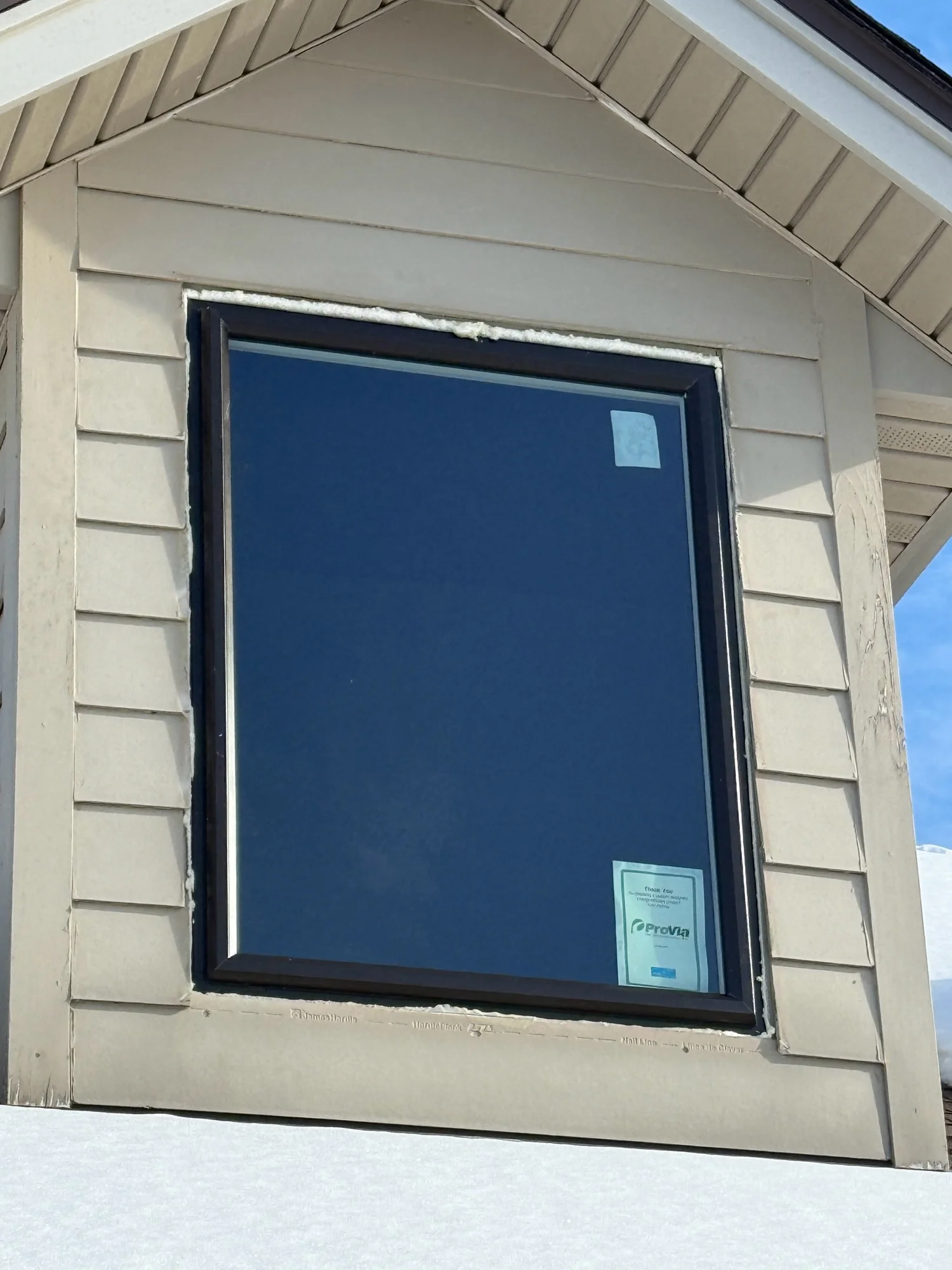
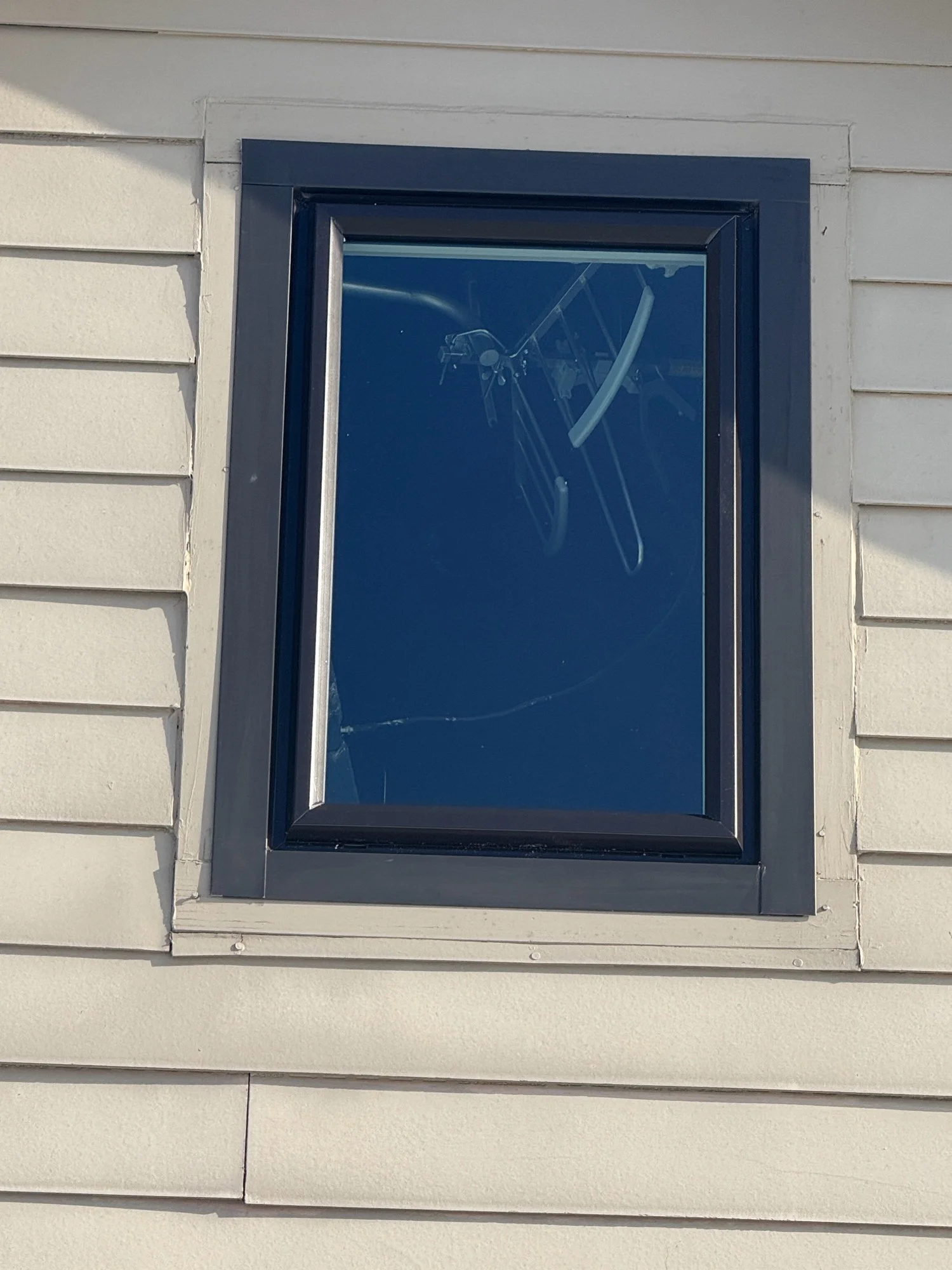
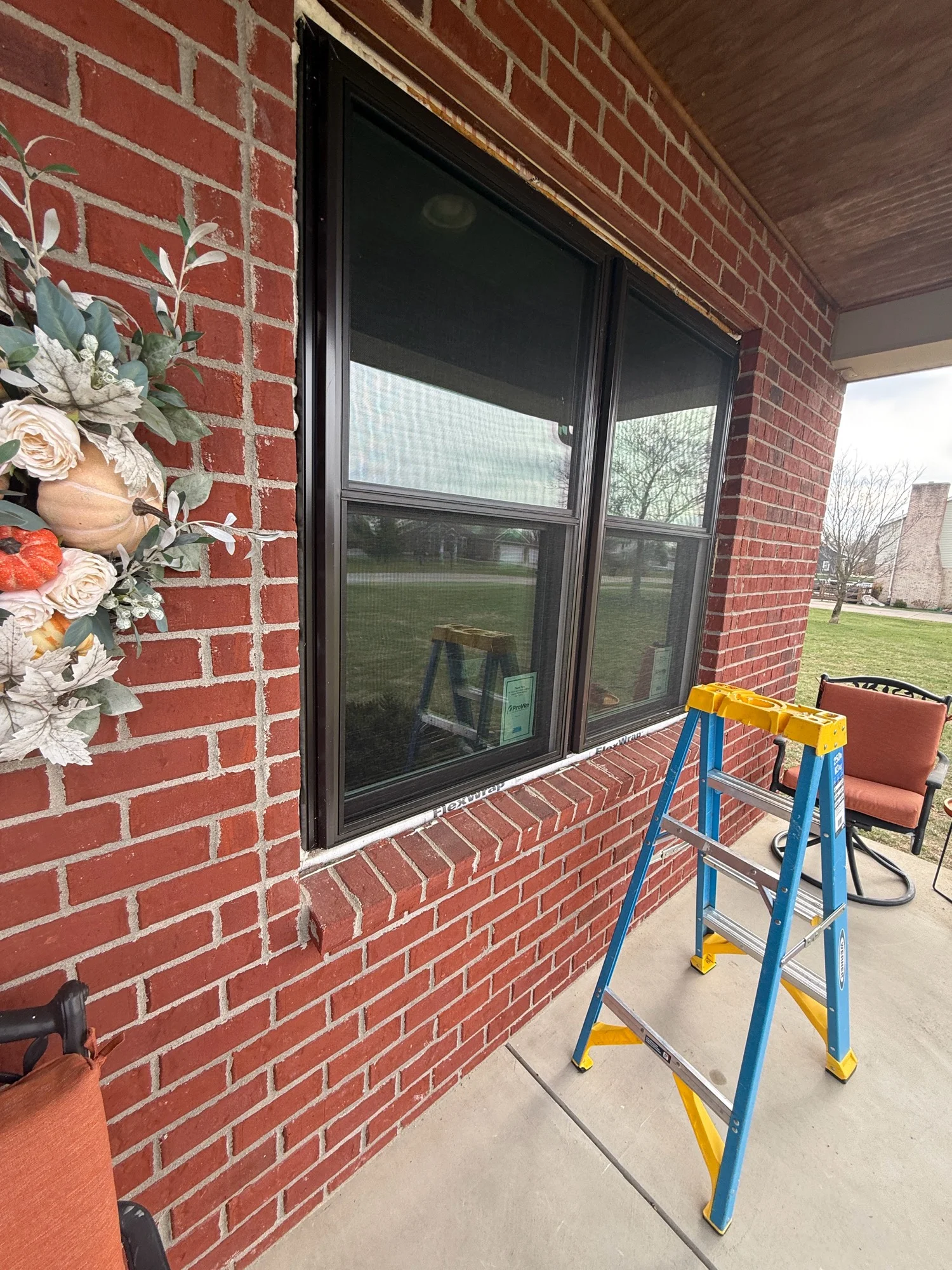
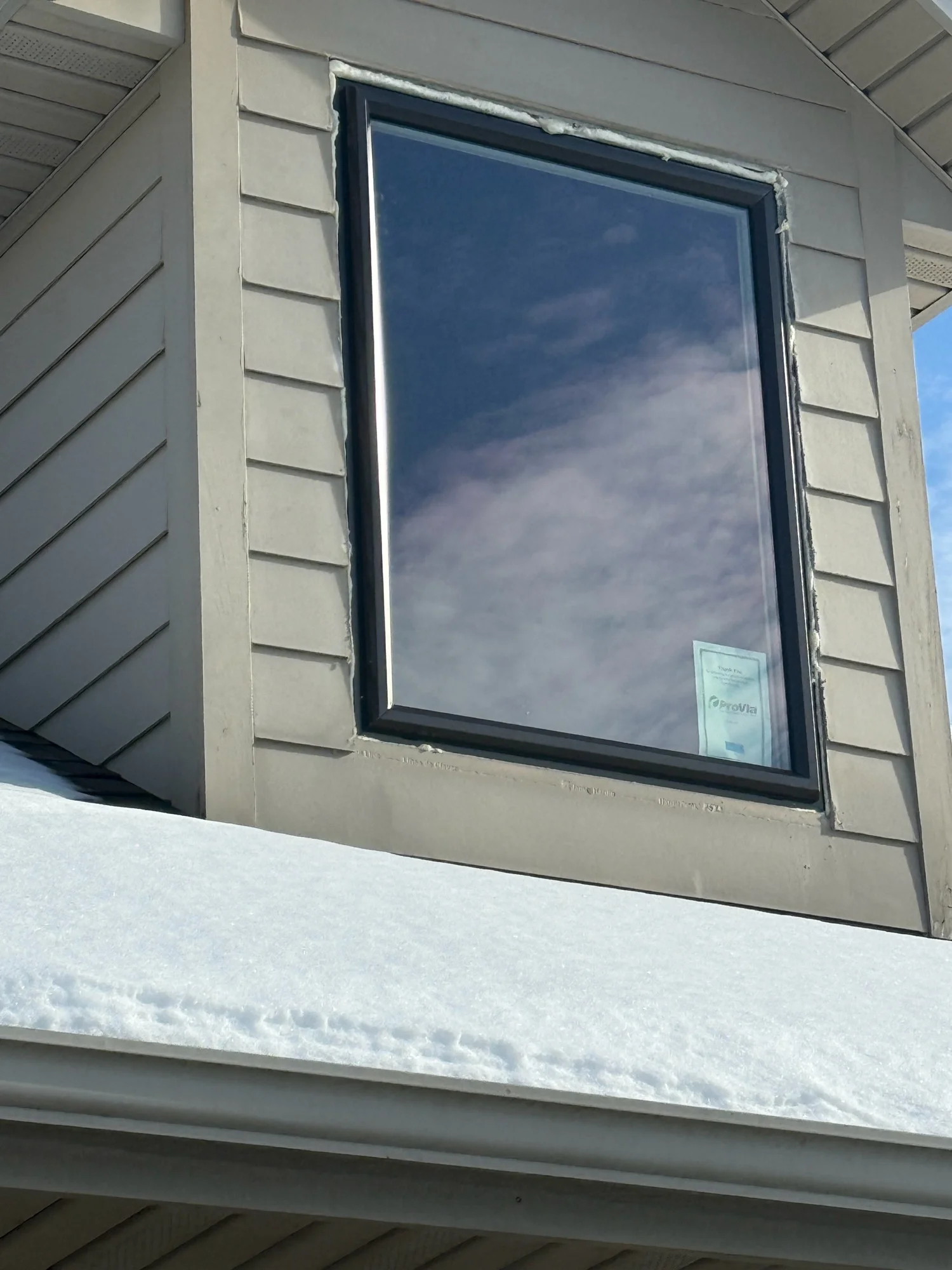
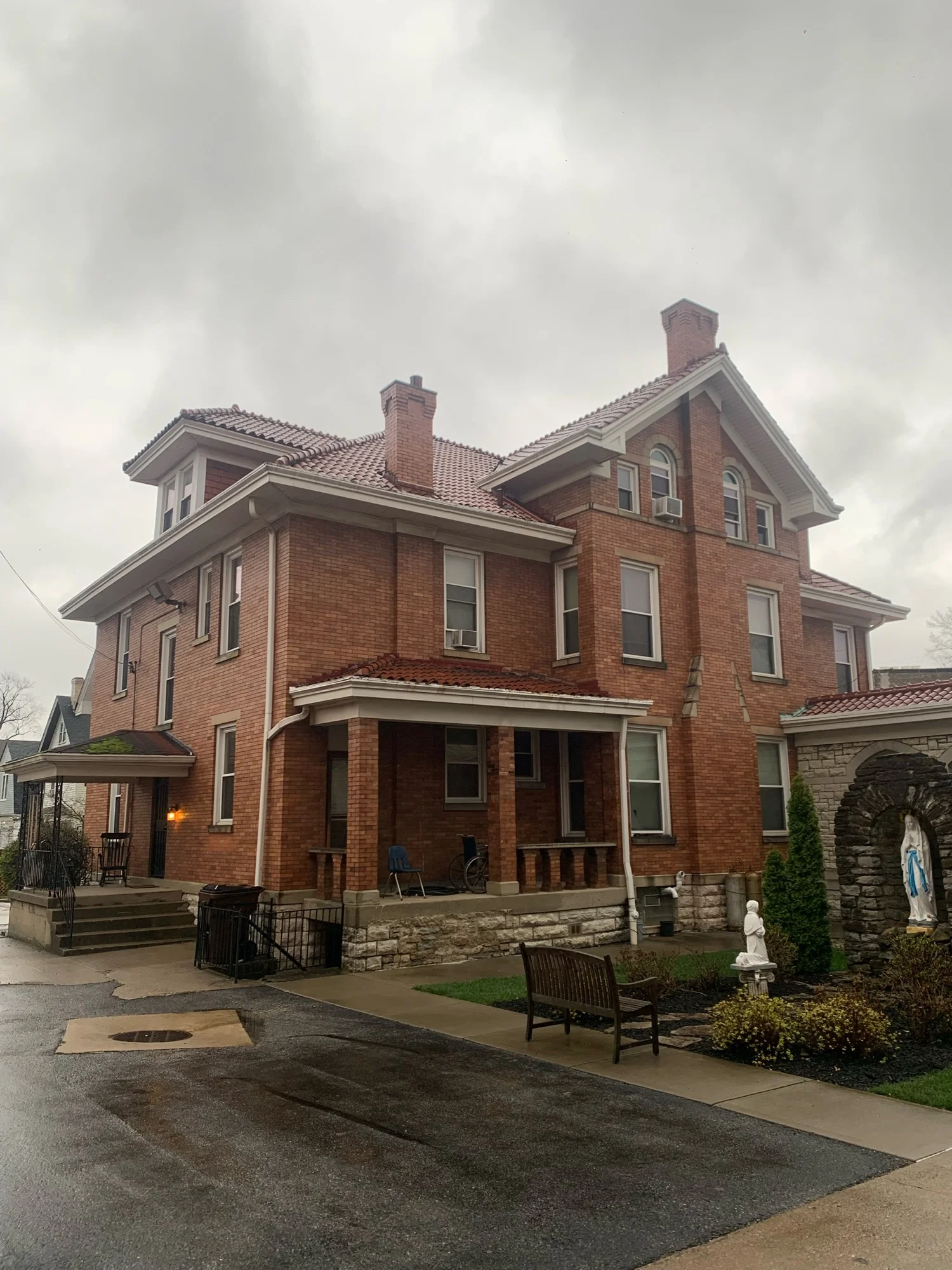
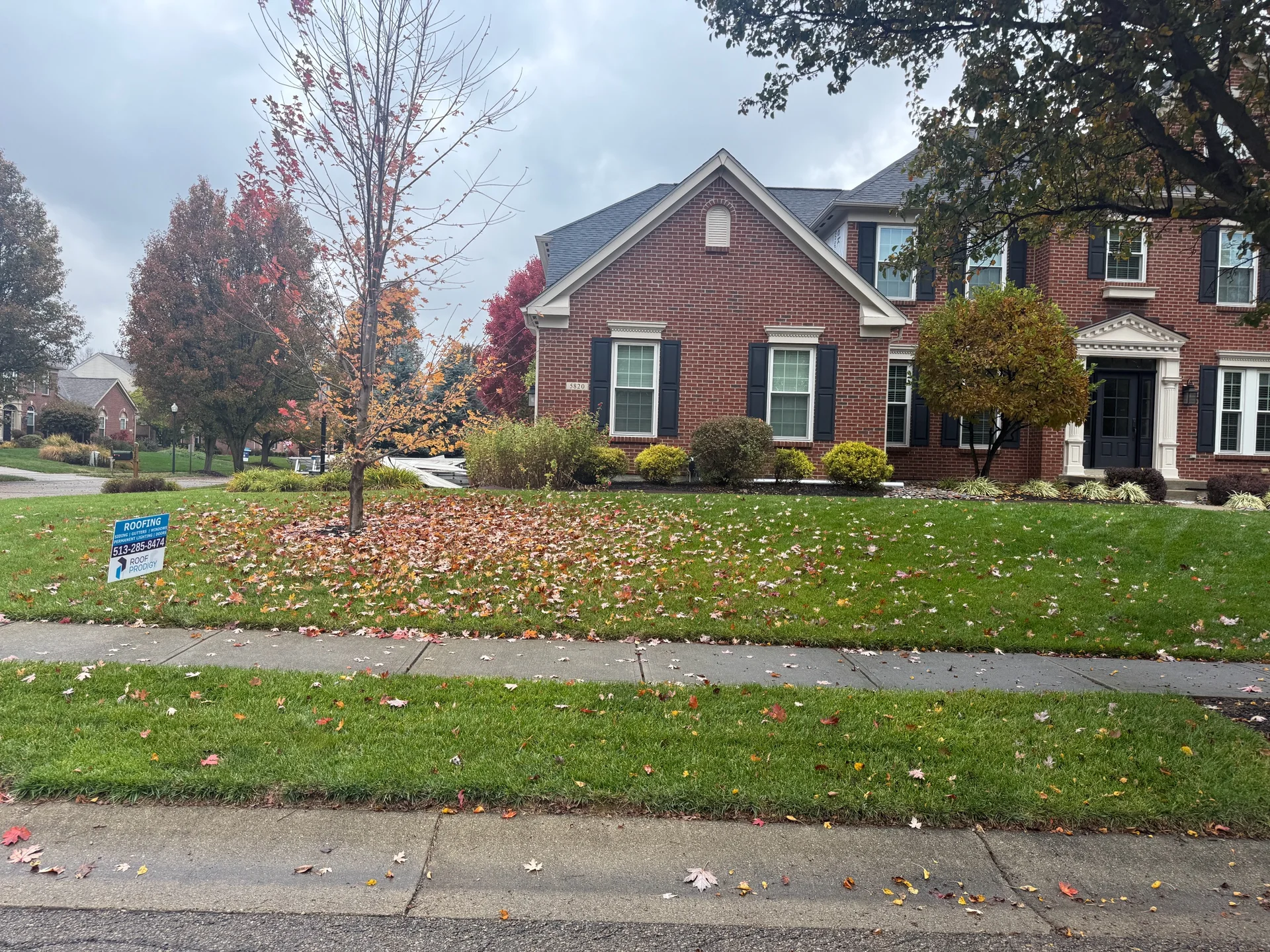
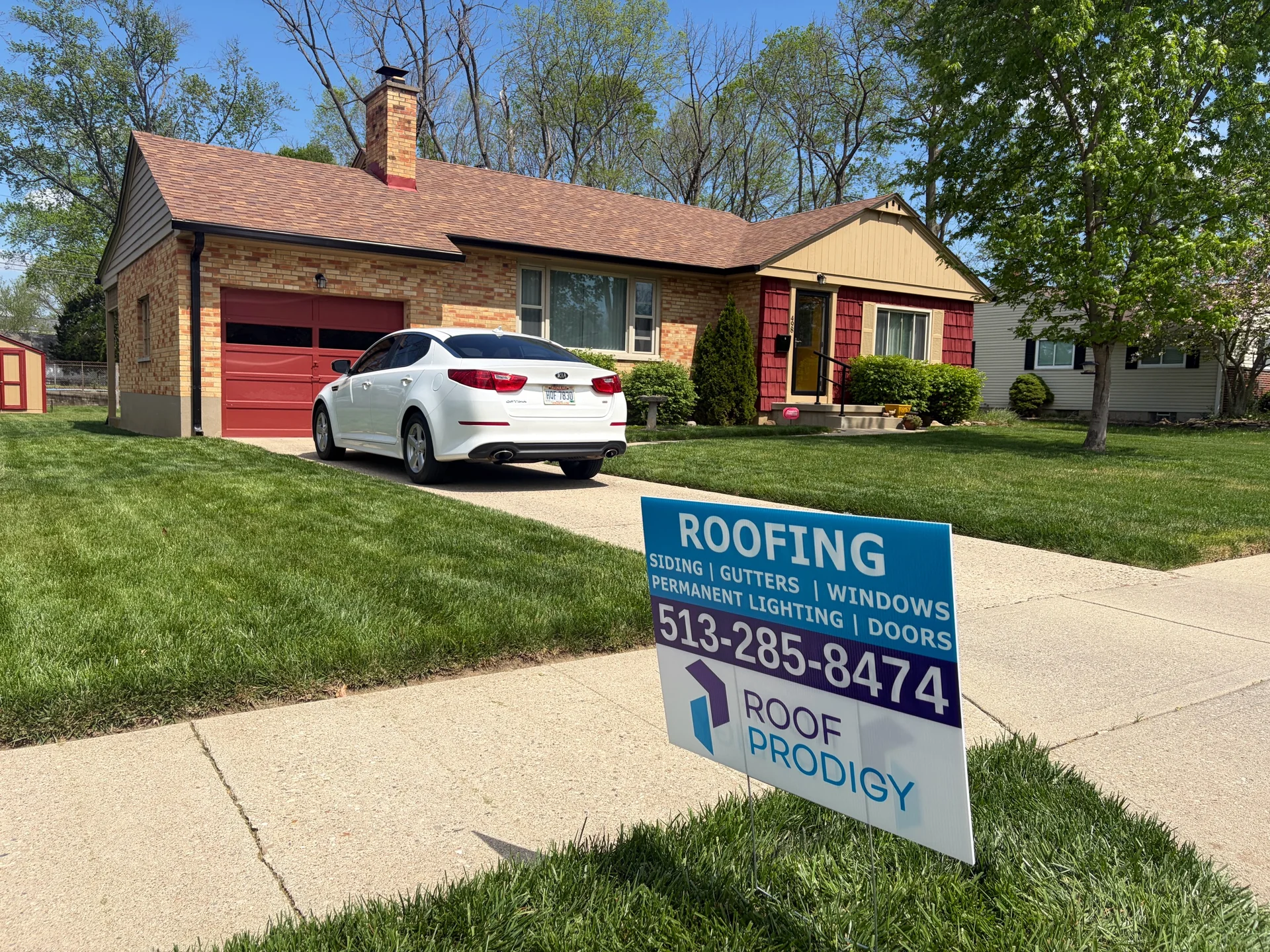
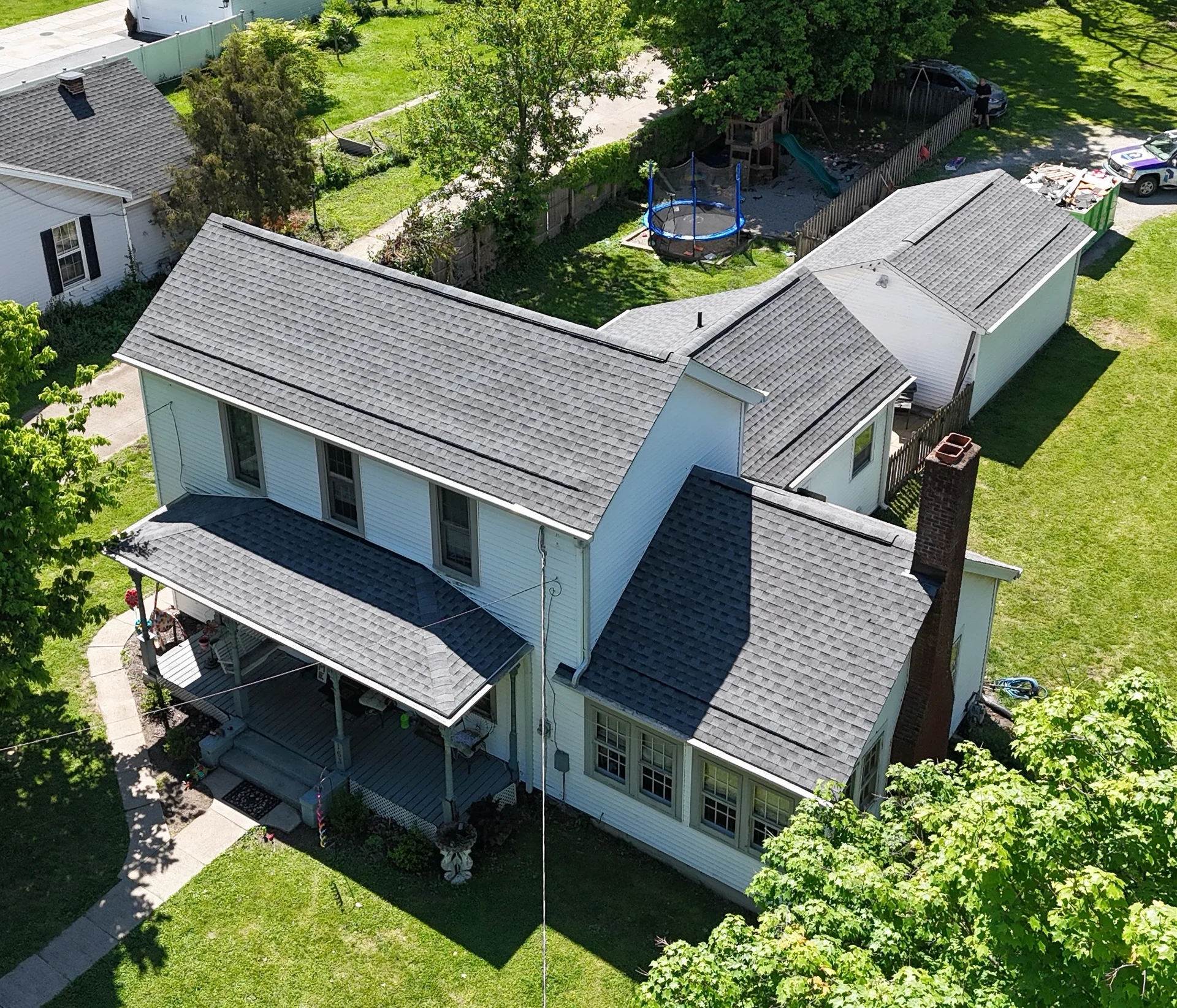
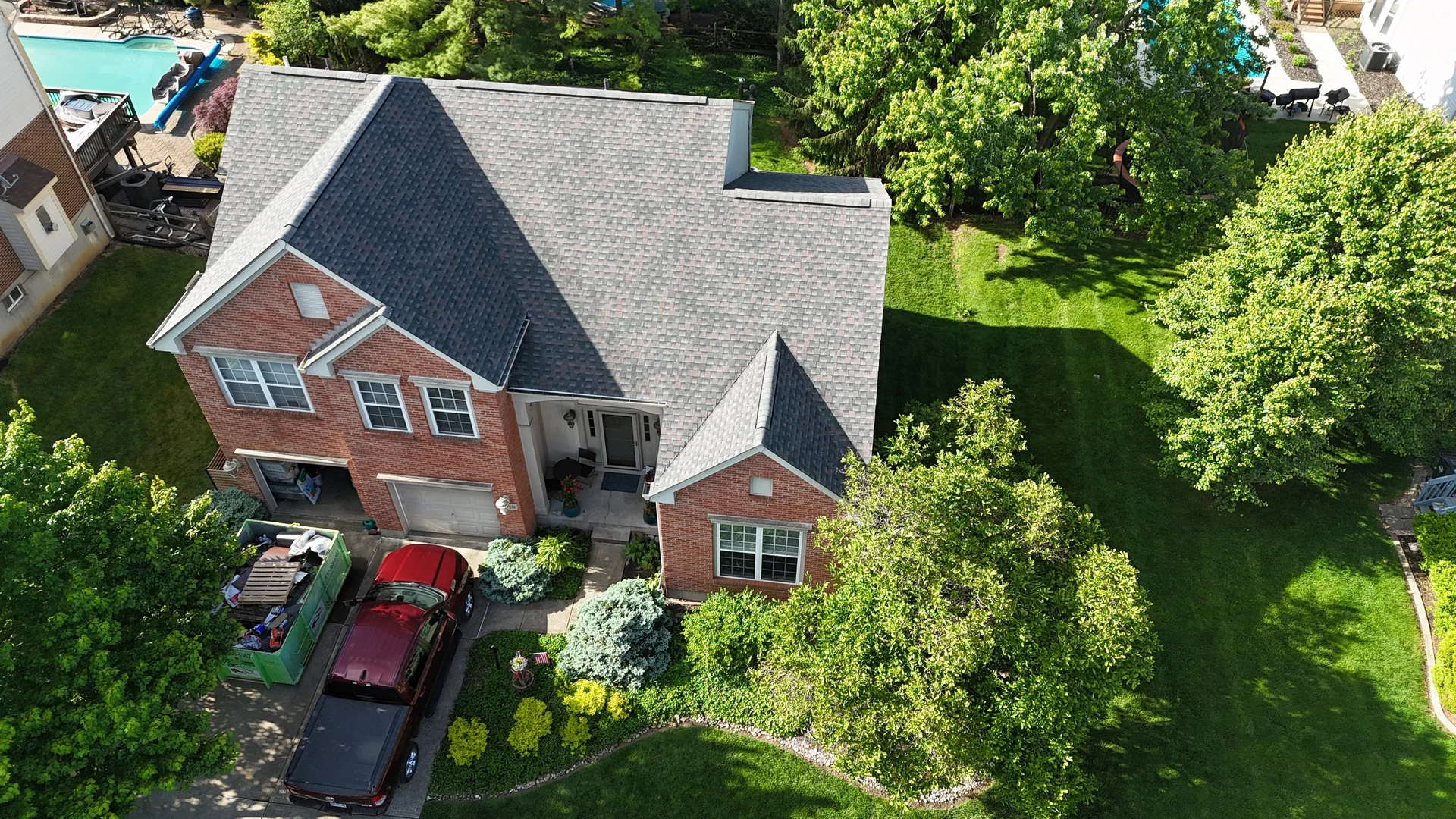
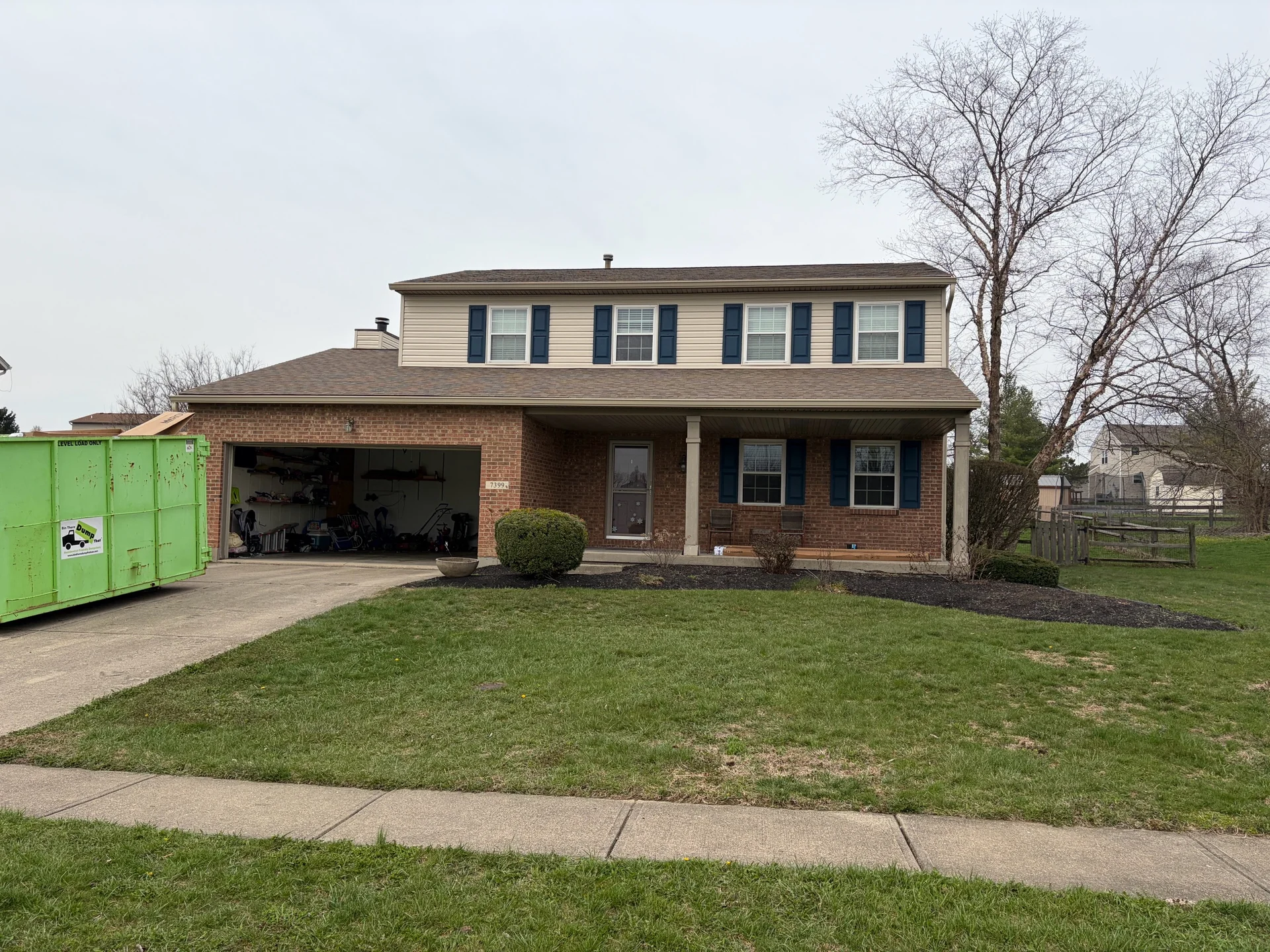
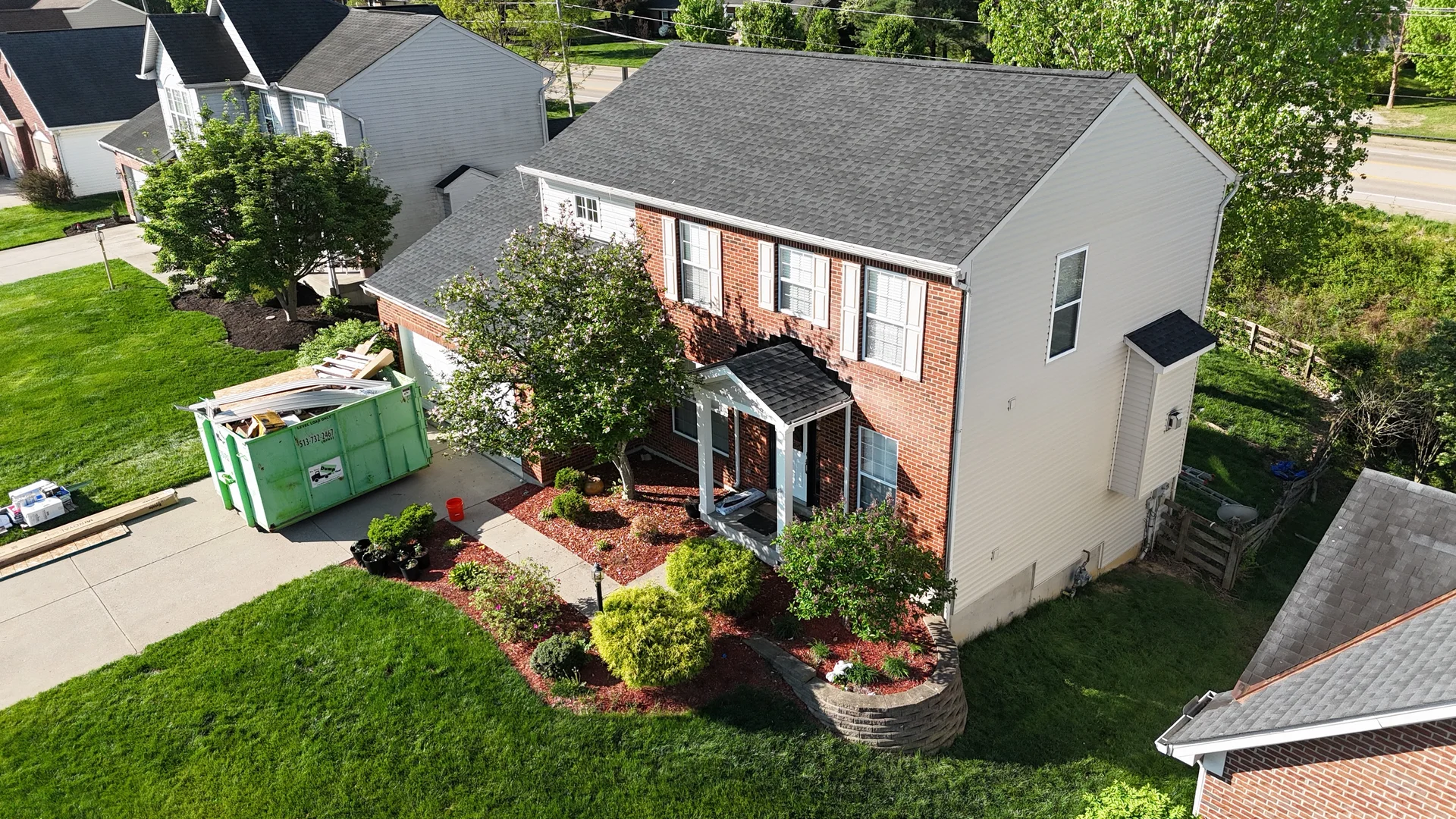
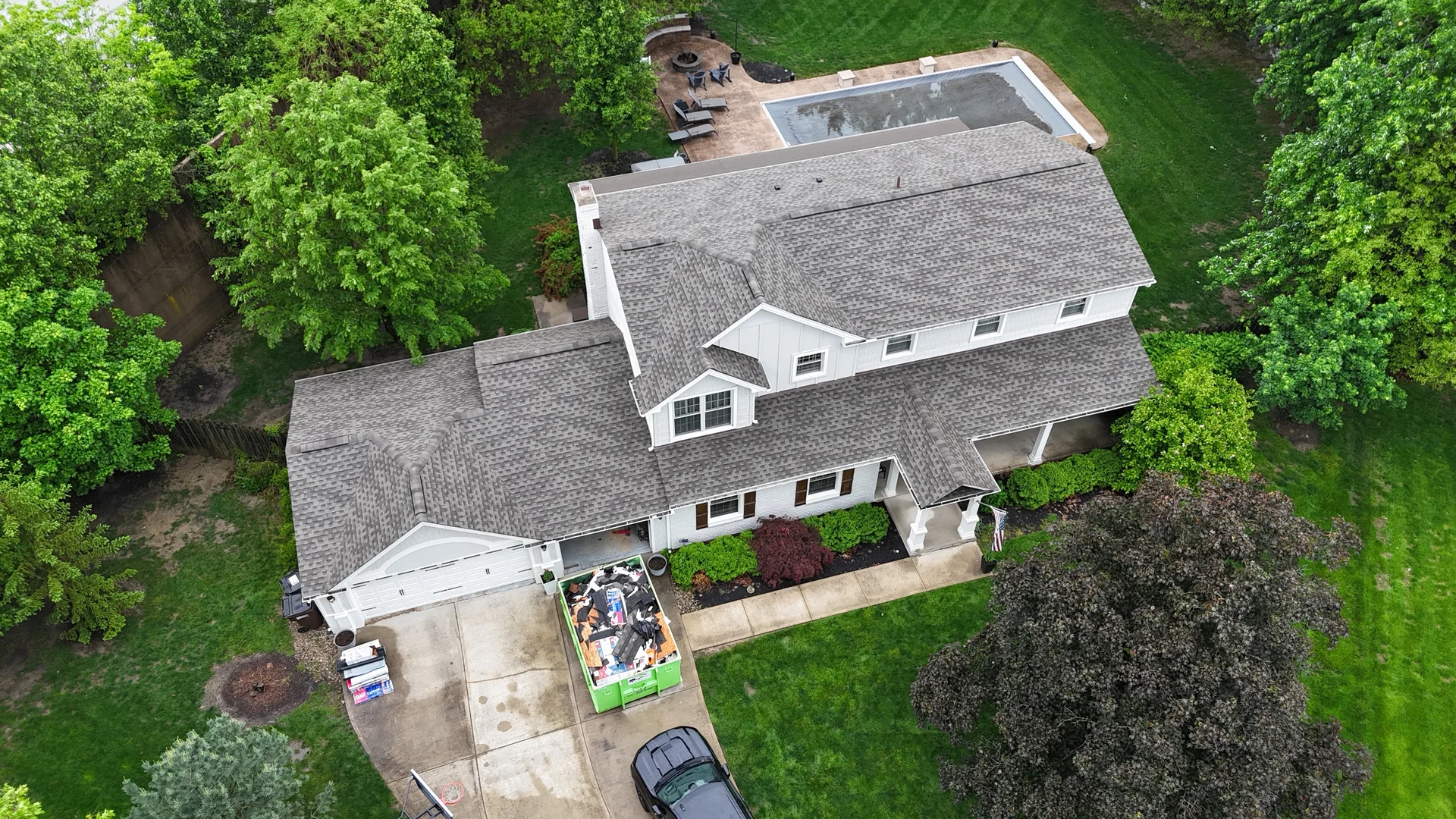
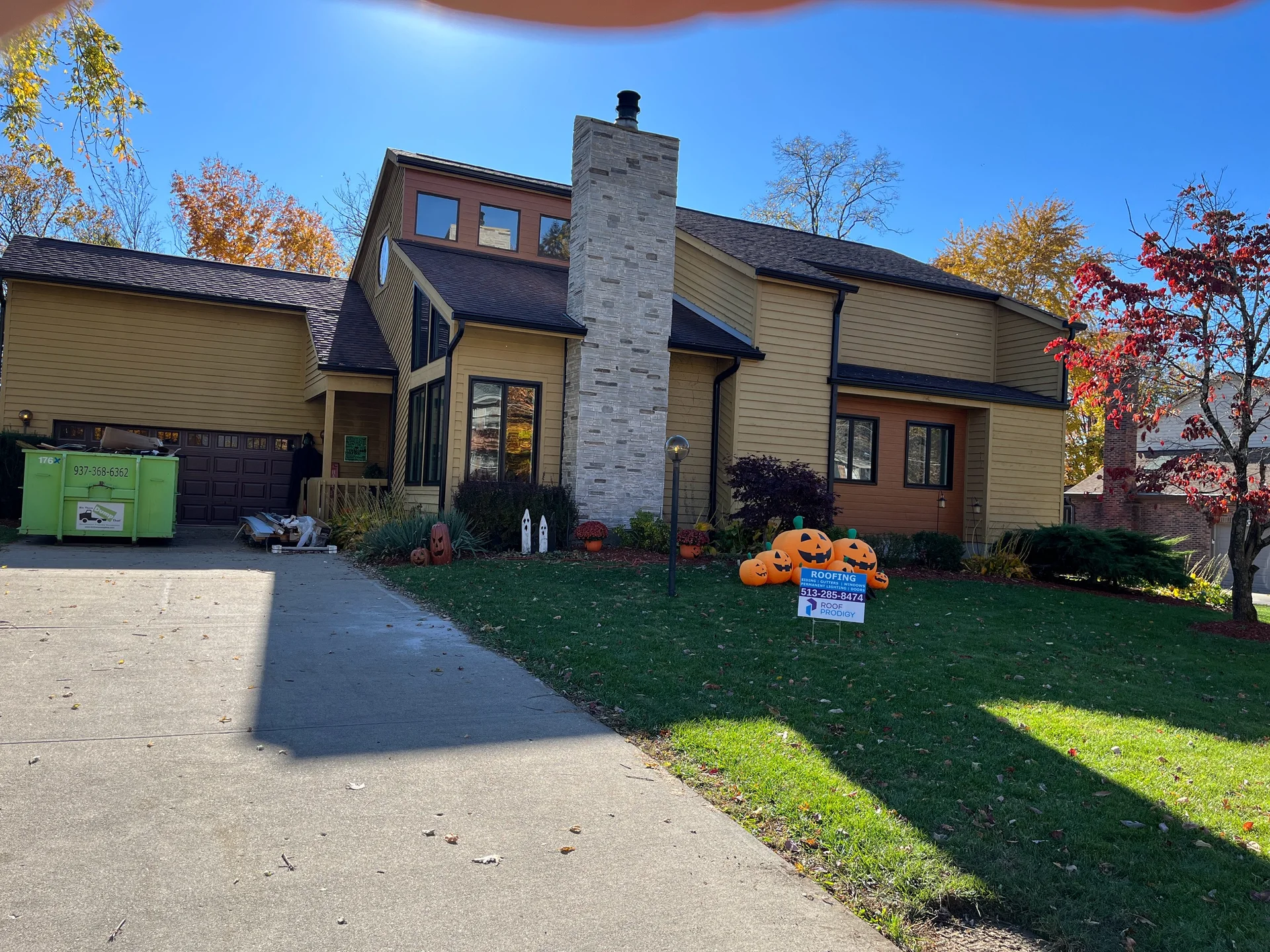
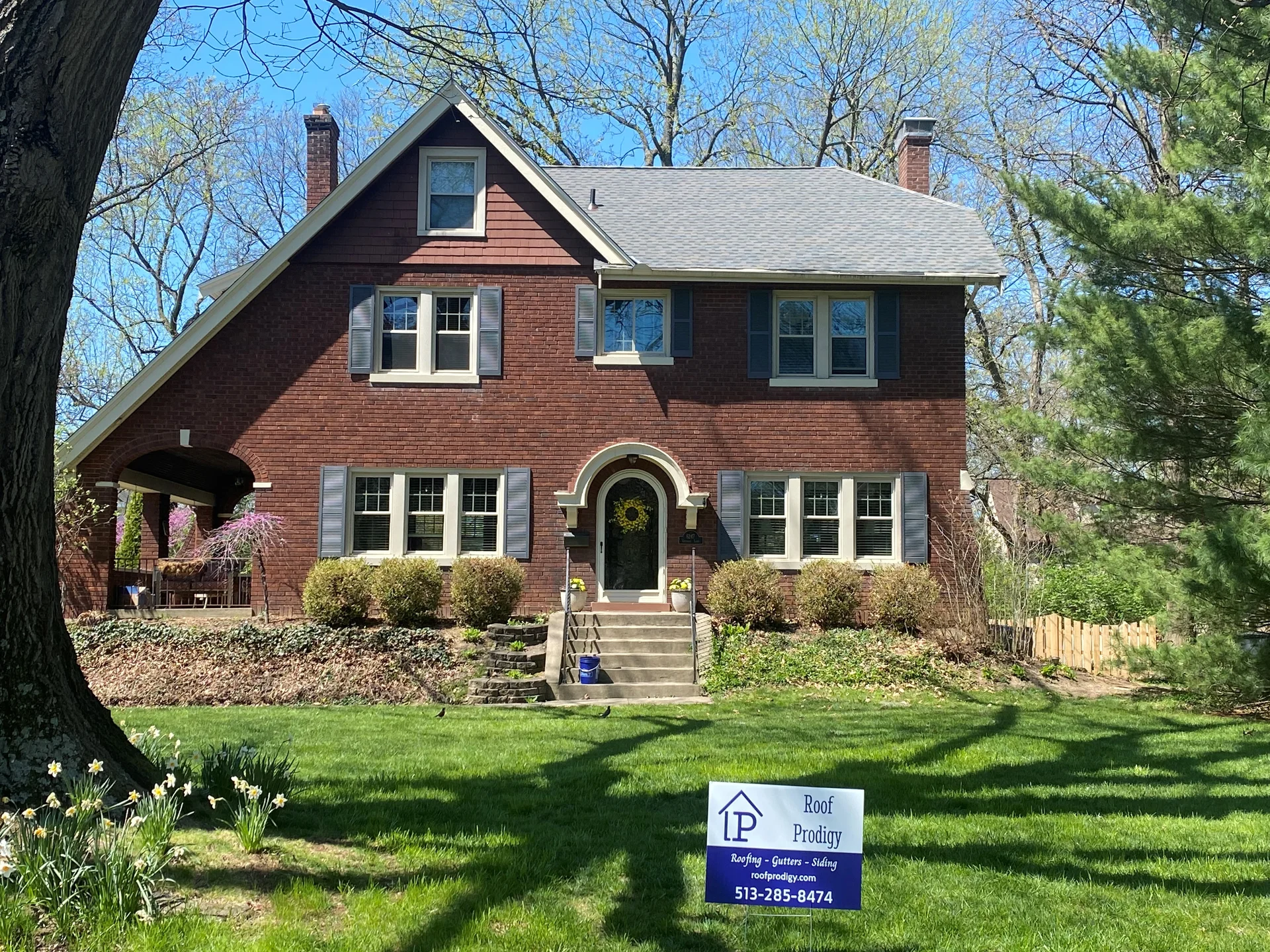
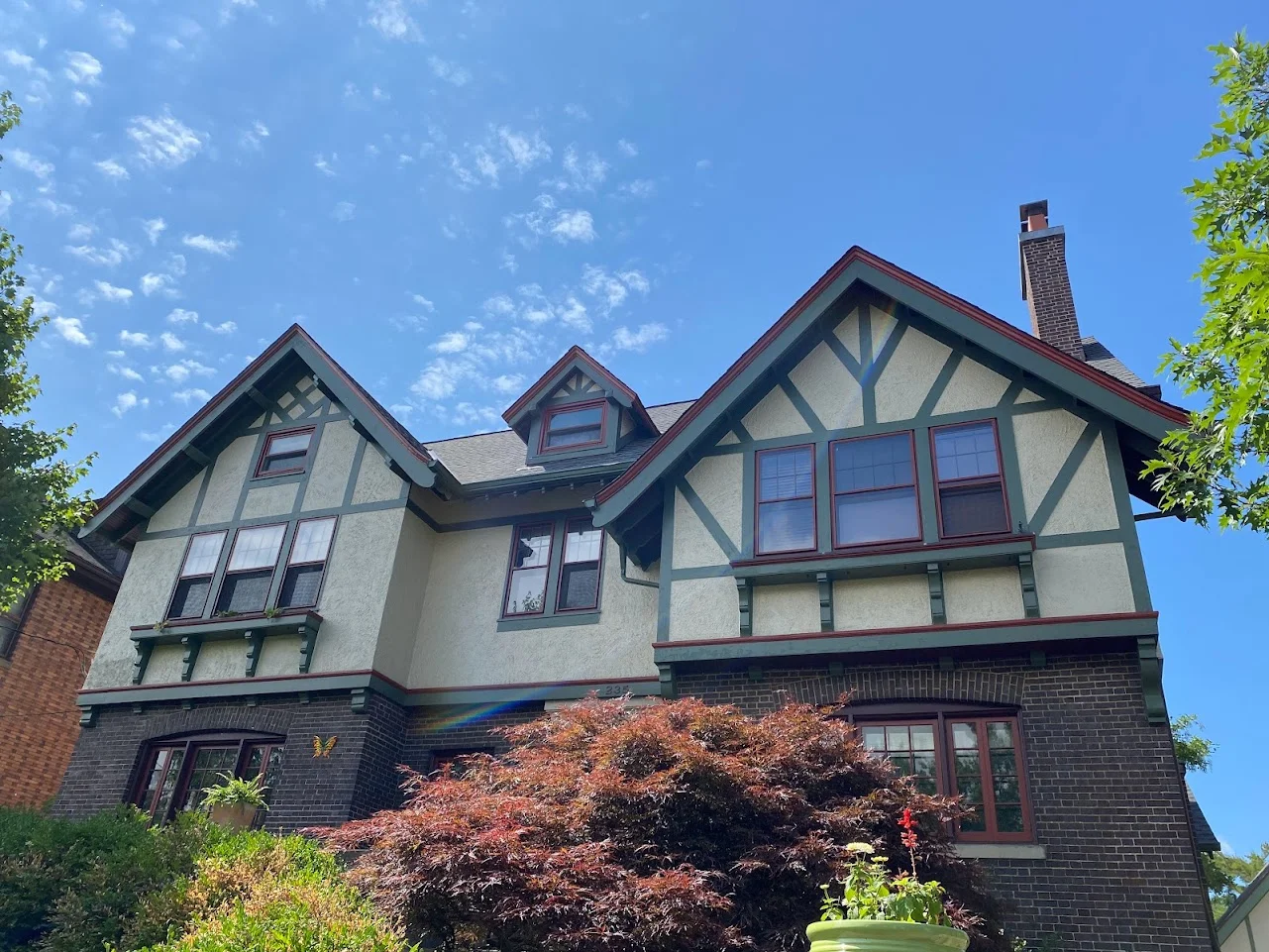
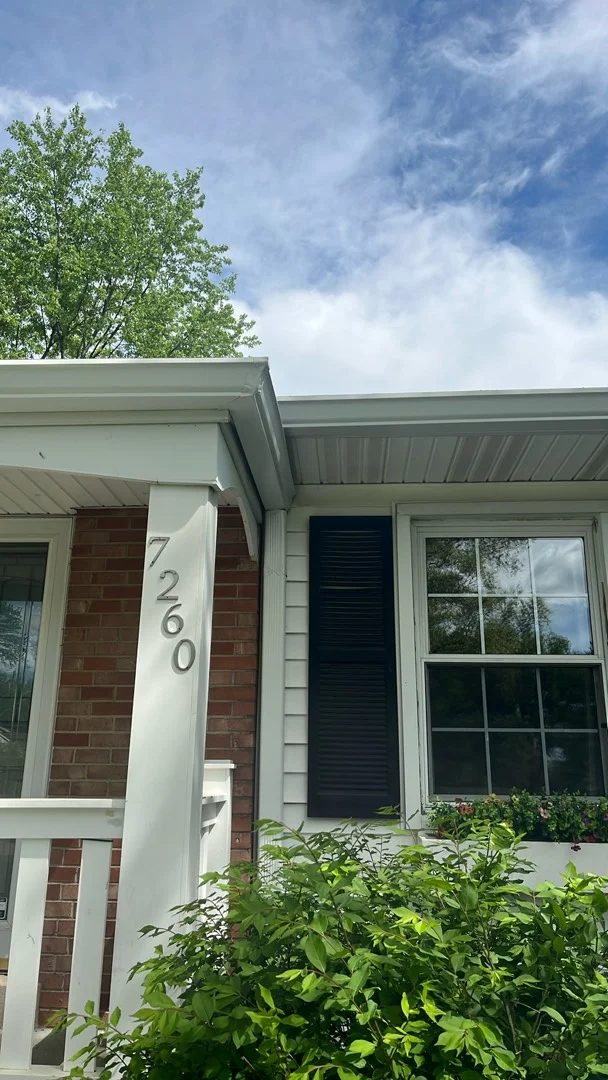
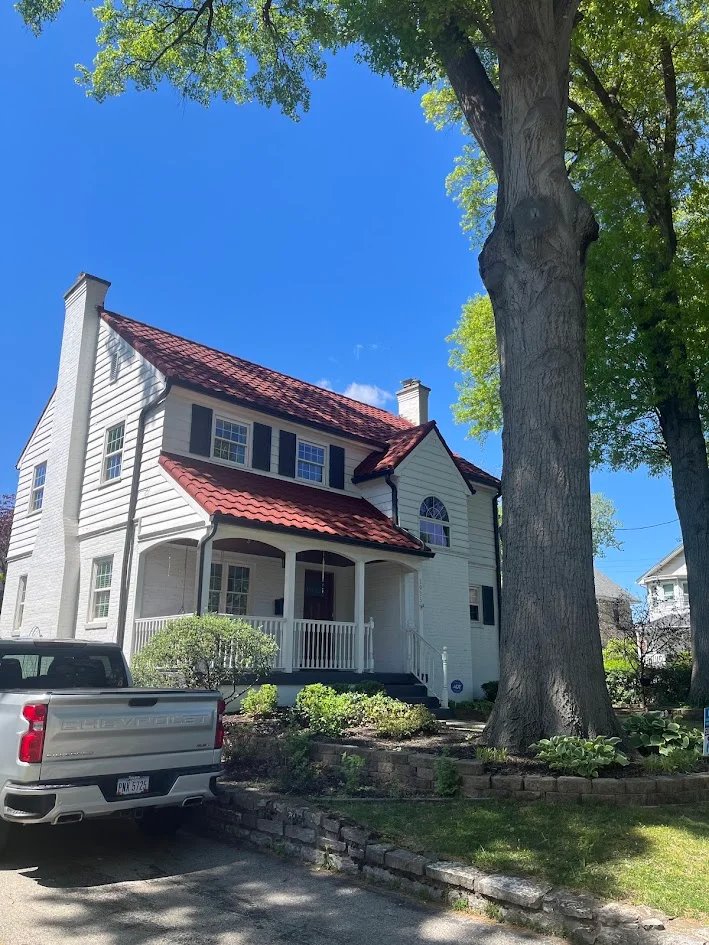
A red brick bungalow in Lebanon with a pair of shed dormers, and a noise problem. The owners were not replacing windows because the old ones were ugly or because a salesman had shown them a heating bill. They wanted the outside to be quieter on the inside. What went in are custom triple-pane ProVia units in black, built to the sizes of the openings they were going into, the dormers included.
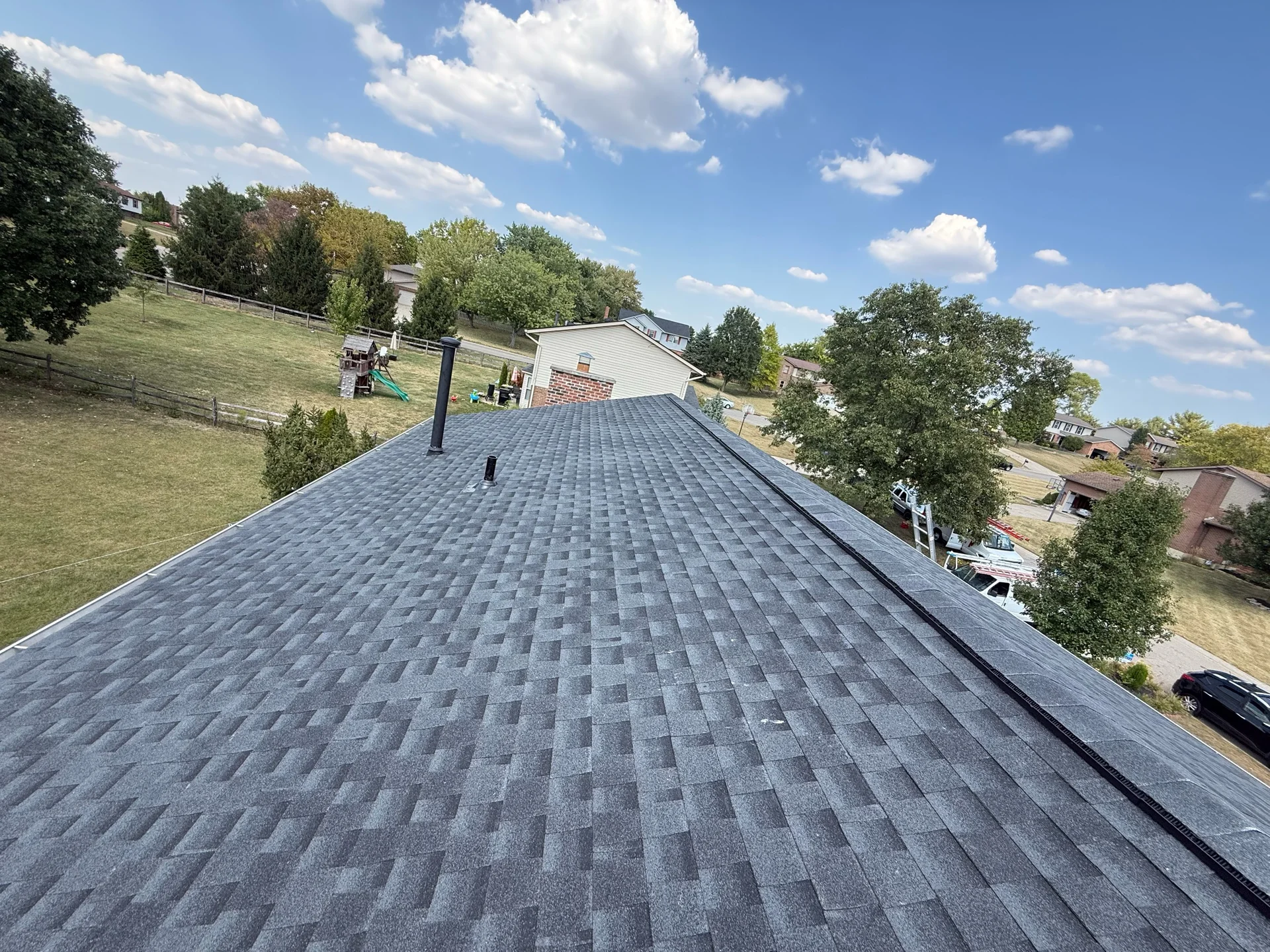
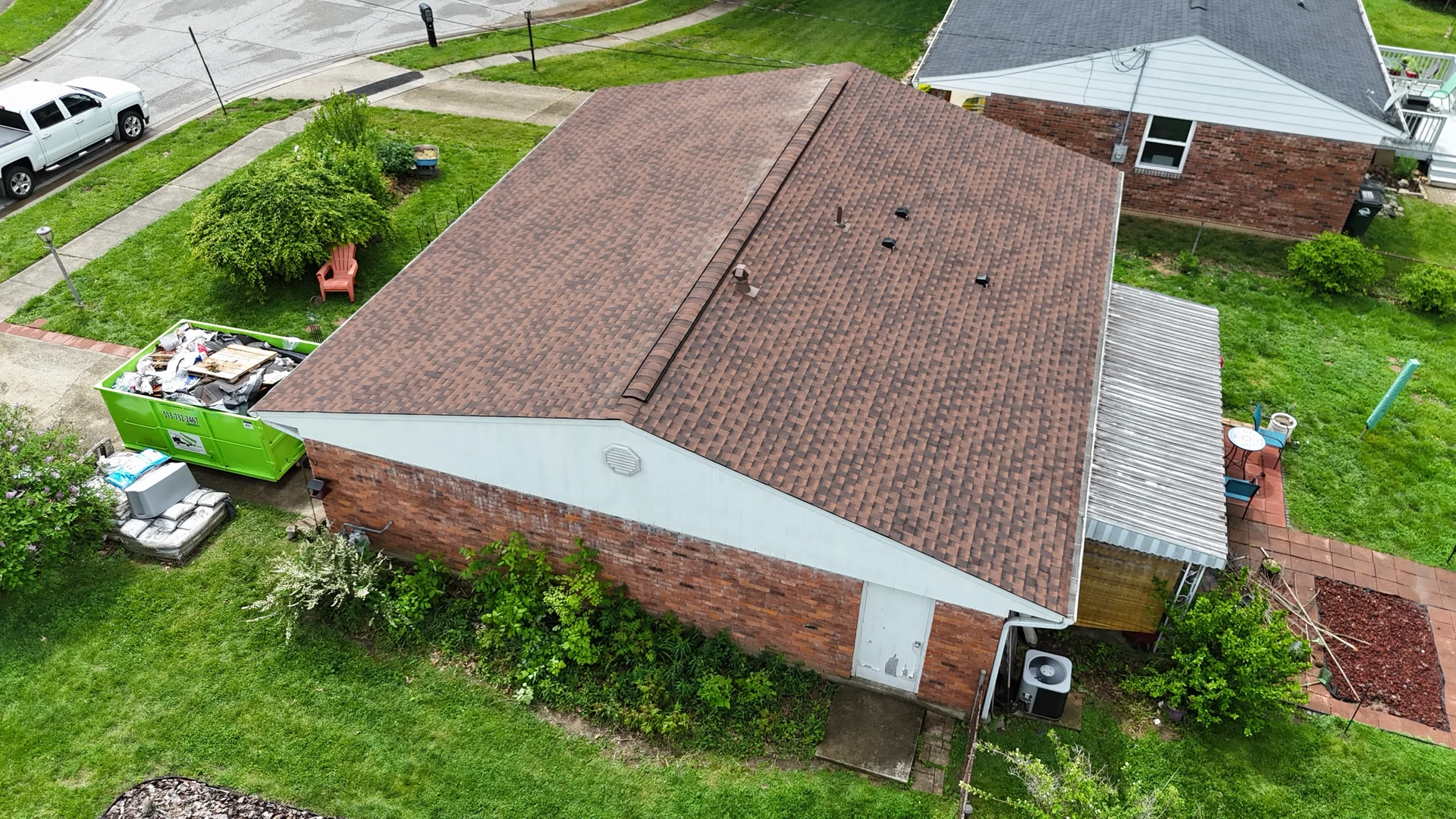
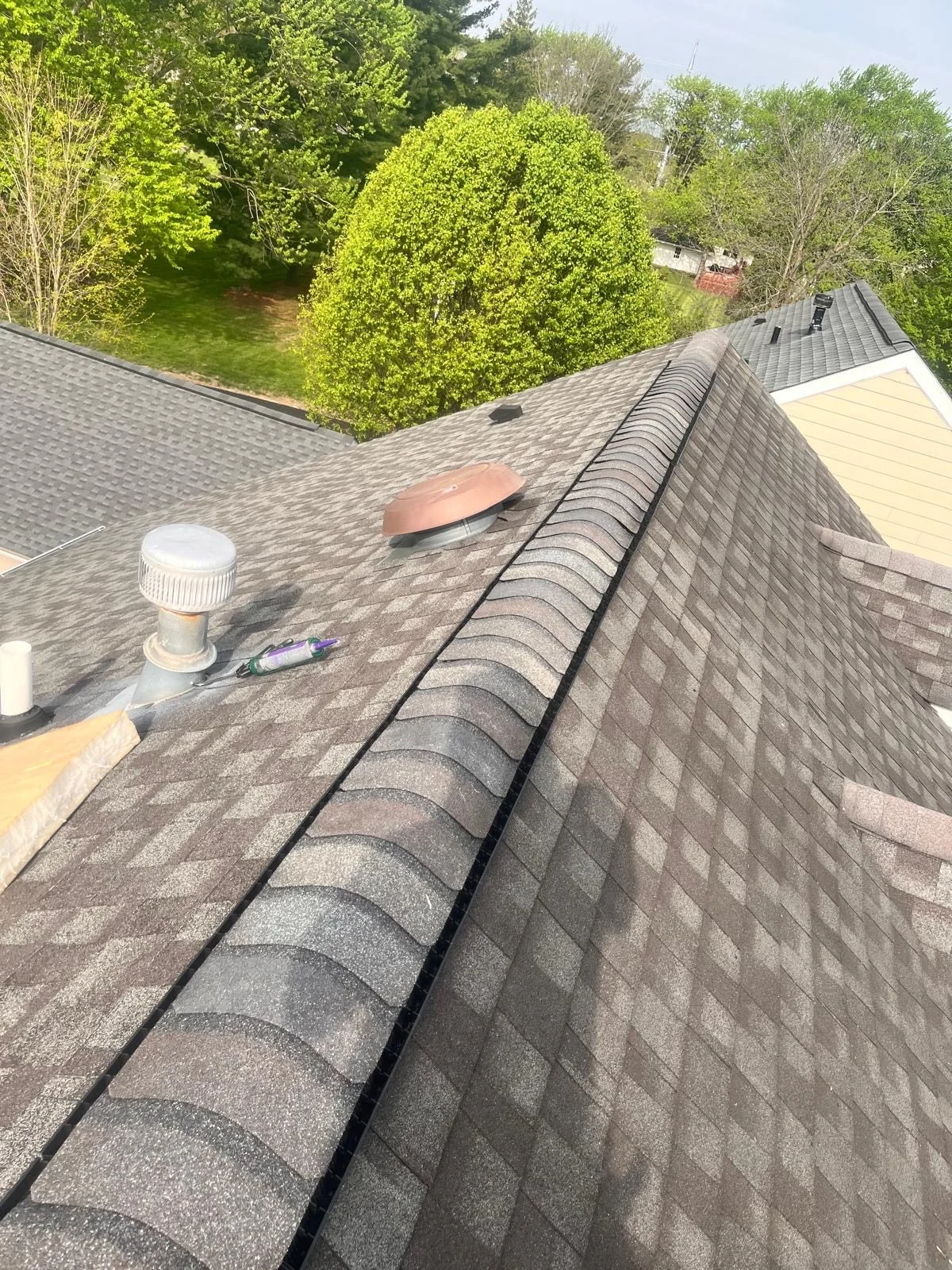
The windows were one part of a whole-exterior project at this address. Contracted in August 2025 and released trade by trade across the rest of the year, the same house also took James Hardie lap siding with new Hardie soffit, fascia wrapped in custom-bent color-matched aluminum, six-inch seamless K-style gutters with three-by-four downspouts, and a complete GAF Timberline HDZ roof stripped down to the decking. The roof went on in August, the siding through November and December, the gutters at the end of the year, so the house was never opened up all at once.
Black frames against red brick is the change you can see from the street, and it is the reason most people stop at the photographs. The change the owners actually bought is the one no photograph can show.
A red brick bungalow in Lebanon with a pair of shed dormers, and a noise problem. The owners were not replacing windows because the old ones were ugly or because a salesman had shown them a heating bill. They wanted the outside to be quieter on the inside. What went in are custom triple-pane ProVia units in black, built to the sizes of the openings they were going into, the dormers included.
The windows were one part of a whole-exterior project at this address. Contracted in August 2025 and released trade by trade across the rest of the year, the same house also took James Hardie lap siding with new Hardie soffit, fascia wrapped in custom-bent color-matched aluminum, six-inch seamless K-style gutters with three-by-four downspouts, and a complete GAF Timberline HDZ roof stripped down to the decking. The roof went on in August, the siding through November and December, the gutters at the end of the year, so the house was never opened up all at once.
Black frames against red brick is the change you can see from the street, and it is the reason most people stop at the photographs. The change the owners actually bought is the one no photograph can show.
Technical Discussion
Triple pane bought for quiet, not for heat
Nearly everything written about window glass is written about energy: U-factor, solar heat gain, argon fill, low-e coatings. All of it is real, and all of it is worth having. But ask people a year after a window replacement what they actually noticed, and energy is rarely the first answer. The house being quieter is. That is the benefit that arrives the first evening and turns up every day afterward, at a level you can hear rather than infer from a bill.
A window stops sound the way a wall does, with weight and with air. Glass is heavy, and heavy things are hard to make vibrate. The gap between two panes acts as a spring between two weights. That is the whole mechanism: mass, spring, mass. It works well, with one catch that matters more than any brochure lets on — every mass-spring-mass assembly has a frequency at which the whole thing resonates and passes sound almost as though it were not there. In a conventional double-pane unit, two panes of identical thickness with one narrow, even gap between them, that weak spot tends to sit right in the range where traffic, voices, engines and machinery live.
Which is why the two useful moves are asymmetry and mass. Make the panes different thicknesses so they no longer want to vibrate together. Make the air spaces different widths for the same reason. Add a third pane and you have added another weight and another spring, and more total glass for sound to shift. That is what a triple-pane unit is doing here that a standard double-pane is not: it is not simply one more layer of the same thing, it is a chance to make the assembly uneven.
Low frequency is the stubborn part — a truck idling at a stop sign, the bass through a car window, a mower two houses down. Deep sound is barely troubled by thin, tight assemblies, and it is worth knowing that a third pane is not the only tool for it. Laminated glass, which sandwiches a plastic interlayer between two sheets and damps the vibration instead of just resisting it, is often the better answer for low-frequency noise, and it can be specified in one or two rooms rather than a whole house. If your noise problem is a road rather than a playground, that conversation is worth having before the order goes in.
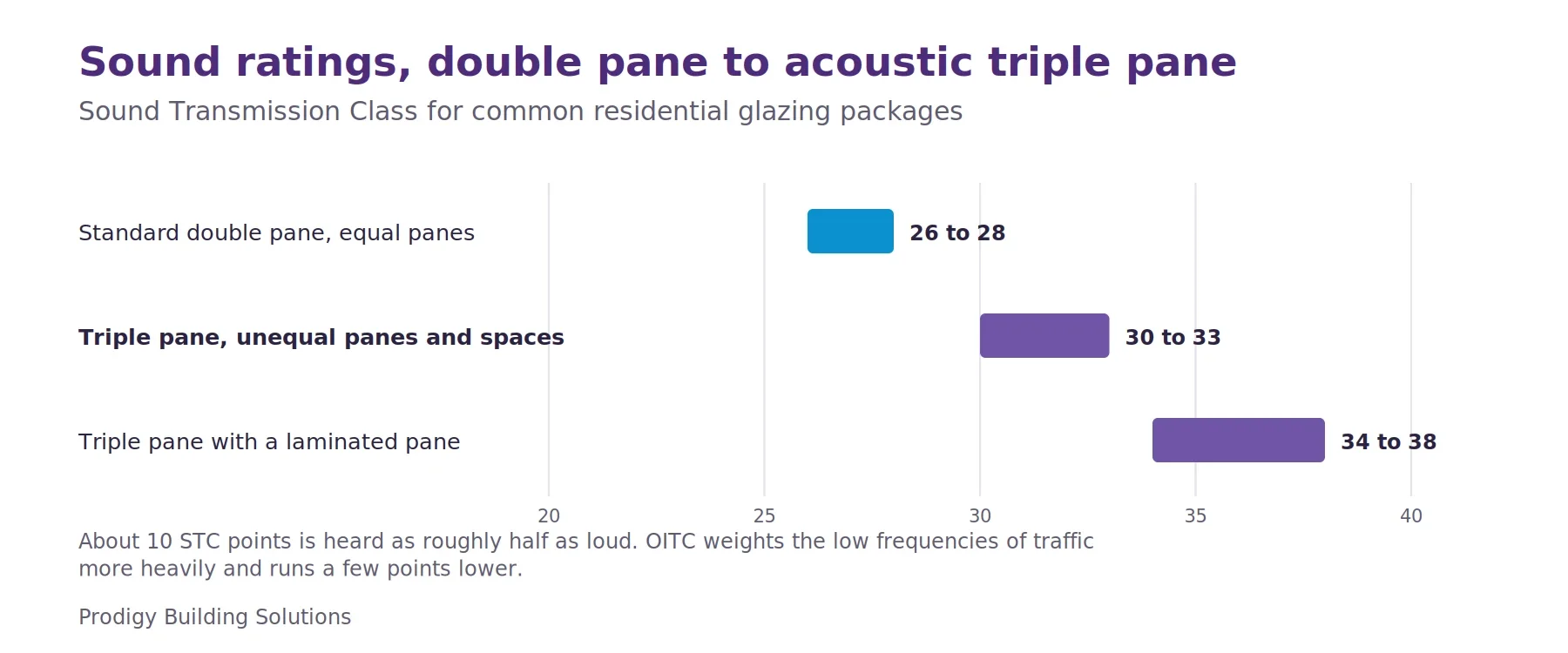
Figure 1 — Asymmetry and mass are what move the rating, and ten points is roughly half the loudness.
The ratings make the difference visible. Windows are rated by Sound Transmission Class, and the outdoor-indoor version, OITC, weights the low frequencies of traffic more heavily. A conventional double-pane window with two equal panes lands around STC 26 to 28. A triple-pane unit with unequal panes and unequal air spaces reaches the low 30s, and adding a laminated pane pushes into the mid to high 30s. Each 10 points of STC is heard as roughly a halving of loudness, so the step from a standard double-pane to a well-built acoustic triple-pane is a change anyone can hear the first evening.
Then the frame and the installation, which is where the disappointment usually happens. Sound travels where air travels. A continuous unsealed gap between a window frame and the rough opening lets sound straight past the glass, and no glass package recovers from it — you can spend a great deal on triple-pane units and hear the same street you always did if the perimeter is packed with whatever came to hand. It means sealing the full perimeter properly, and it means the unit itself closing tight, on compression seals that squeeze when the lock is thrown rather than a sash that merely arrives at the frame. Triple-pane glass is also heavier than double, which puts a real load on hinges, balances and the frame itself over years of use, so the hardware and the frame construction matter alongside the glass.
The point for your own house: if quiet is the reason you are replacing windows, say so at the start rather than at the end. It changes which unit gets quoted — thicknesses, air space widths, whether laminated glass belongs in the package — and it changes what a good installation means. It is also worth deciding room by room. The side of a house that faces the road and the side that faces the garden rarely have the same problem, and there is no sense paying to solve the one you do not have.