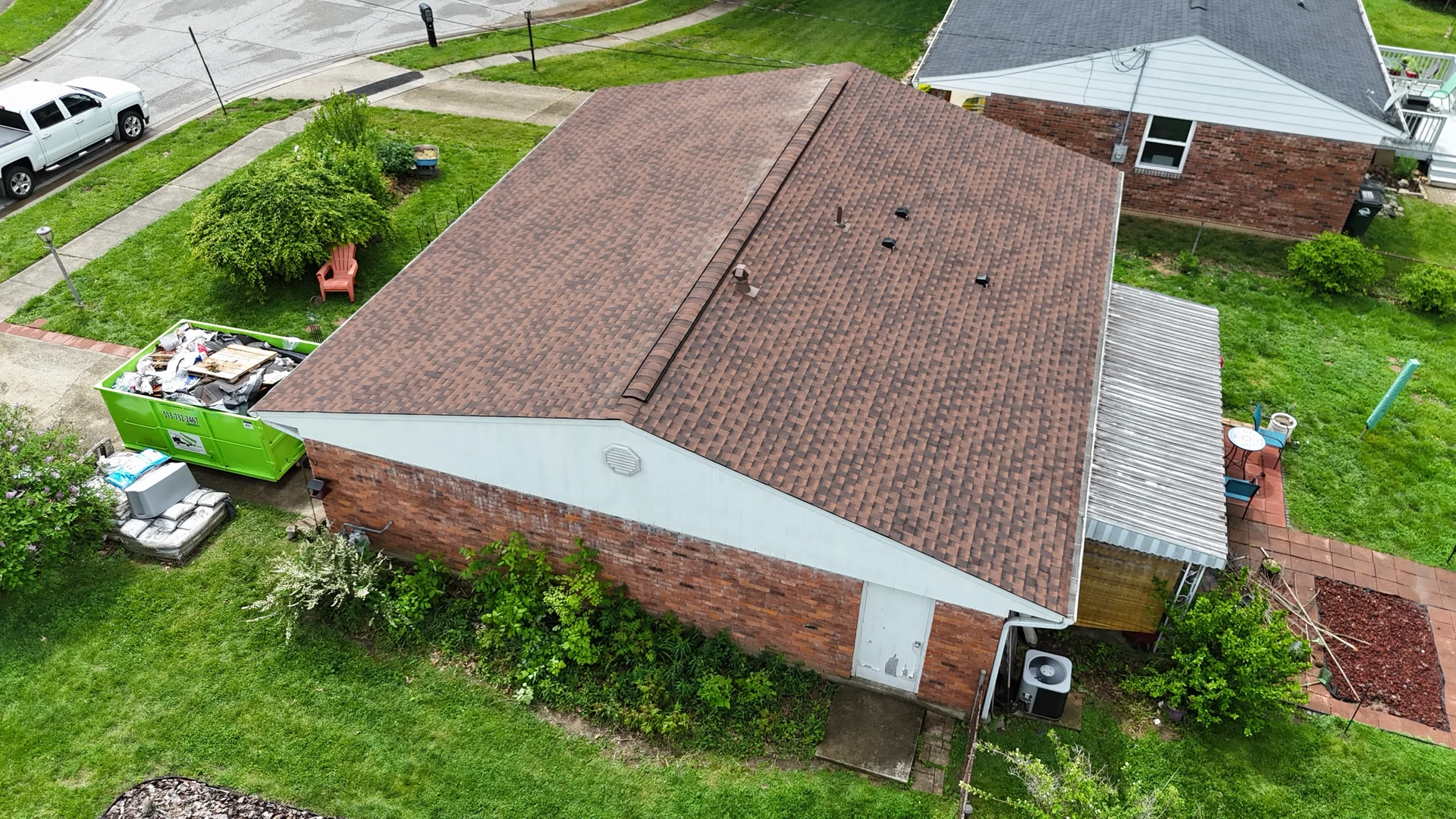
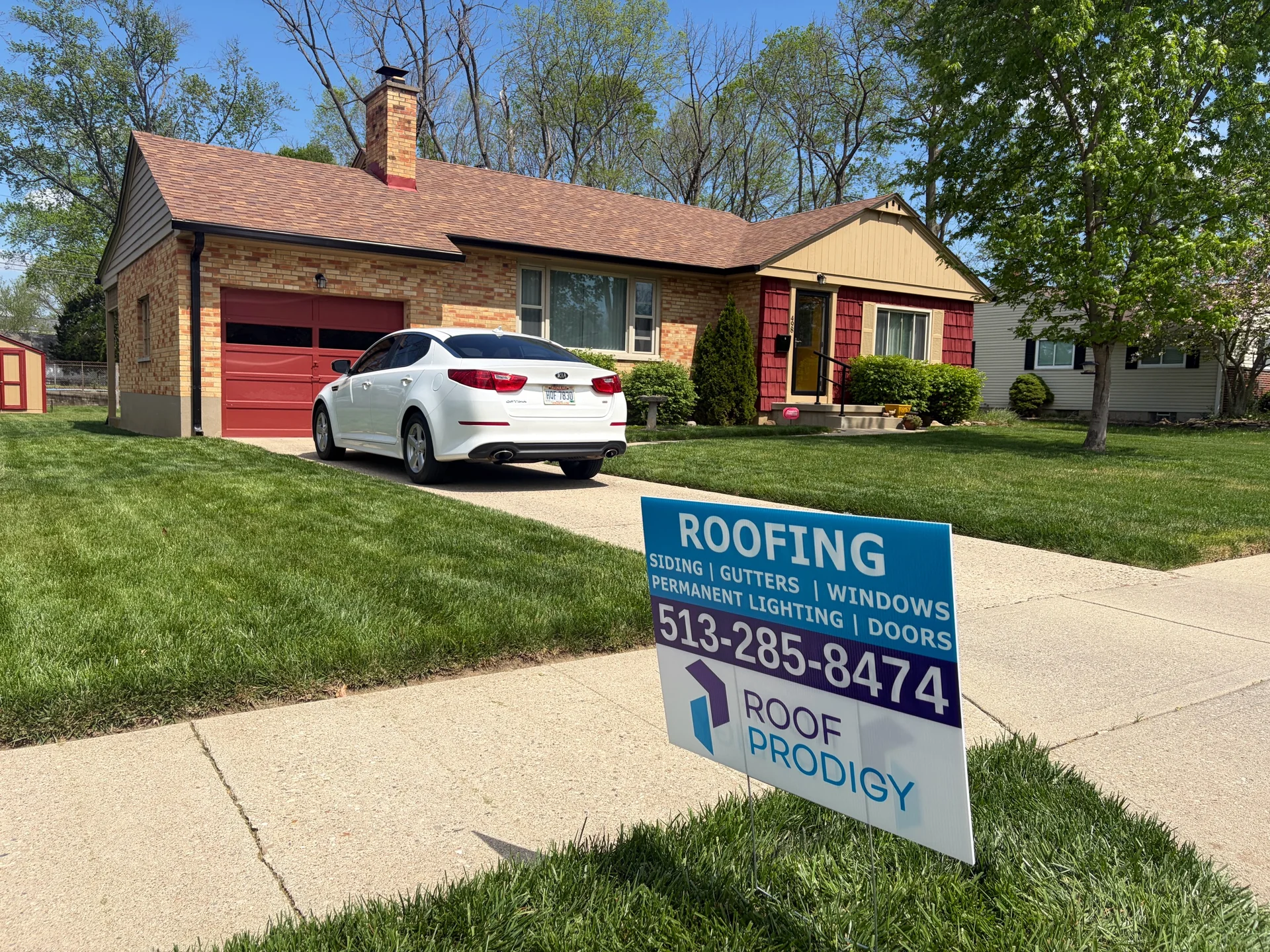
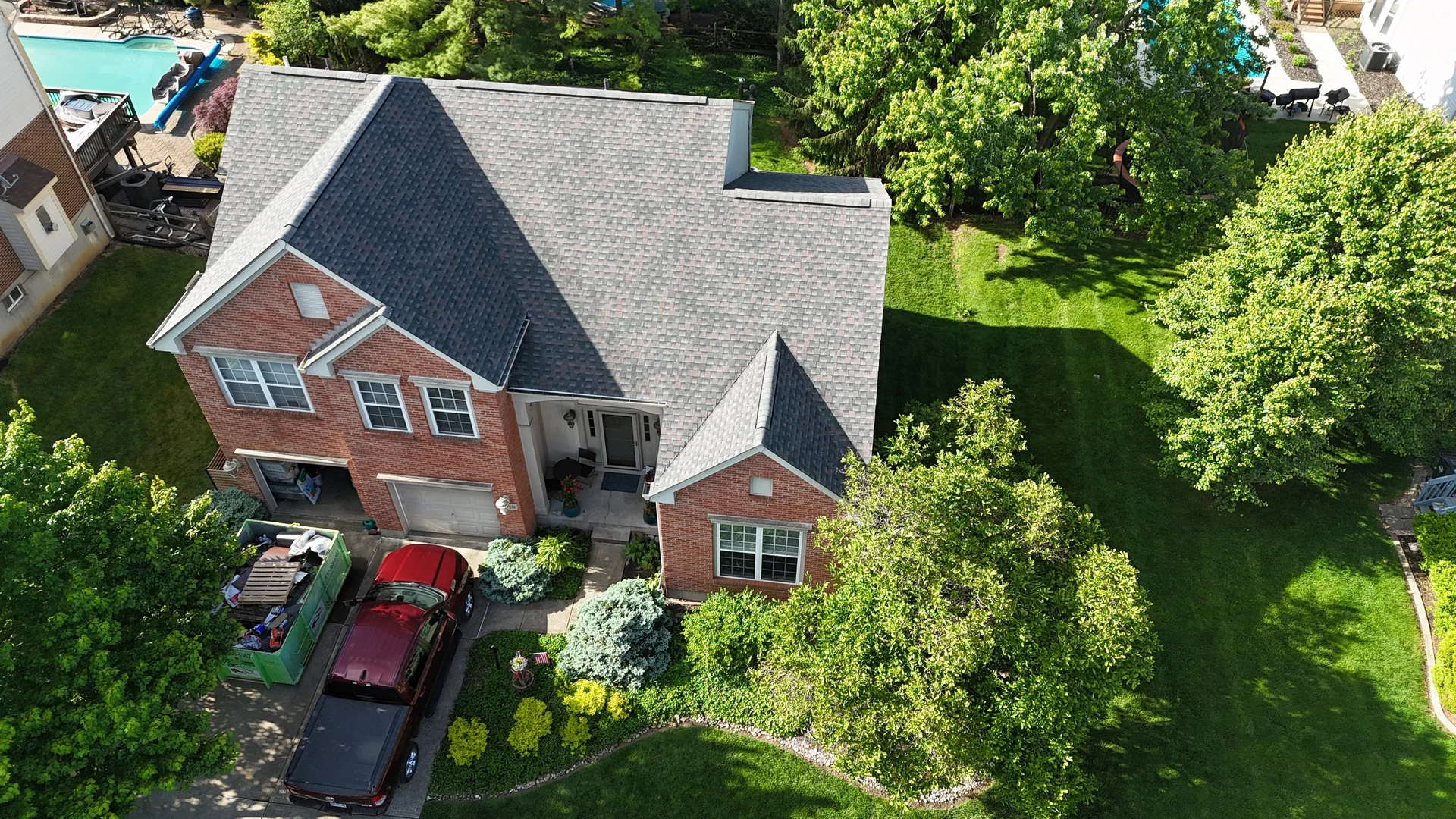
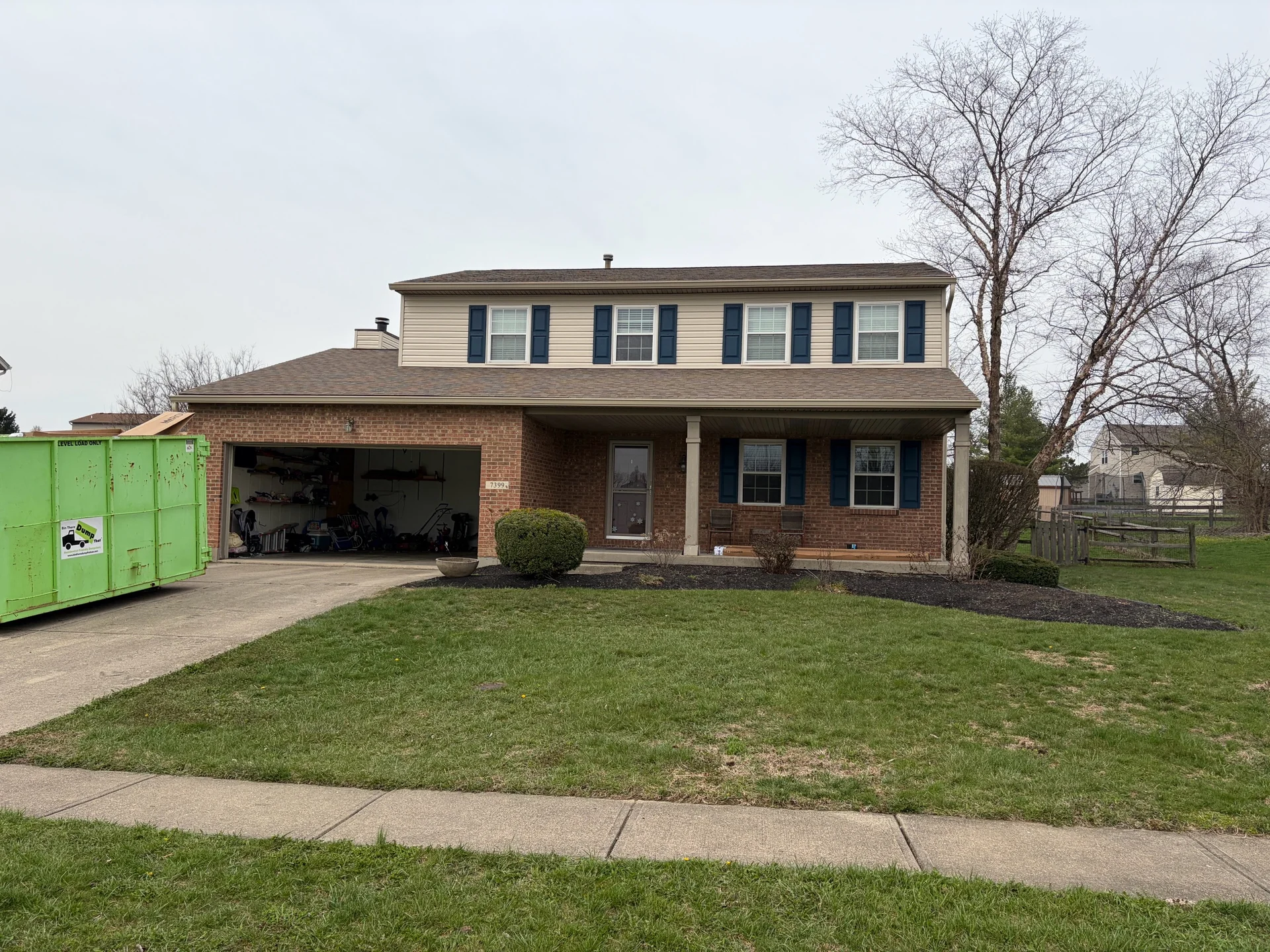
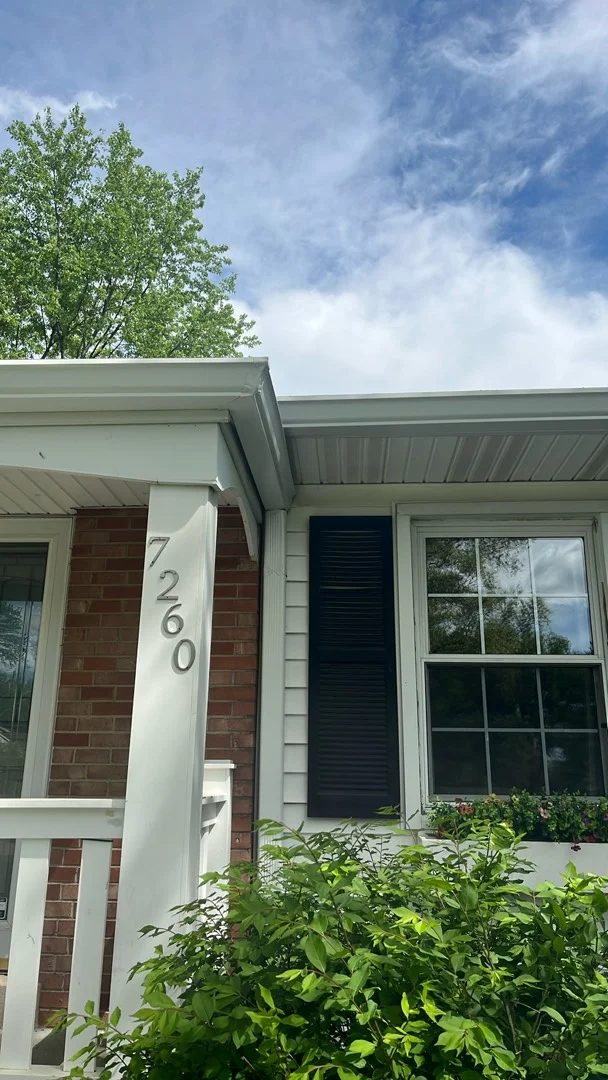
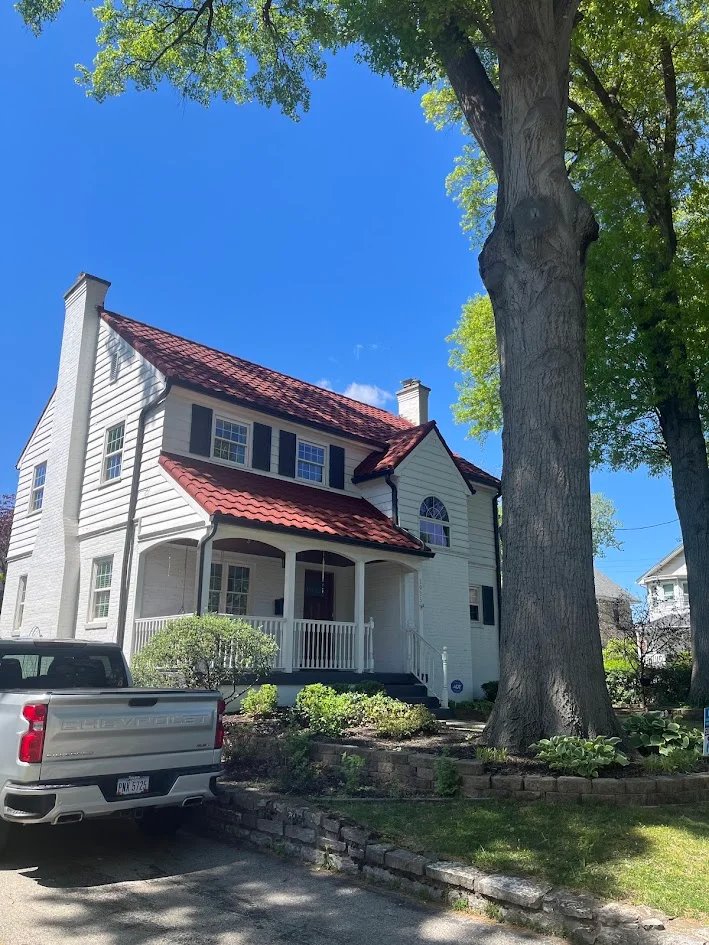
One storm took siding off the walls and shingles off the roof of this Hebron house in the same afternoon. That combination is common in Northern Kentucky and it is awkward, because a single weather event turns into two trades — and left alone, two trades usually become two projects a year or more apart.
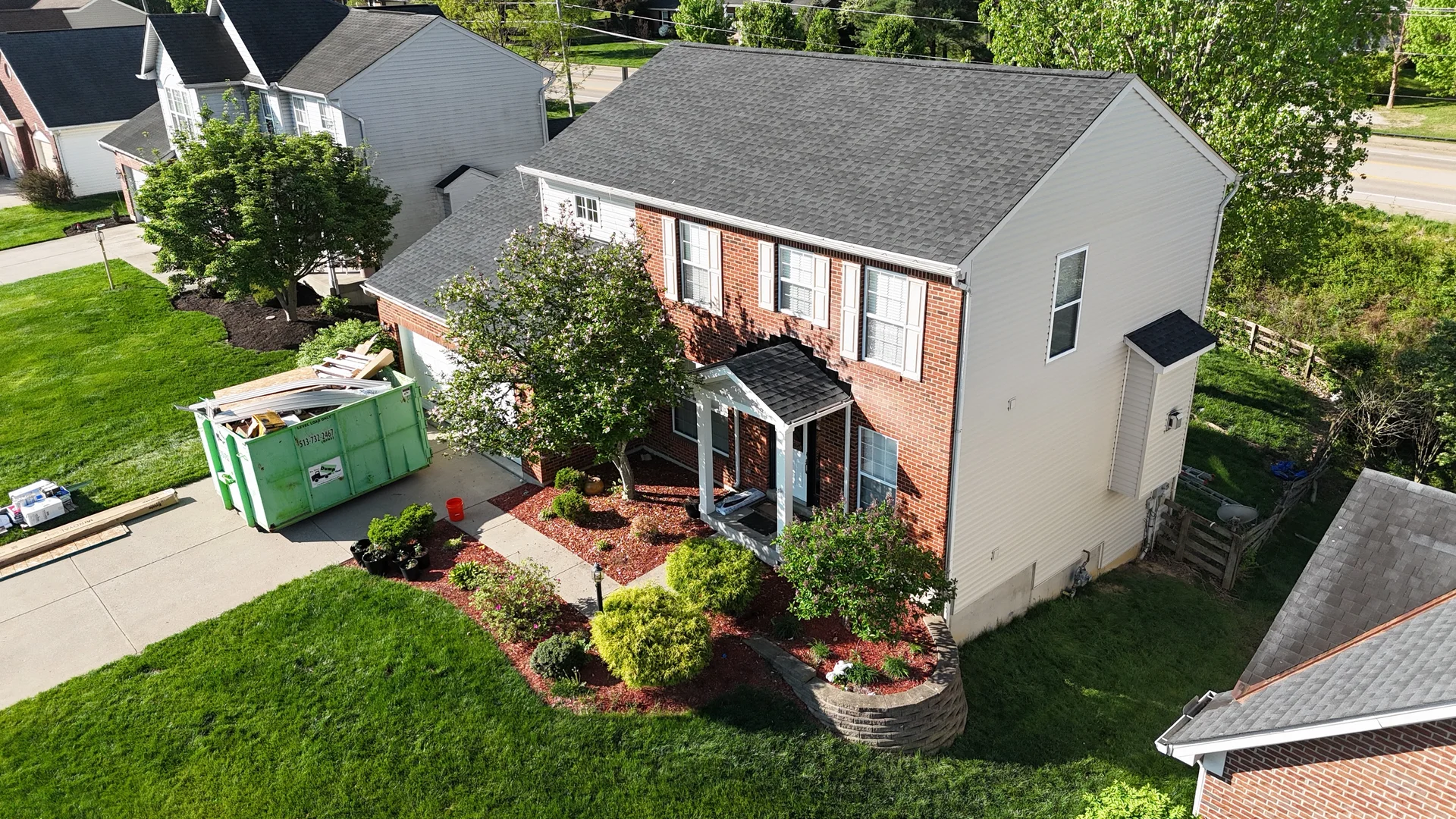
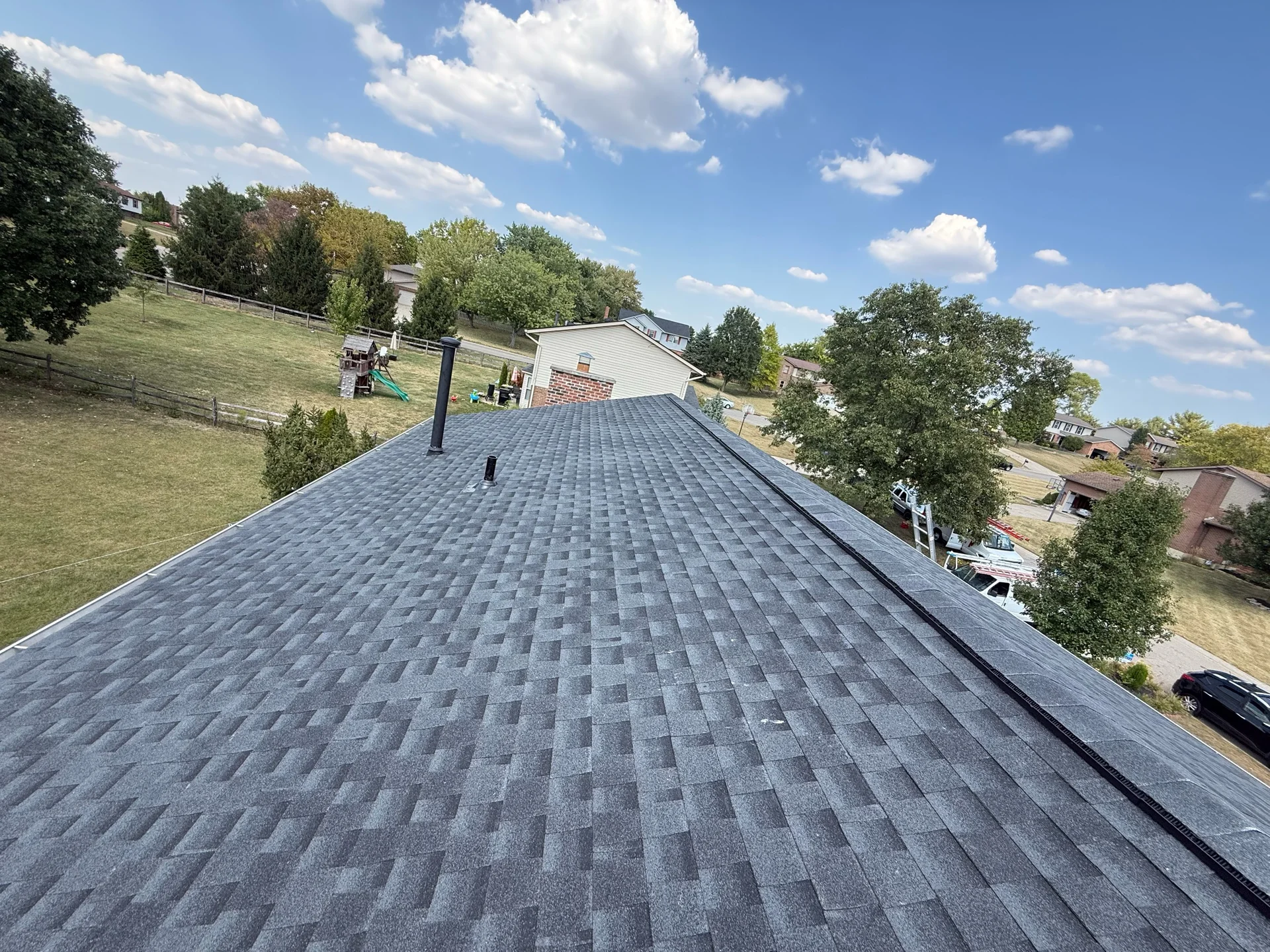
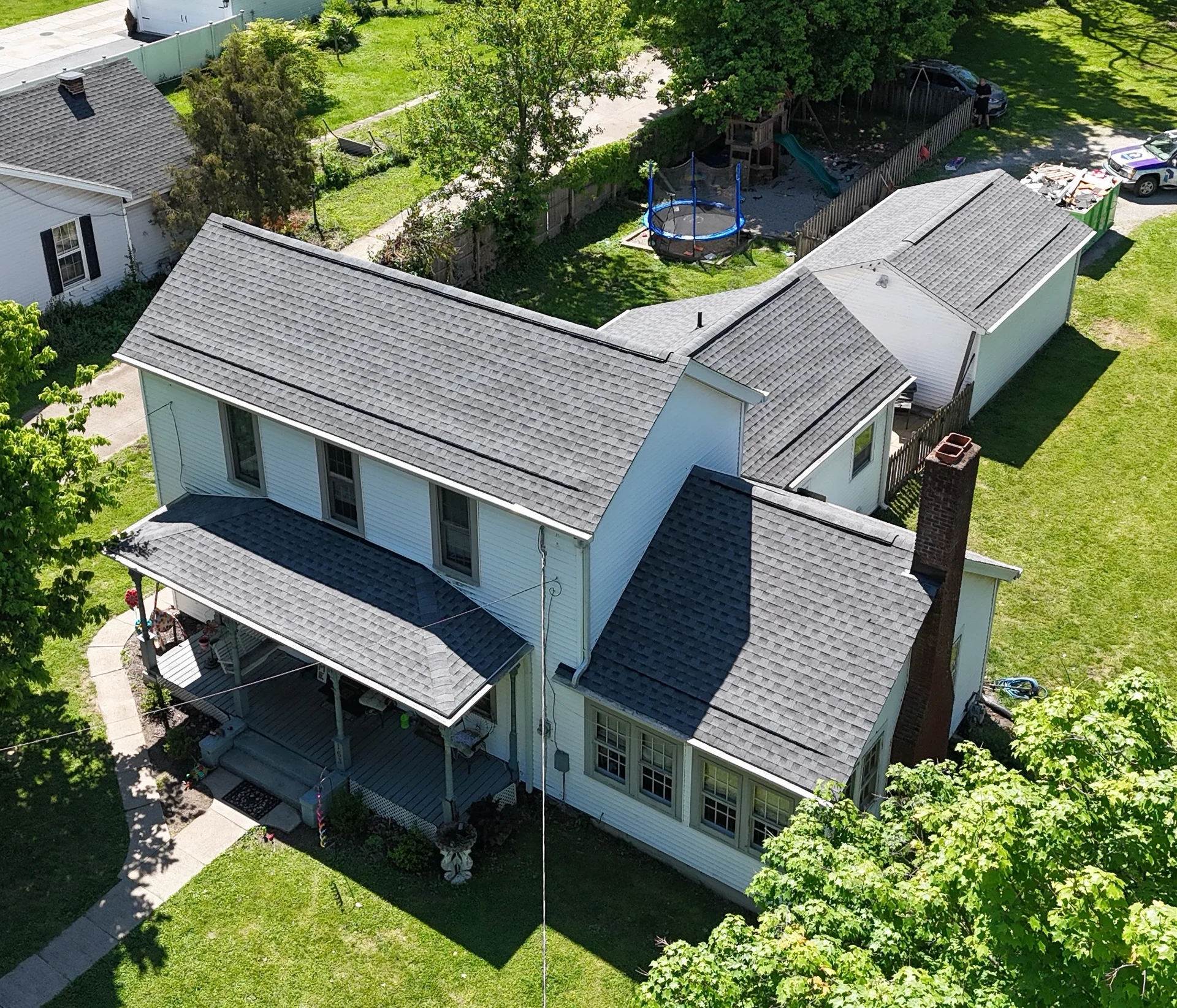
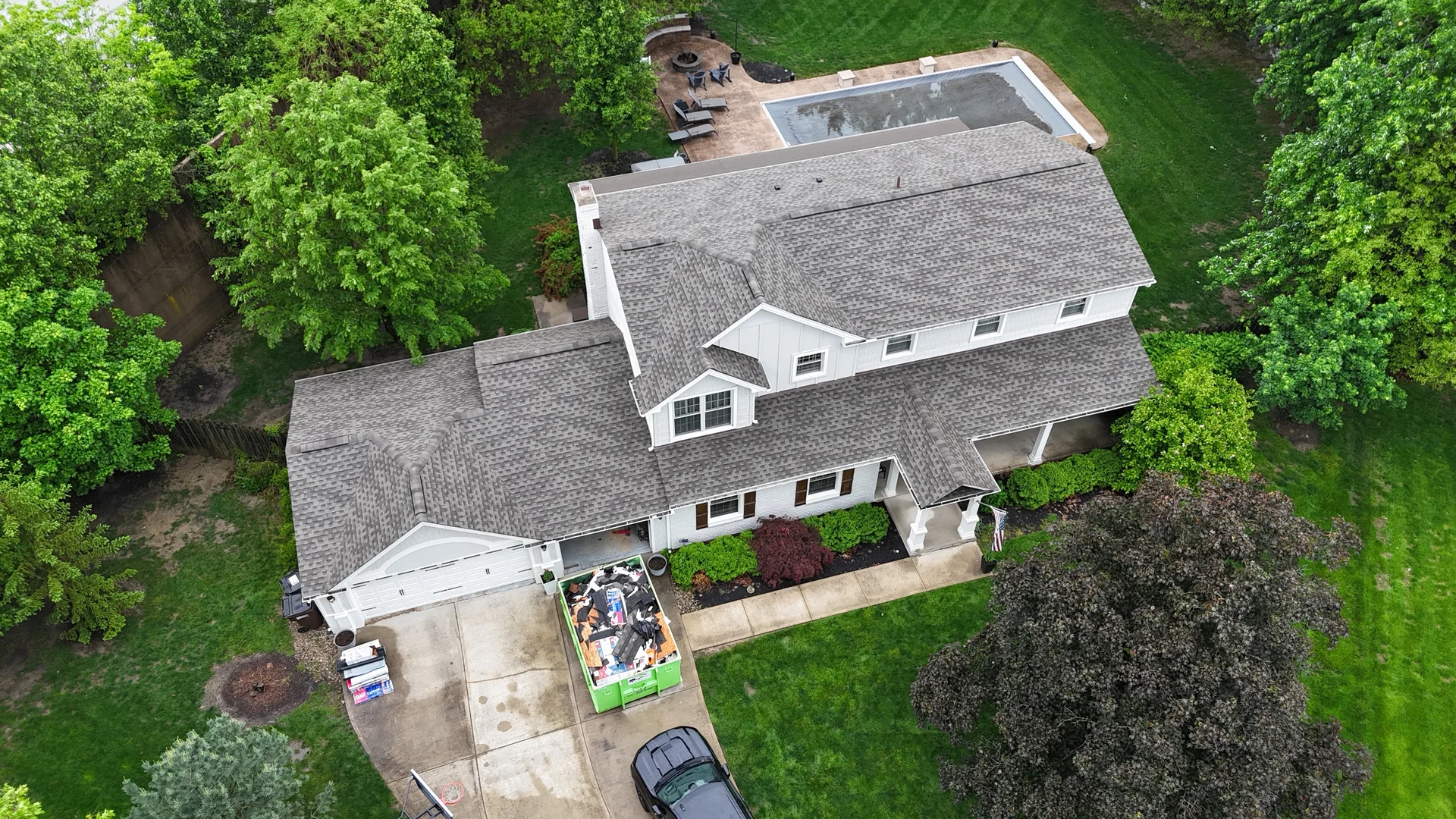
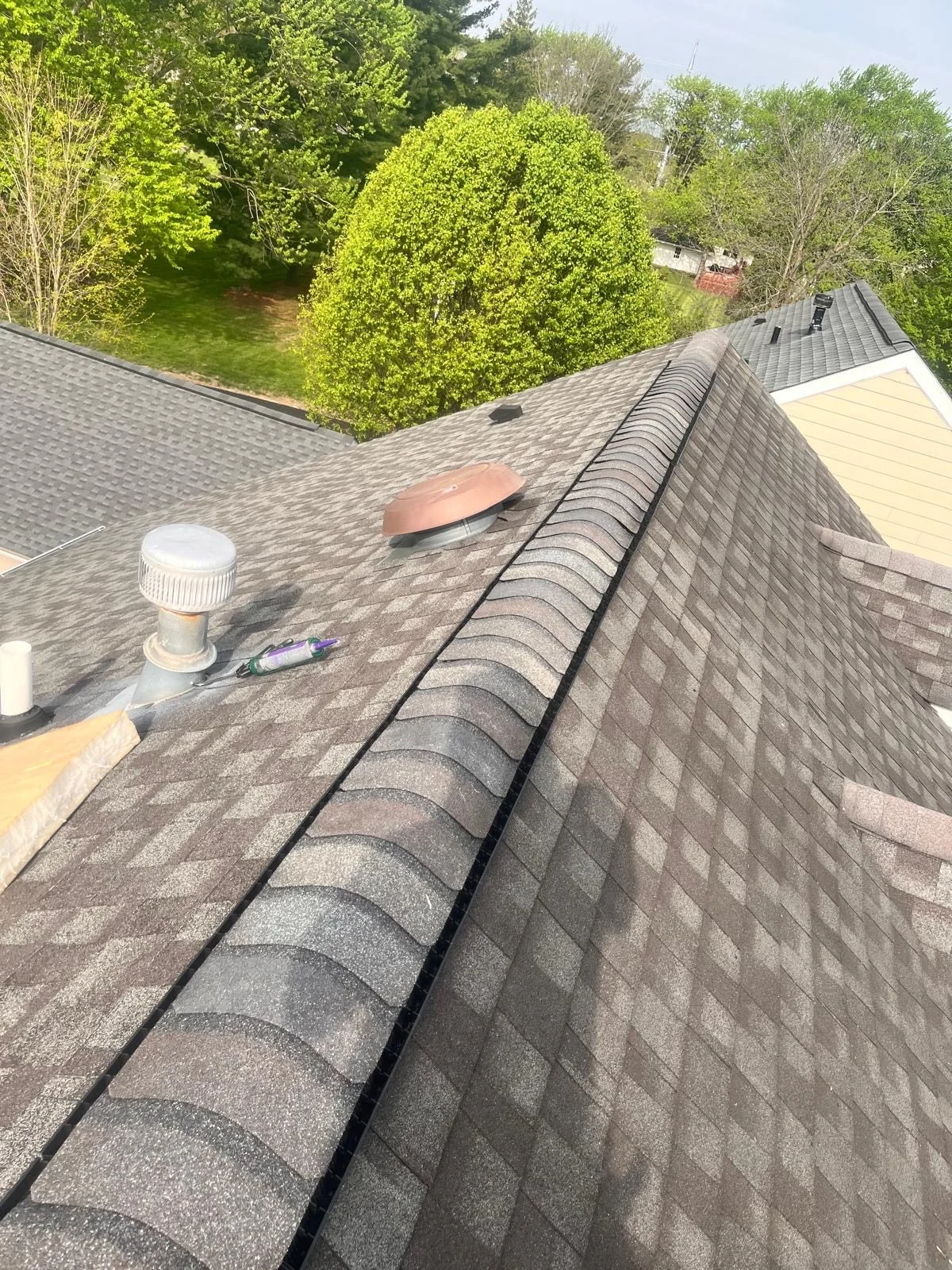
The carrier approved the home for full replacement, and it was run as one job instead. The roof went back in GAF Charcoal and the walls in Sand dutch lap, and the two were chosen against each other rather than one being picked later to live with whatever was already up there. The aerial photograph shows it best: light warm walls under a dark roof, the dumpster in the drive, both trades on site at once.
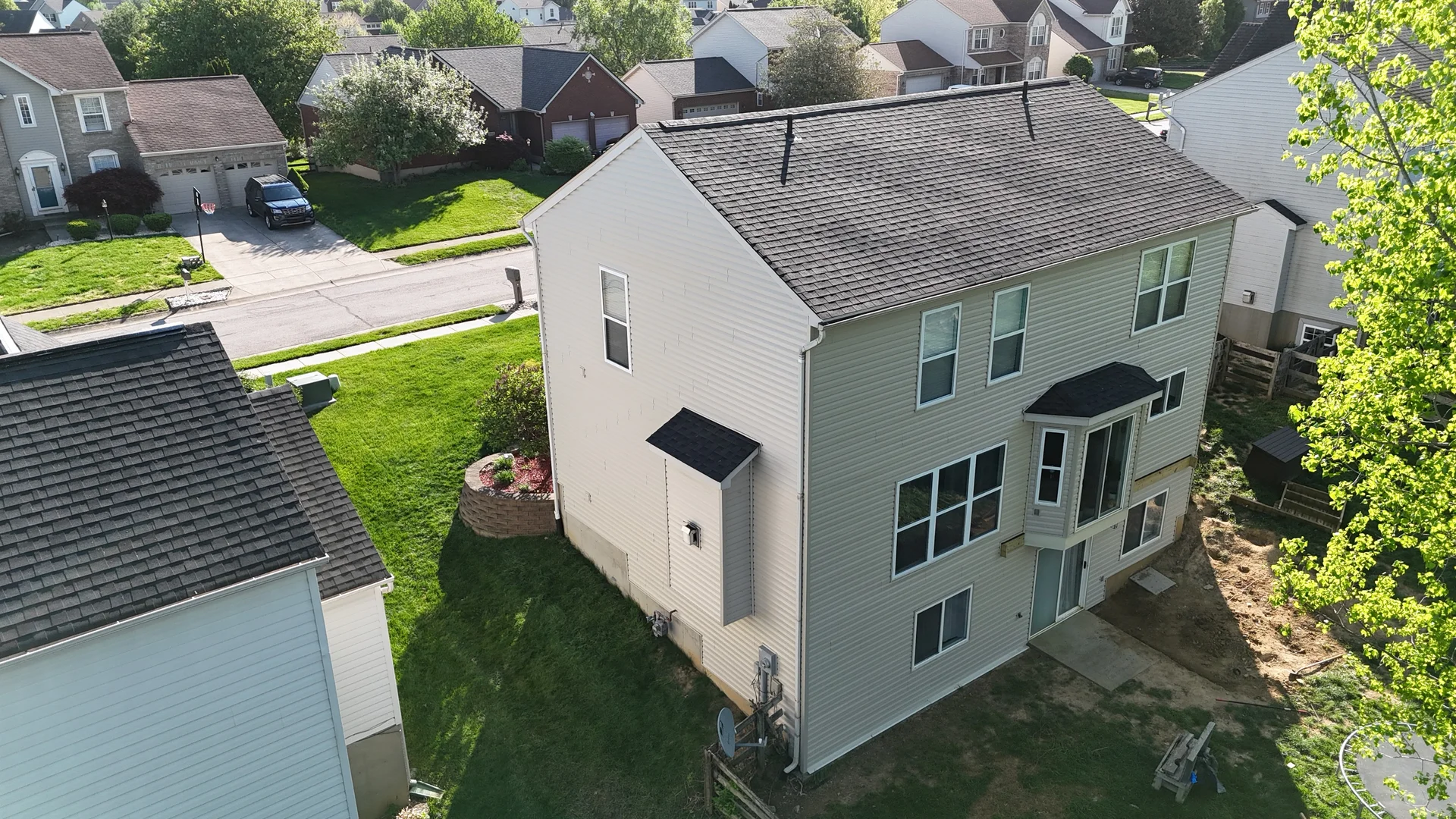
Dutch lap is the profile with the stepped shadow line along the top of each course, which is why it carries a gable end and a bay window without going flat. The house is closed up now, wall and roof finished at the same time and to each other, and ready for the next one of these.
One storm took siding off the walls and shingles off the roof of this Hebron house in the same afternoon. That combination is common in Northern Kentucky and it is awkward, because a single weather event turns into two trades — and left alone, two trades usually become two projects a year or more apart.
The carrier approved the home for full replacement, and it was run as one job instead. The roof went back in GAF Charcoal and the walls in Sand dutch lap, and the two were chosen against each other rather than one being picked later to live with whatever was already up there. The aerial photograph shows it best: light warm walls under a dark roof, the dumpster in the drive, both trades on site at once.
Dutch lap is the profile with the stepped shadow line along the top of each course, which is why it carries a gable end and a bay window without going flat. The house is closed up now, wall and roof finished at the same time and to each other, and ready for the next one of these.
Technical Discussion
One storm, two trades
Insurance thinks in line items. A storm that hits a roof and a wall produces a roof scope and a siding scope, sometimes measured by different people on different days, and the money arrives looking like two separate pots. It is a short step from there to doing the roof now because it is the urgent one, and getting to the siding next spring. There are two good reasons not to, and only one of them is about scheduling.
The first is the seam. Roofing and siding are not two independent surfaces that happen to be on the same house — they overlap, in specific places, in a specific order. At a rake, at a bay roof, anywhere a roof plane dies into a wall, there is step flashing that has to go behind the siding and on top of the roofing, course by course, with a kickout at the bottom of the run to throw water into the gutter instead of down inside the wall. That is a layered detail. It only works if it is built in one direction, from the bottom up, by people who are both there.
Split the job across a year and somebody is always working around finished work. A siding crew arriving after the roof is done either cuts to the shingle line and seals the joint, or lifts roofing it has no business lifting. A roofing crew arriving after new siding is up is asked to slide flashing behind panels that are already locked and trimmed. Neither is fatal on the day. Both produce a joint that depends on sealant rather than on lapping, which is the joint that shows up as a stain on a bedroom ceiling in about six years. Running them together means the wall gets closed up while the roof edge is still open, the flashing goes in the right order, and nobody has to reverse-engineer anything.
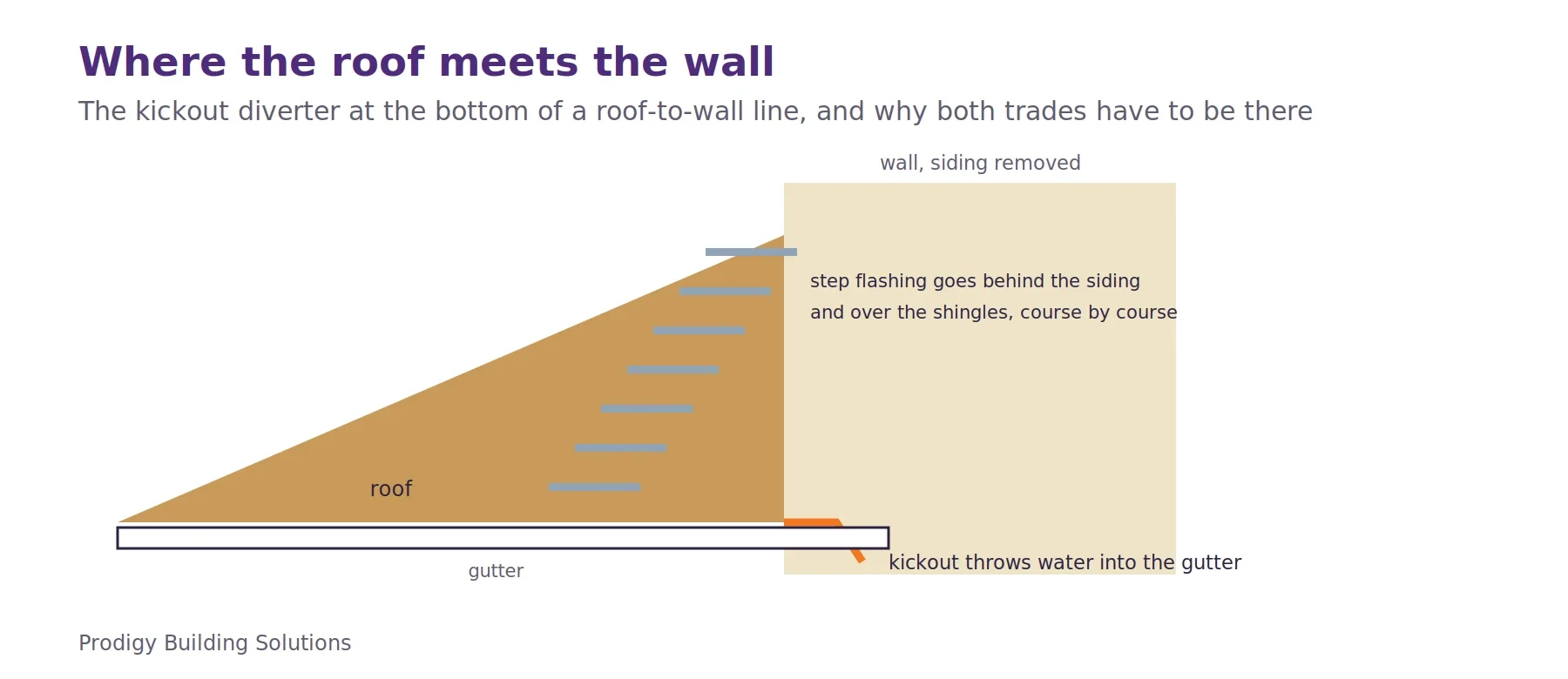
Figure 1 — The kickout only exists if the roofer and the siding crew build the joint together.
The piece that only works when both trades are present is the kickout diverter. Where a roof edge ends against a wall, the last piece of step flashing is bent outward to throw water into the gutter instead of down the wall. Without it, the water that ran down the whole roof-to-wall line goes behind the siding at the one spot that receives the most of it. A kickout has to be set into the siding as the courses go up, so a siding crew arriving after the roof is finished can only cut around it or leave it out.
The second reason is the color, and it is the one homeowners feel every day afterwards. Charcoal is a dark, effectively neutral gray, and that is exactly why it is such a common roof answer — it will sit under most things without arguing. But 'will not clash' and 'was chosen to go together' are different standards. Sand is a warm light neutral, and putting it under charcoal gives you a bright wall with a deliberate dark cap on it: enough contrast that the roof reads as a decision rather than a leftover, without the two fighting each other the way a warm brown roof over a cool gray wall does.
Getting that right takes both samples in your hand at the same time, outdoors, in the same light. A shingle board looks one way in a showroom and another on a bright wall in the middle of the afternoon, and nobody can hold a color accurately in memory for twelve months. When the trades are a year apart, the second decision is always made against a remembered roof.
The practical benefits stack on top of that and are worth naming plainly: one dumpster, one mobilization, one set of ladders and lifts, one claim to document and supplement, one round of living with a crew in the driveway. If a storm hit your roof and your walls on the same day, the useful question is not which one to do first. It is whether they can be done as one project — and if the answer is yes, that is nearly always the better house at the end of it.