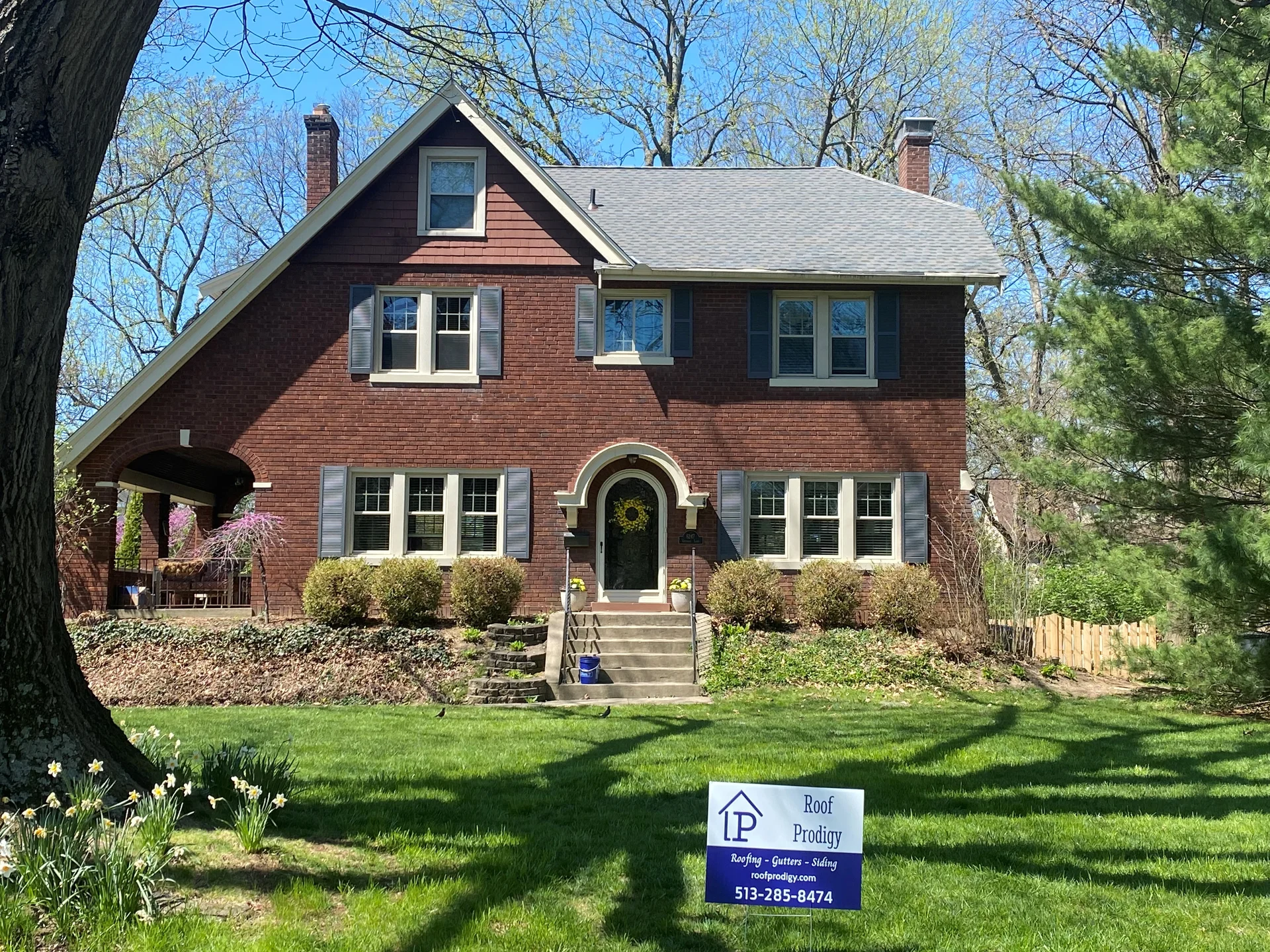
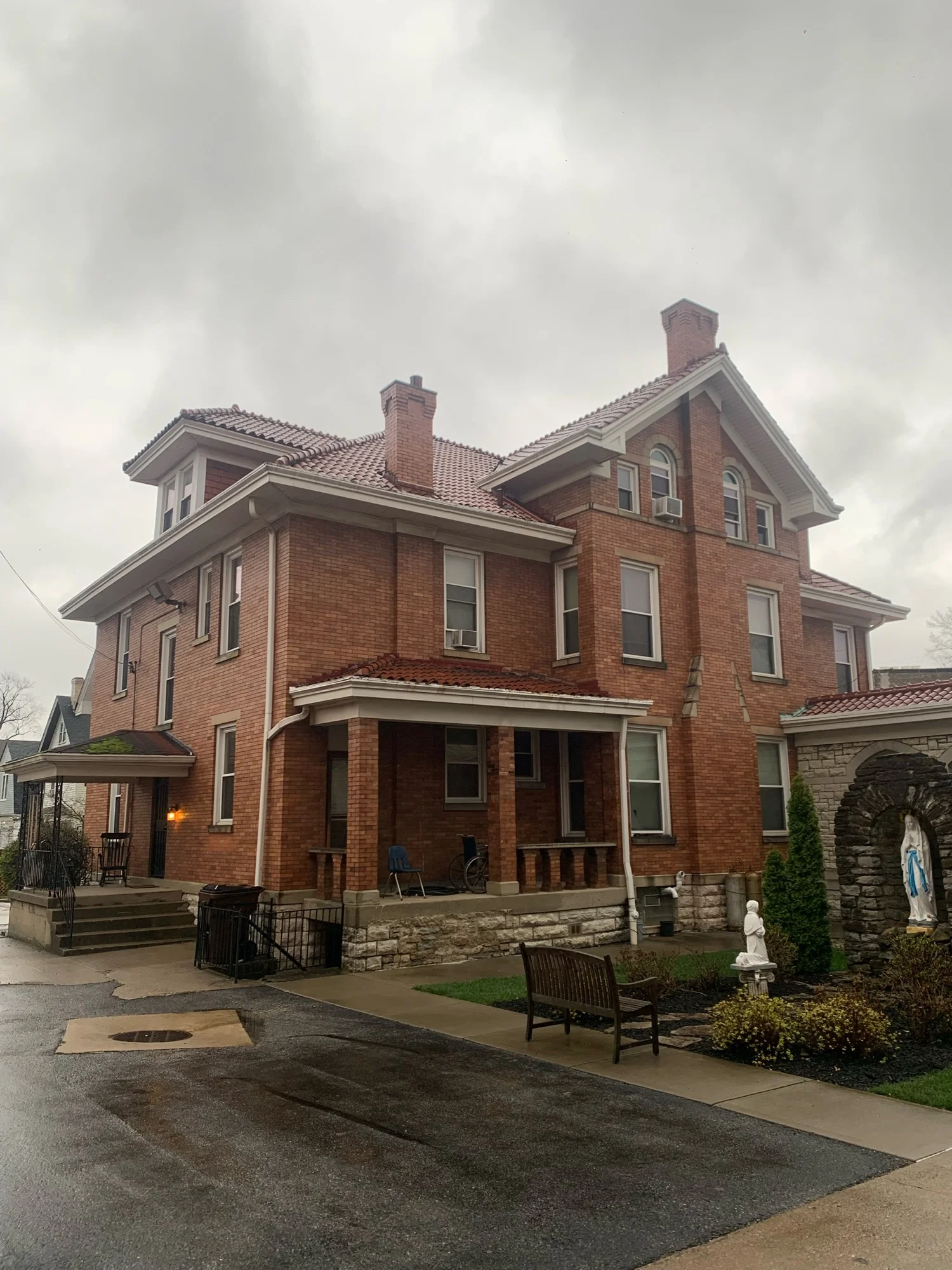
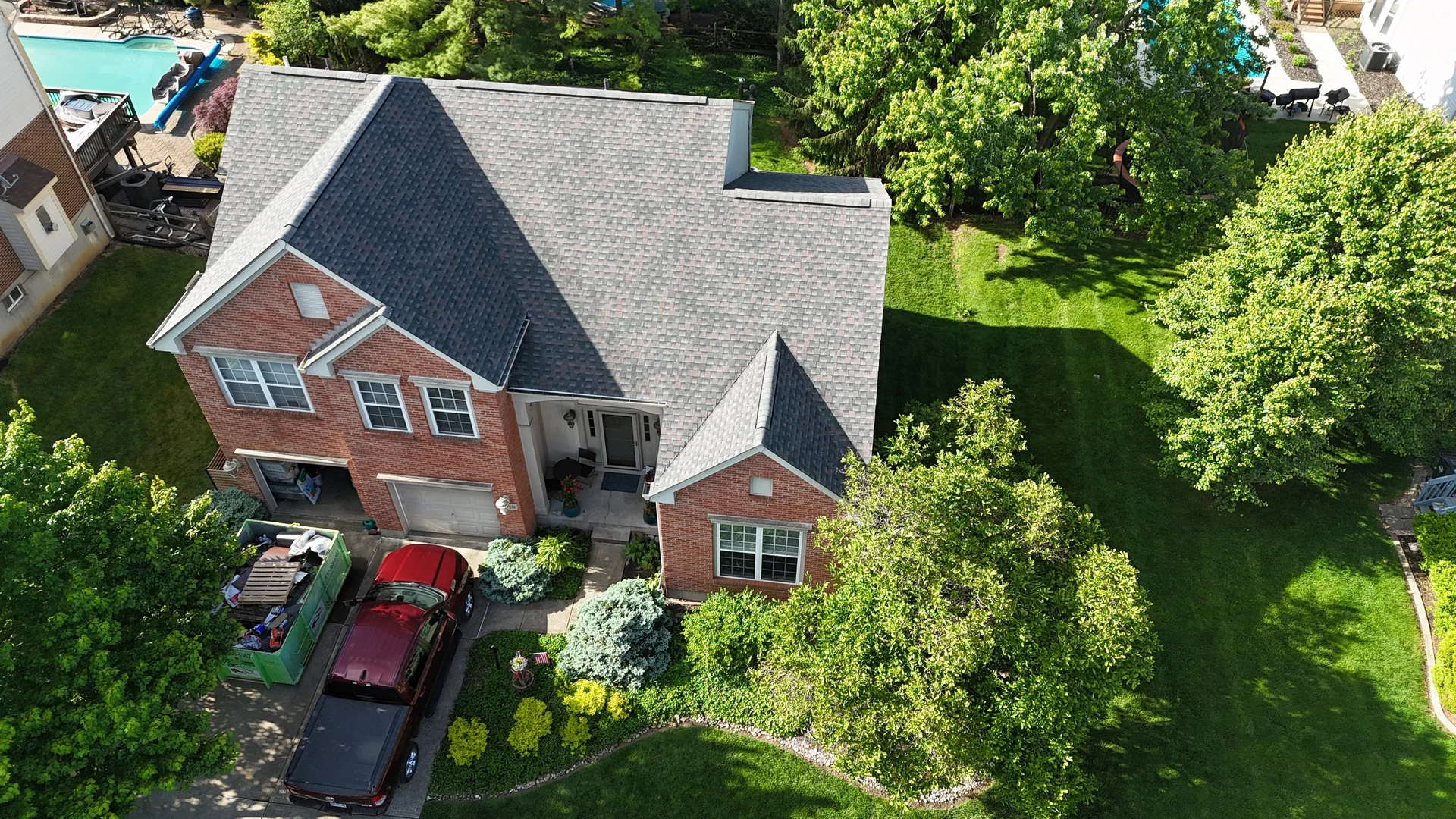
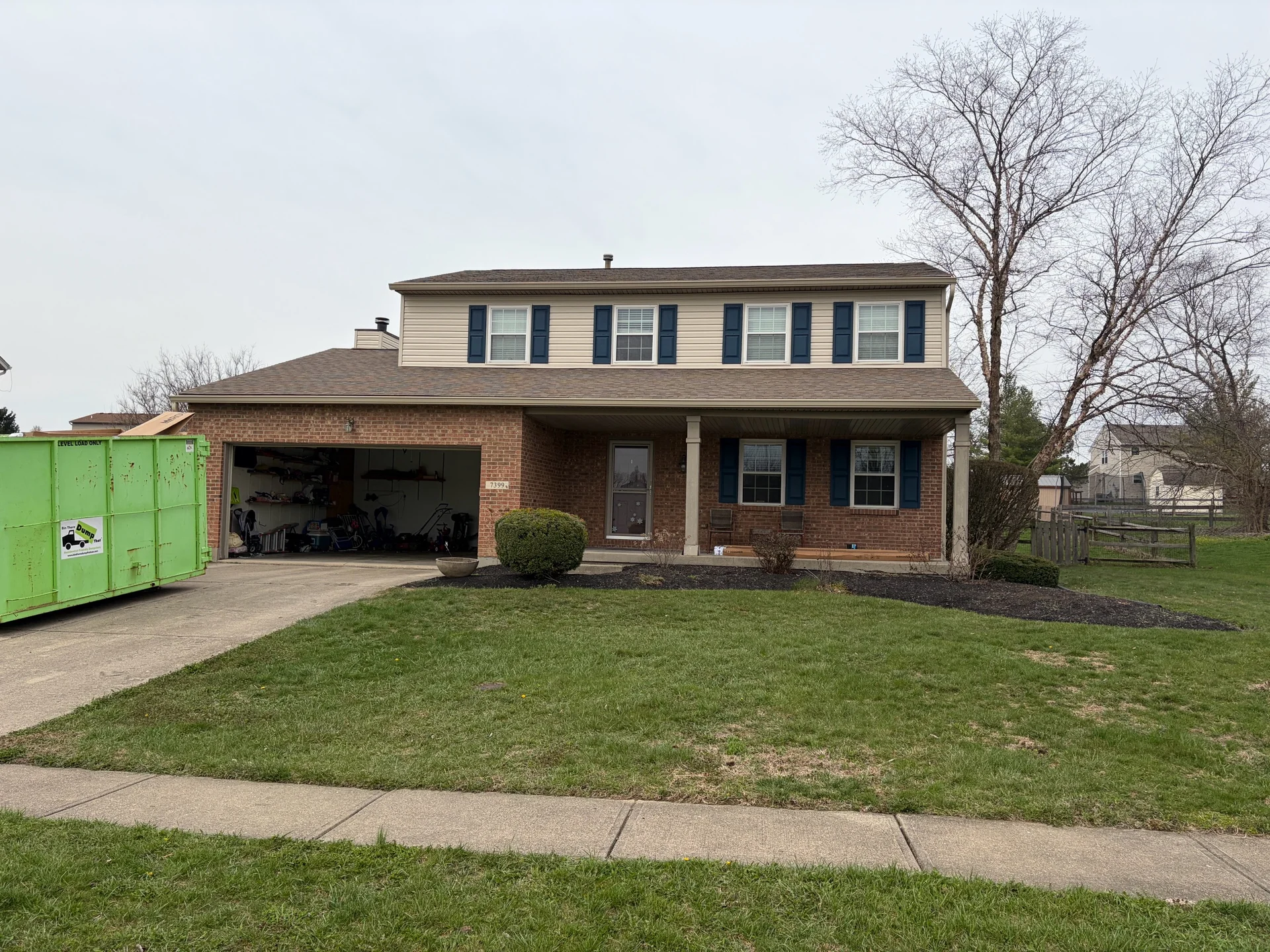
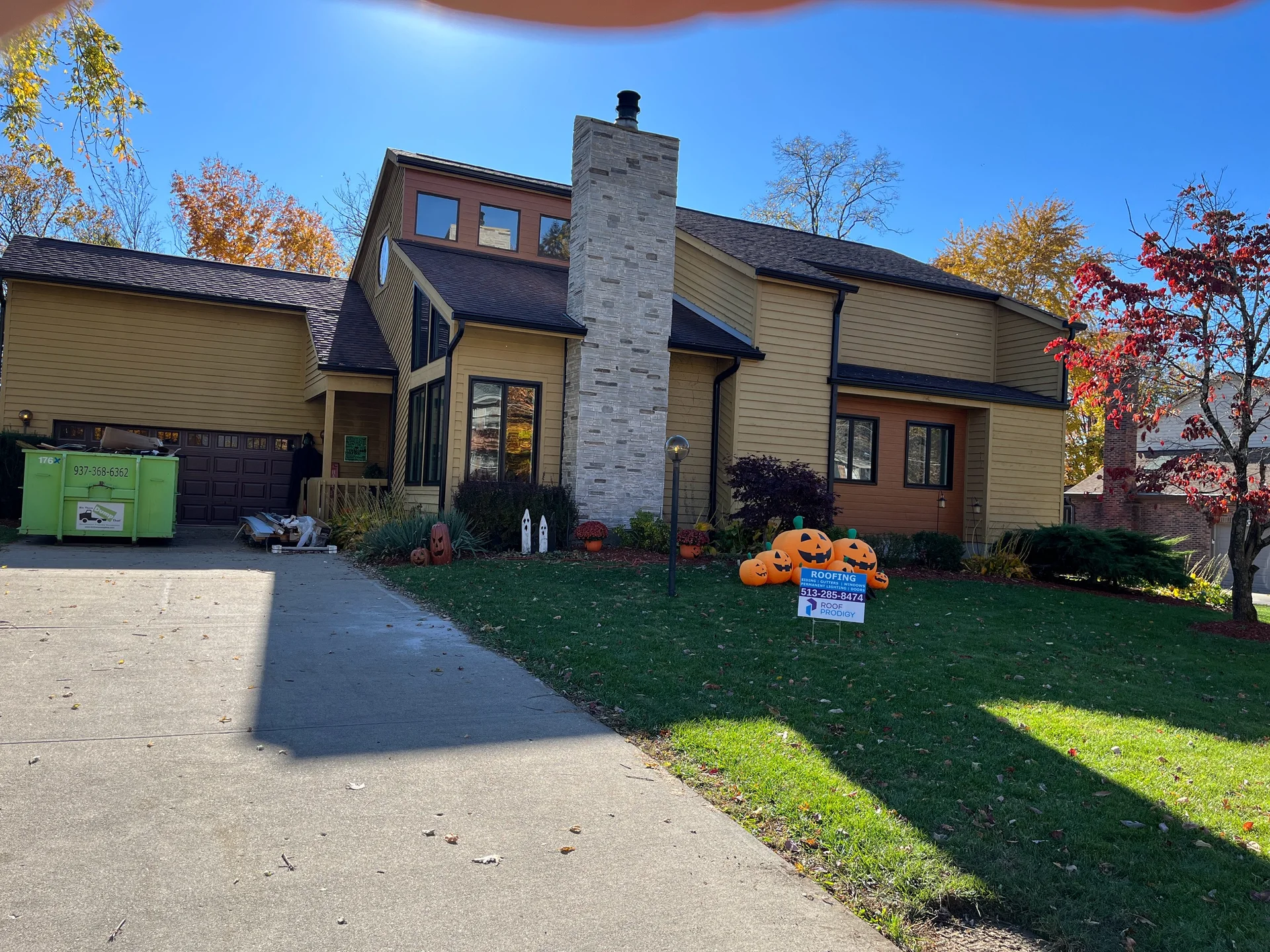
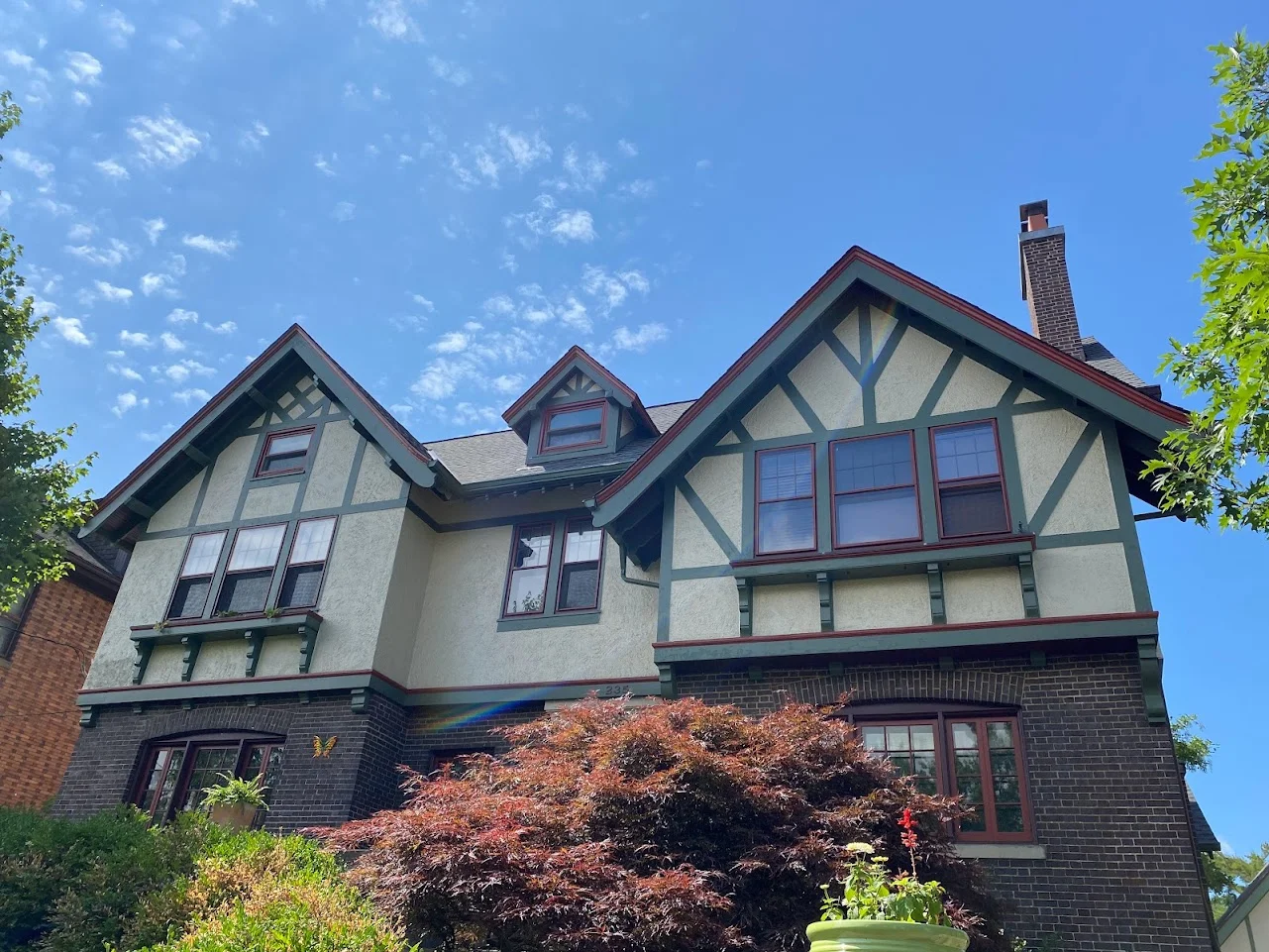
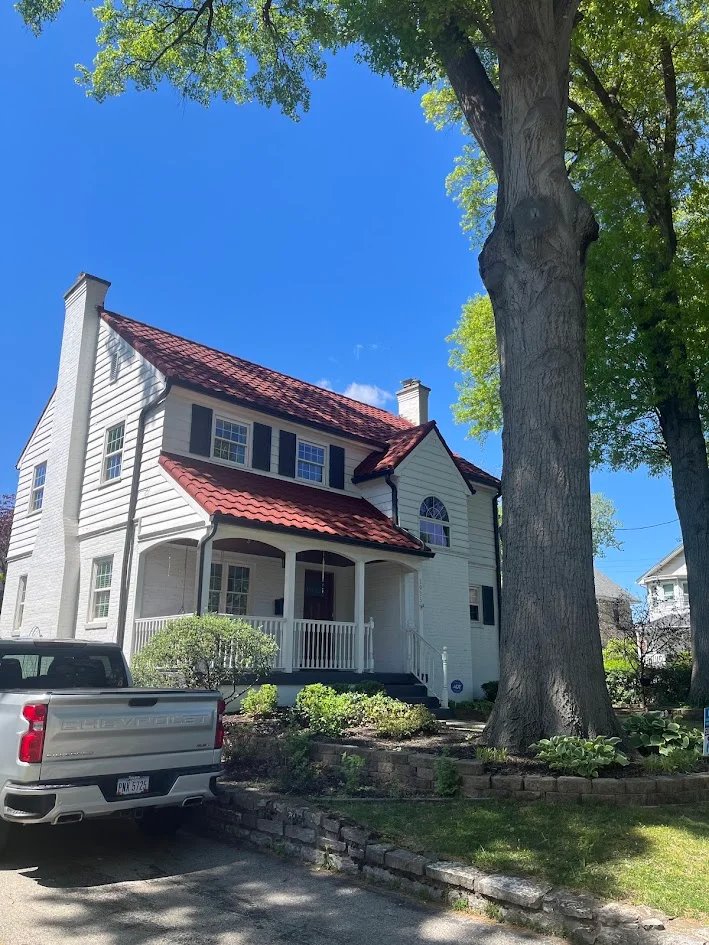
This Silverton house had a slate roof that had started losing tiles. A missing slate is simply a hole, and weather was getting into the house through them — which meant the roof had gone past the point where individual repairs were keeping up.
What the homeowner cared about was the look. Slate reads a particular way from the street, and the house had been wearing it a long time. Putting real slate back was not the right call for this building, for reasons that had more to do with the framing and the trade than with taste, so the work went a different way: keep the appearance, drop the weight and the wait.
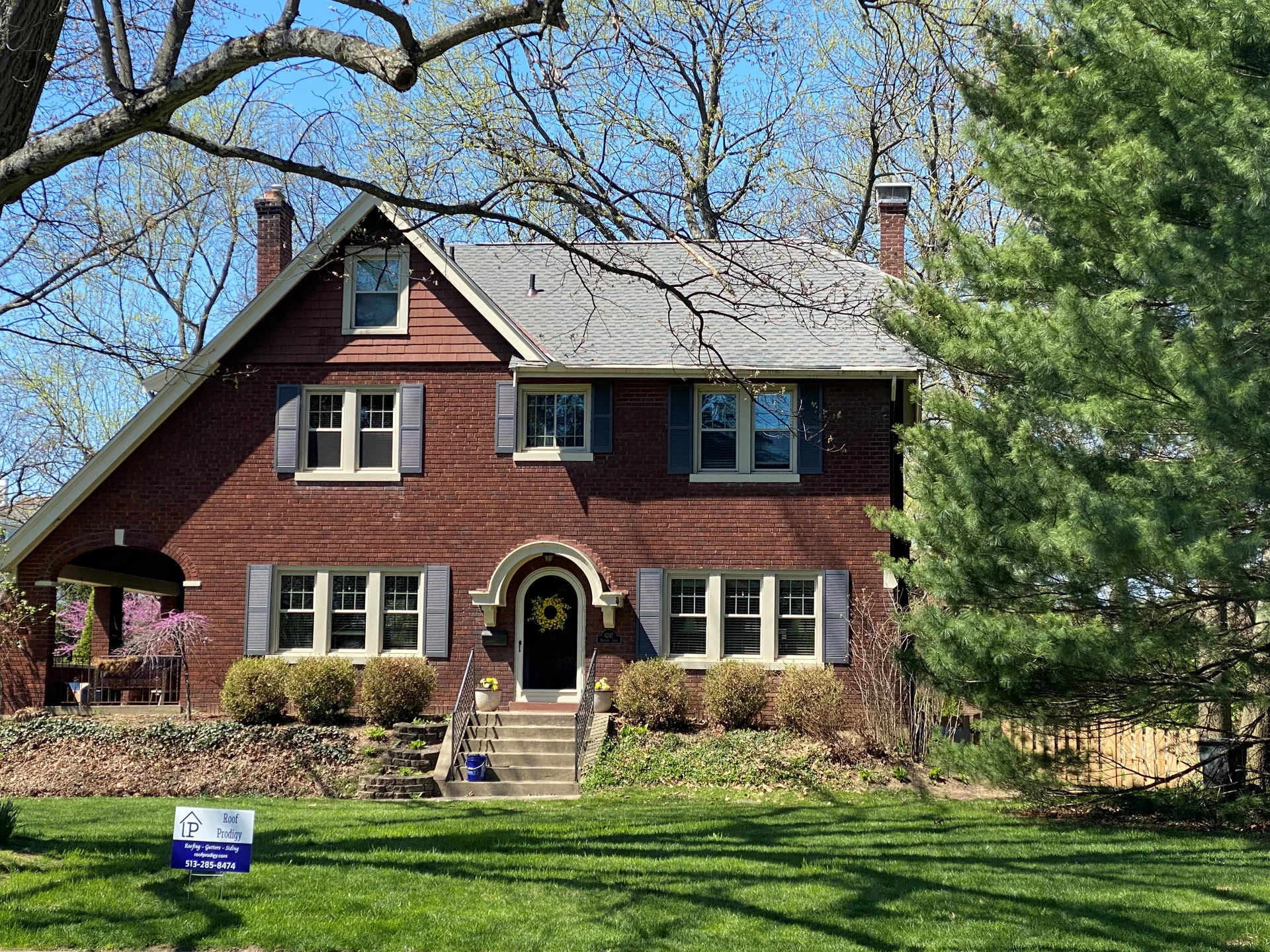
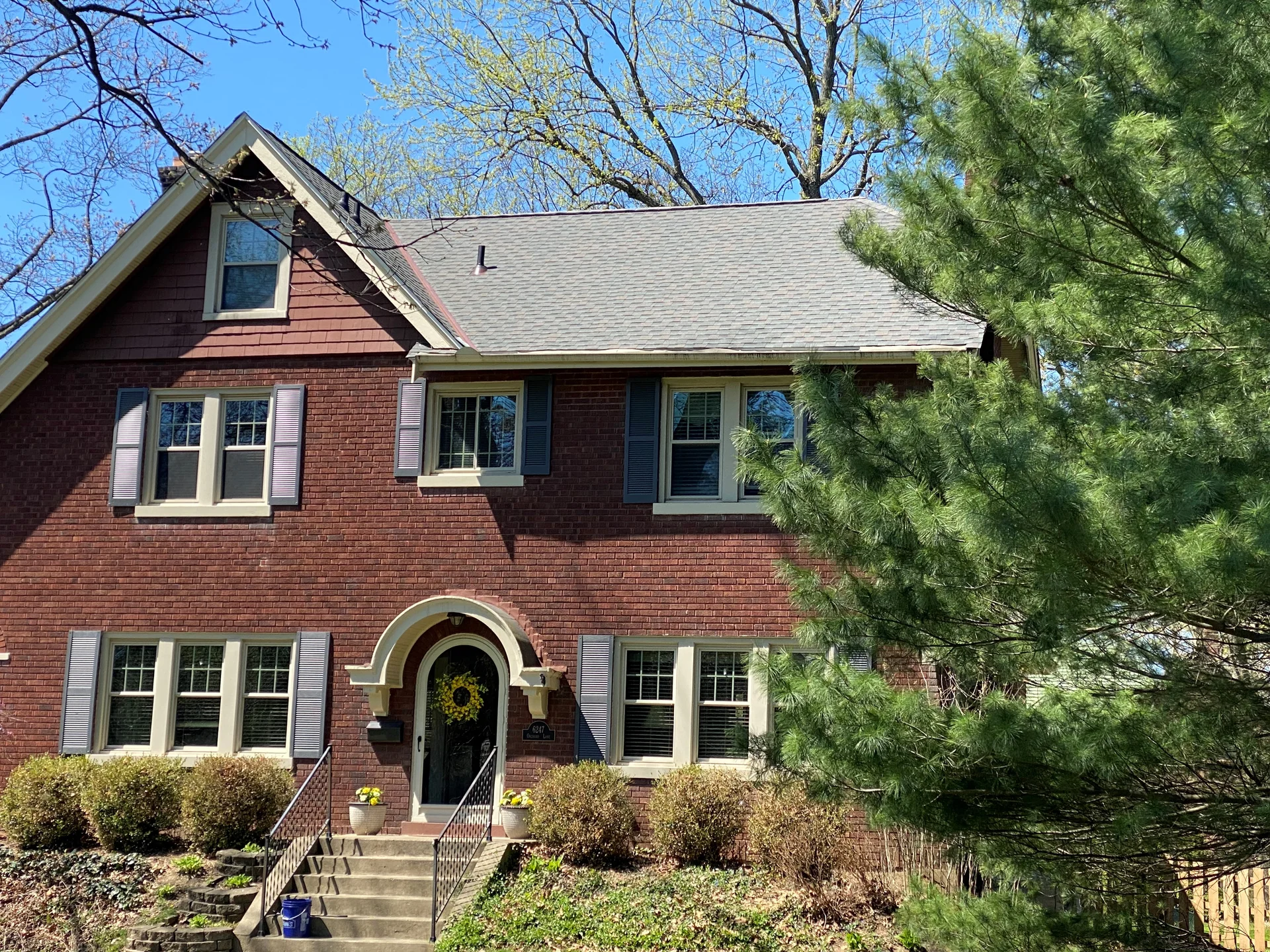
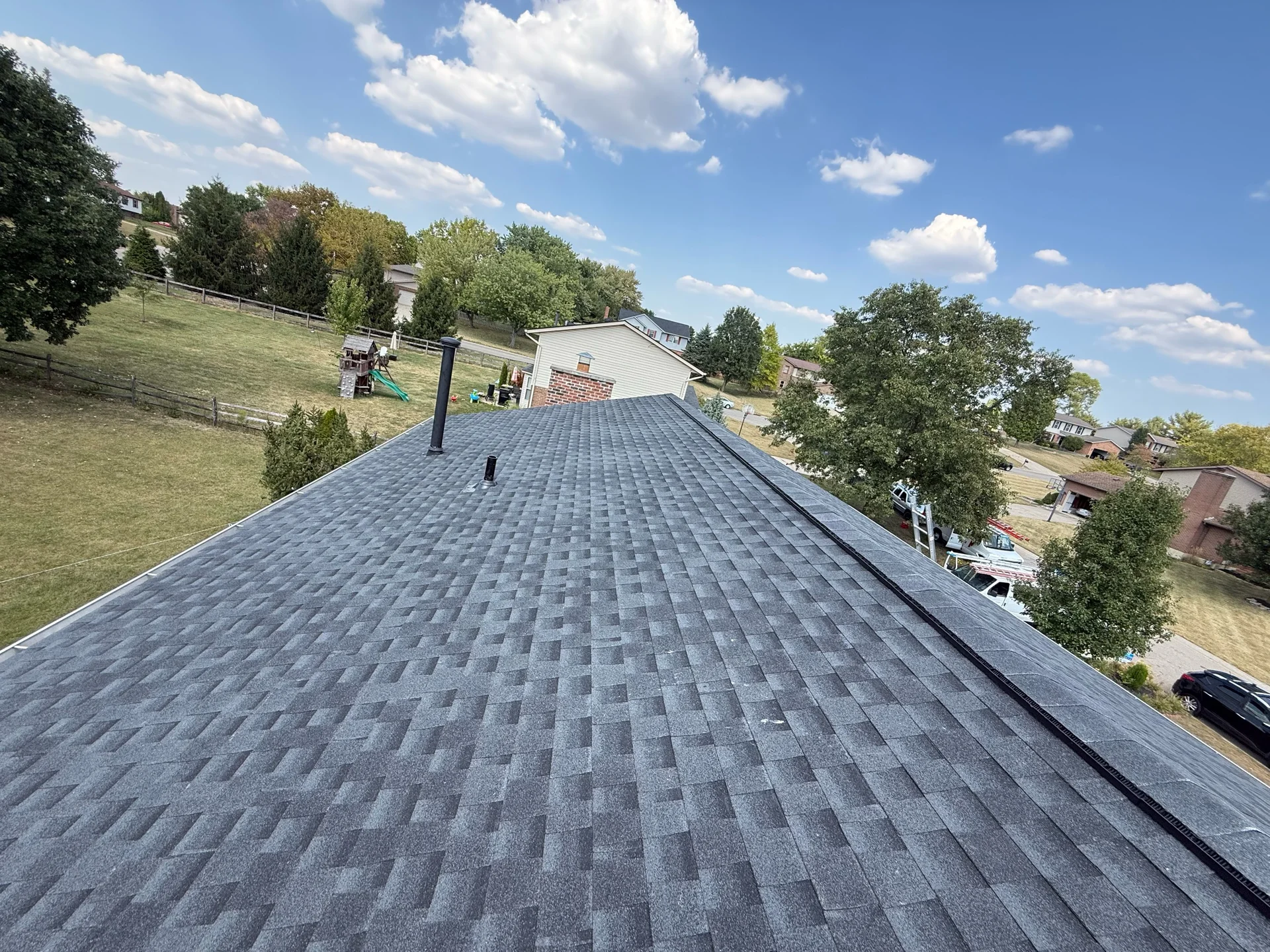
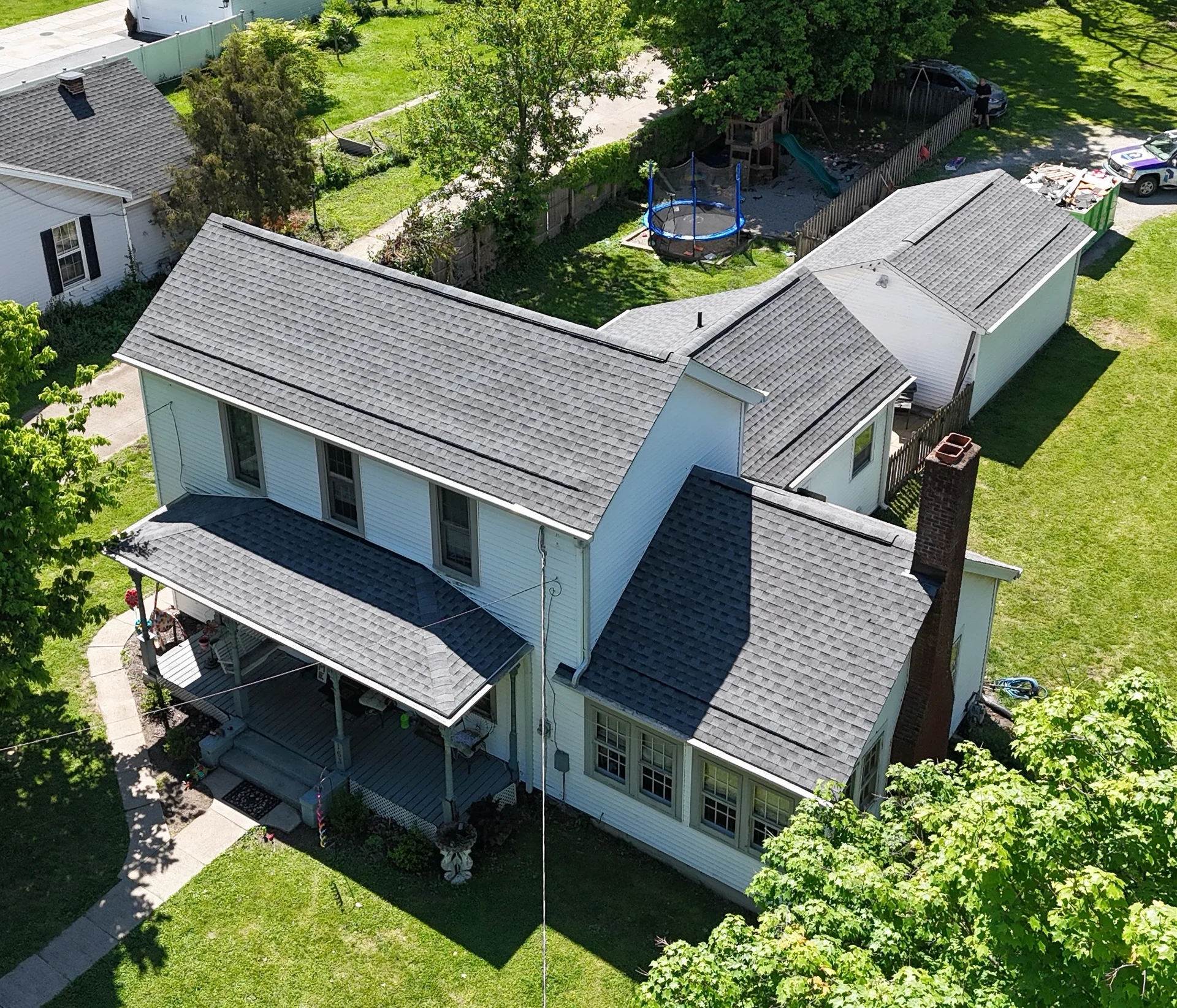
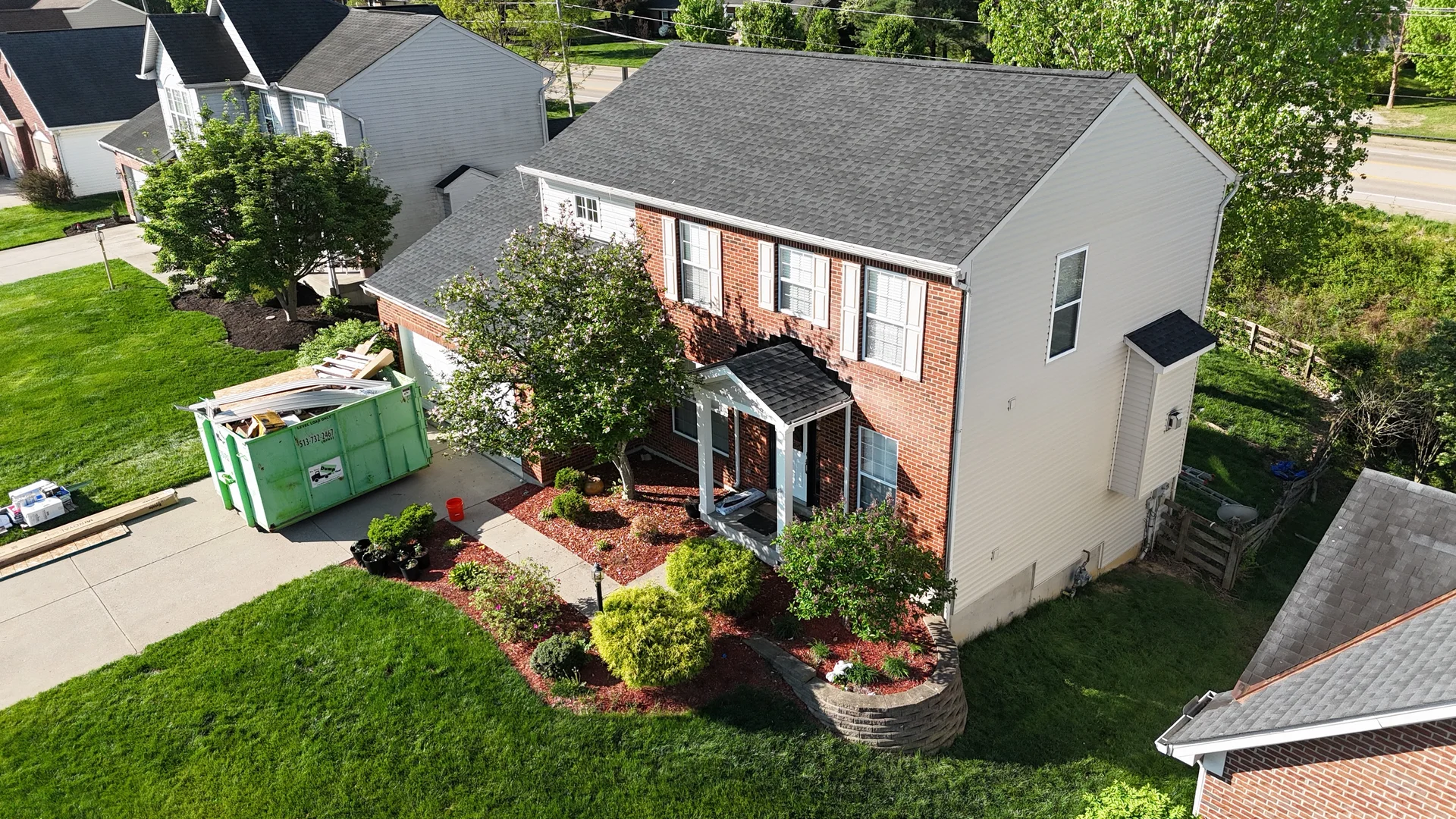
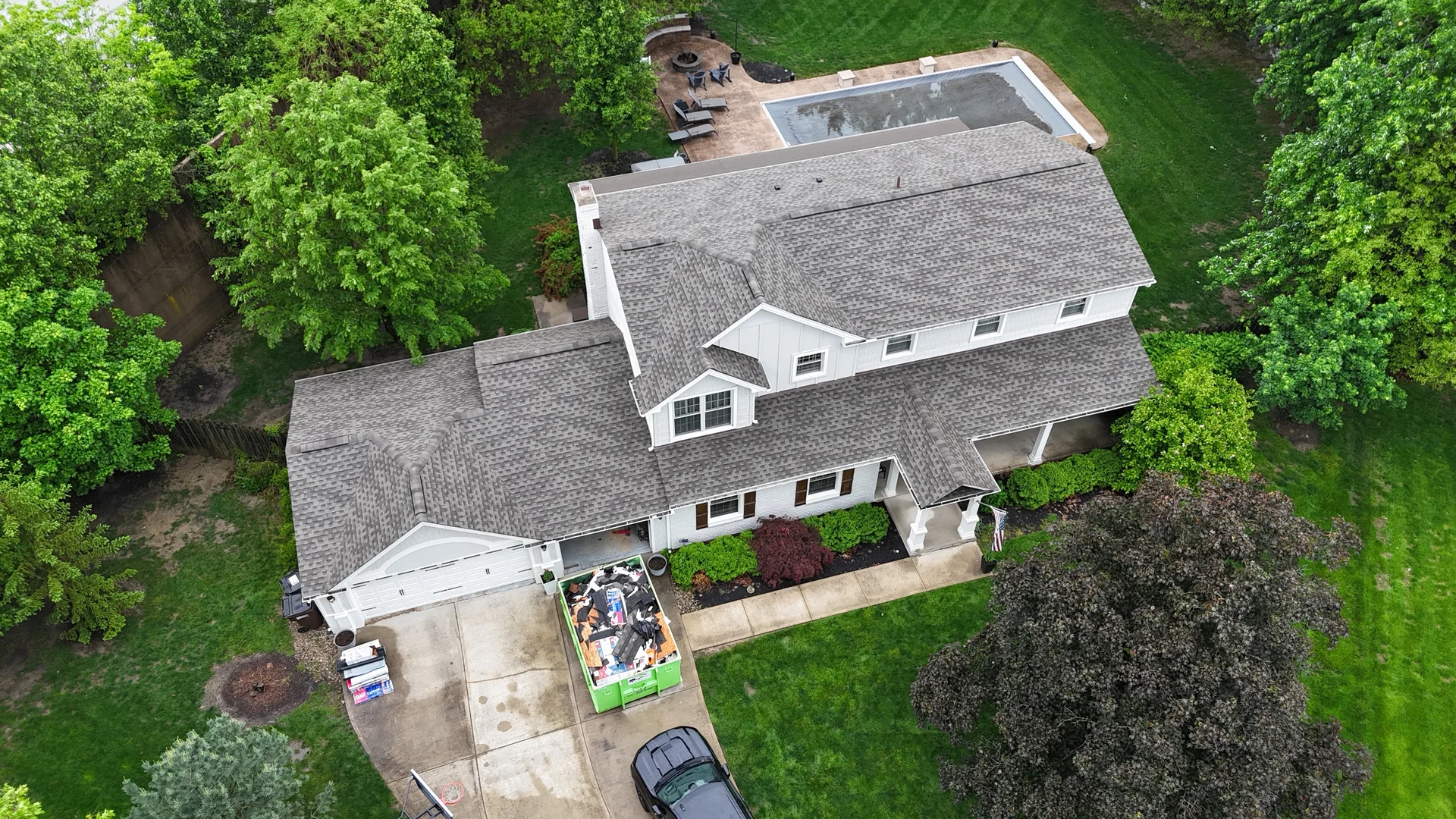
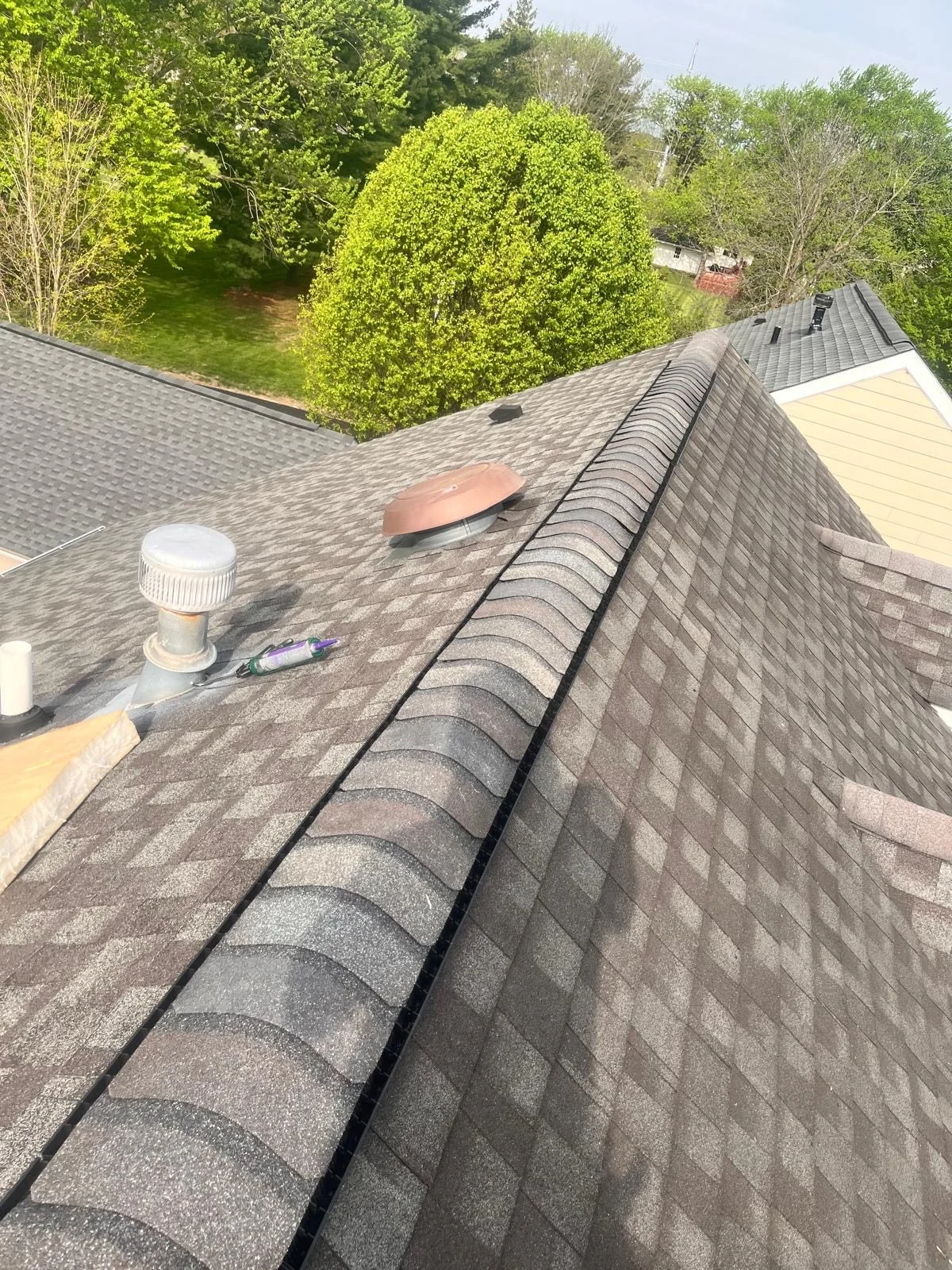
All the old roofing came off, and the substructure was reviewed before anything new went down — not a formality on a house that has been carrying stone for decades. The new roof is GAF Timberline HDZ in Williamsburg Slate, chosen by the homeowner off the color sheet and laid in an offset pattern for a clean appearance and for moisture protection, with GAF starter shingles around the home, underlayment and ice-and-water protection as the moisture barrier over the decking and structure, ice-and-water at the perimeter to limit build-up at the eaves, a roll ridge vent along the peak, and drip edge protecting the gutter line.
Permits were included, and the site was cleaned thoroughly at the end. From the street the house still reads as a slate roof. Underneath, it is a considerably easier roof to own.
This Silverton house had a slate roof that had started losing tiles. A missing slate is simply a hole, and weather was getting into the house through them — which meant the roof had gone past the point where individual repairs were keeping up.
What the homeowner cared about was the look. Slate reads a particular way from the street, and the house had been wearing it a long time. Putting real slate back was not the right call for this building, for reasons that had more to do with the framing and the trade than with taste, so the work went a different way: keep the appearance, drop the weight and the wait.
All the old roofing came off, and the substructure was reviewed before anything new went down — not a formality on a house that has been carrying stone for decades. The new roof is GAF Timberline HDZ in Williamsburg Slate, chosen by the homeowner off the color sheet and laid in an offset pattern for a clean appearance and for moisture protection, with GAF starter shingles around the home, underlayment and ice-and-water protection as the moisture barrier over the decking and structure, ice-and-water at the perimeter to limit build-up at the eaves, a roll ridge vent along the peak, and drip edge protecting the gutter line.
Permits were included, and the site was cleaned thoroughly at the end. From the street the house still reads as a slate roof. Underneath, it is a considerably easier roof to own.
Technical Discussion
Why the slate did not go back on
When a slate roof starts shedding tiles, the instinct is to replace it in kind, and sometimes that is right. Here it was not, for three reasons that stack on top of each other.
The first is weight. Slate is stone, and a slate roof weighs several times what an asphalt roof weighs over the same area. The framing under a house like this was built for that load when the house went up — but it has been carrying it through every winter since, and old framing settles, dries out, and occasionally gets modified by someone adding a bathroom. Once the slate is off, putting the same load back on is a question for someone qualified to answer it, and answering it properly costs money and time before a single new tile is laid. Going lighter removes the question entirely.
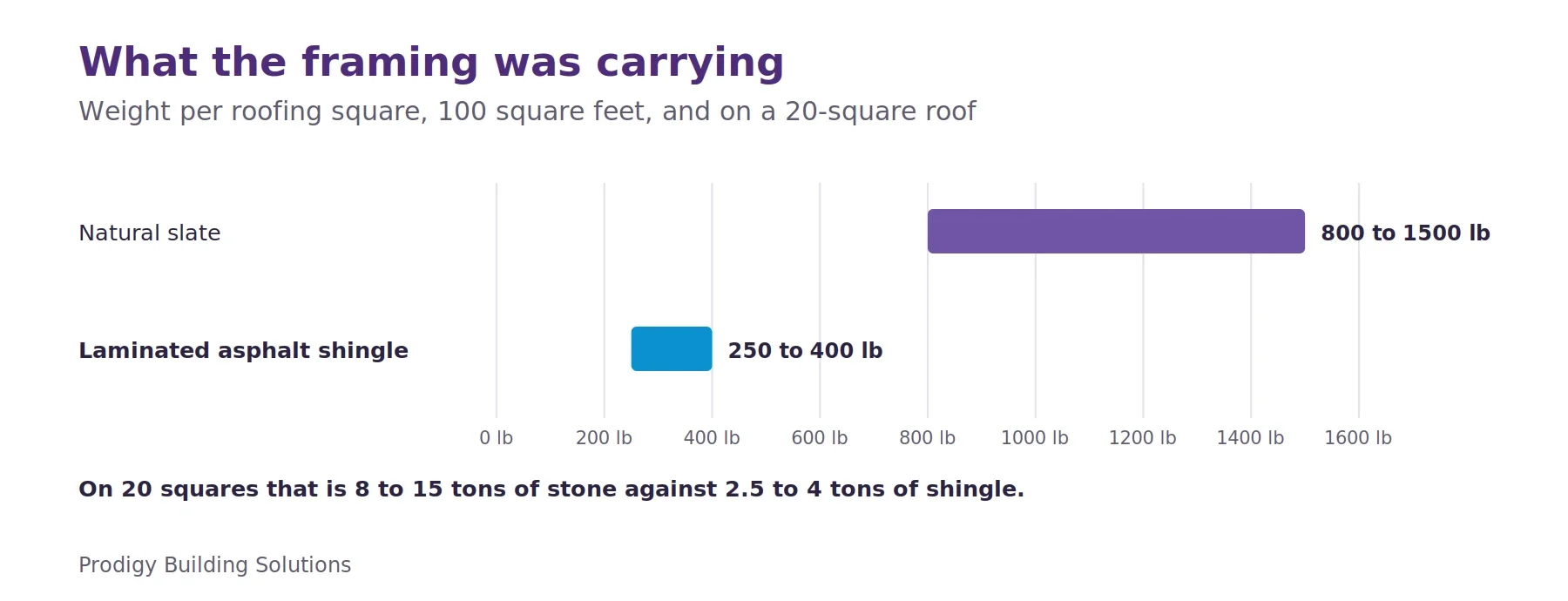
Figure 1 — Going lighter removed the structural question before it had to be answered.
The weight is the number that settles the first question. Natural slate runs roughly 800 to 1,500 pounds per roofing square of 100 square feet, depending on thickness. A laminated asphalt shingle runs about 250 to 400. On a 20-square roof that is the difference between carrying 8 to 15 tons on the framing and carrying 2 to 4. A rafter system built for stone will carry the shingle without a second thought; the reverse is the calculation nobody wants to do.
The second is the material. New slate is quarried stone, and matching an existing roof means matching color, size and thickness from a quarry that is still producing that stone. Salvaged slate solves the matching problem and creates a different one: you are buying tile that has already spent most of a century on somebody's roof, with no way to know how much of its life is left. Either path is expensive, and neither is quick.
The third is the people, and it is the one that gets underestimated. Slate is not laid like anything else. The nails are set so the tile hangs rather than being clamped tight, the exposure and headlap are unforgiving, and the finished roof is a field of brittle pieces that crack if you walk on them wrong. It is a distinct trade, it does not transfer over from asphalt, and the number of people who do it well is small and shrinking. That is not only a problem for the installation. It is a problem for every repair over the following thirty years, when a couple of cracked tiles means finding a specialist and waiting for the calendar to open.
So what does a slate-look asphalt shingle give up? Length of service, first — a real slate roof can outlast several asphalt roofs, and it is fair to say so plainly. And it gives up something at close range: stone has actual thickness, and the shadow line along a slate course is a real edge, where a laminated shingle builds its shadow out of a second layer and a printed pattern. Standing in the yard looking up, you can tell.
What it keeps is most of what the roof was doing for the house. It keeps the gray and the broken, variegated pattern at the distance from which a roof is actually seen — the street and the sidewalk. It keeps the structure carrying a fraction of the load it was carrying before. It keeps the roof repairable by any competent roofer in town, next month, at ordinary cost. And it keeps the house dry now, rather than after a structural review and a search for matching stone.
If you are looking at a slate roof that is dropping tiles, the question is not slate versus asphalt in the abstract. It is what your framing will take, what matching stone will cost and how long it will take to get someone to lay it — and whether that difference buys you something you can see from where you actually stand.