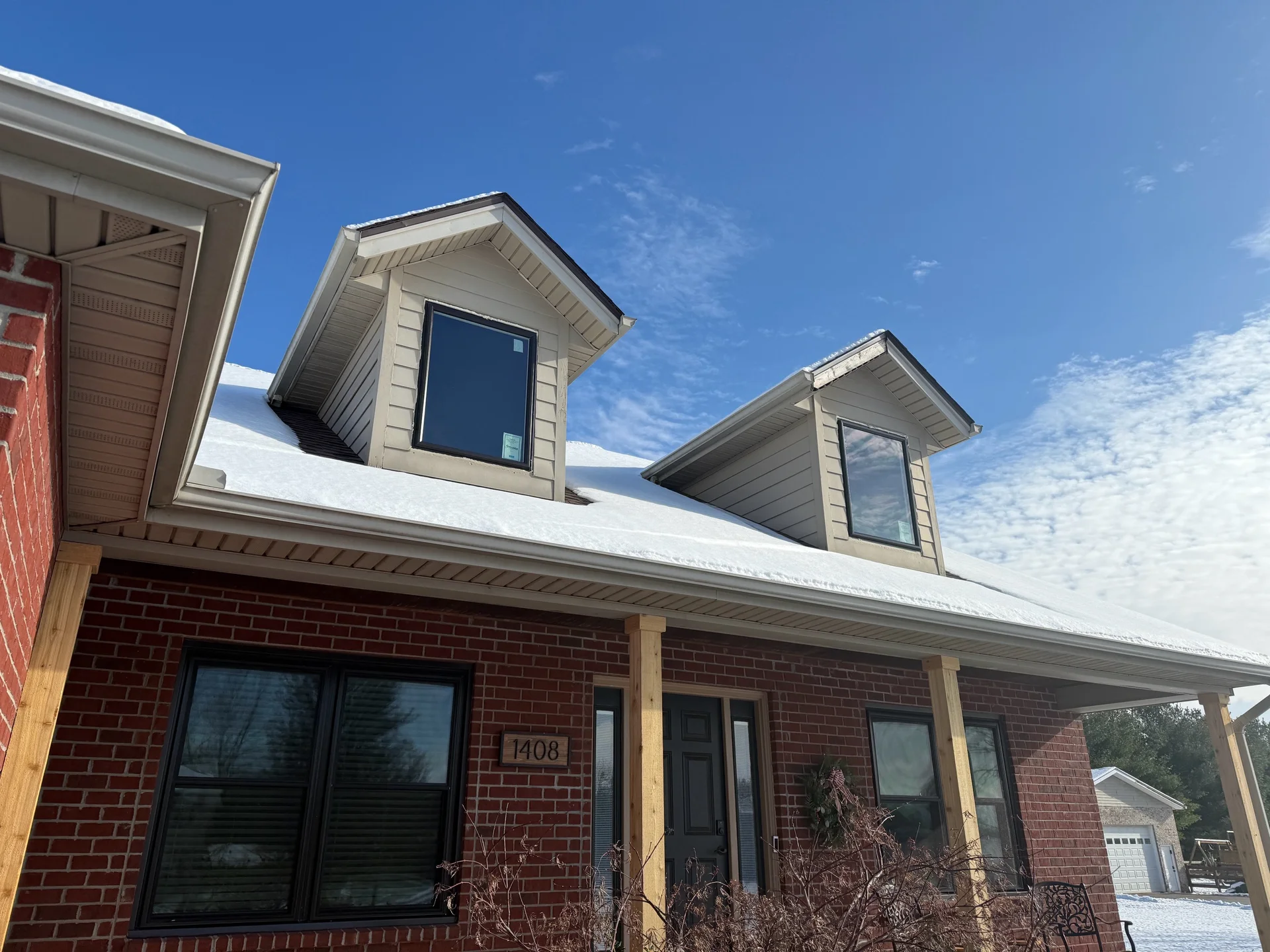
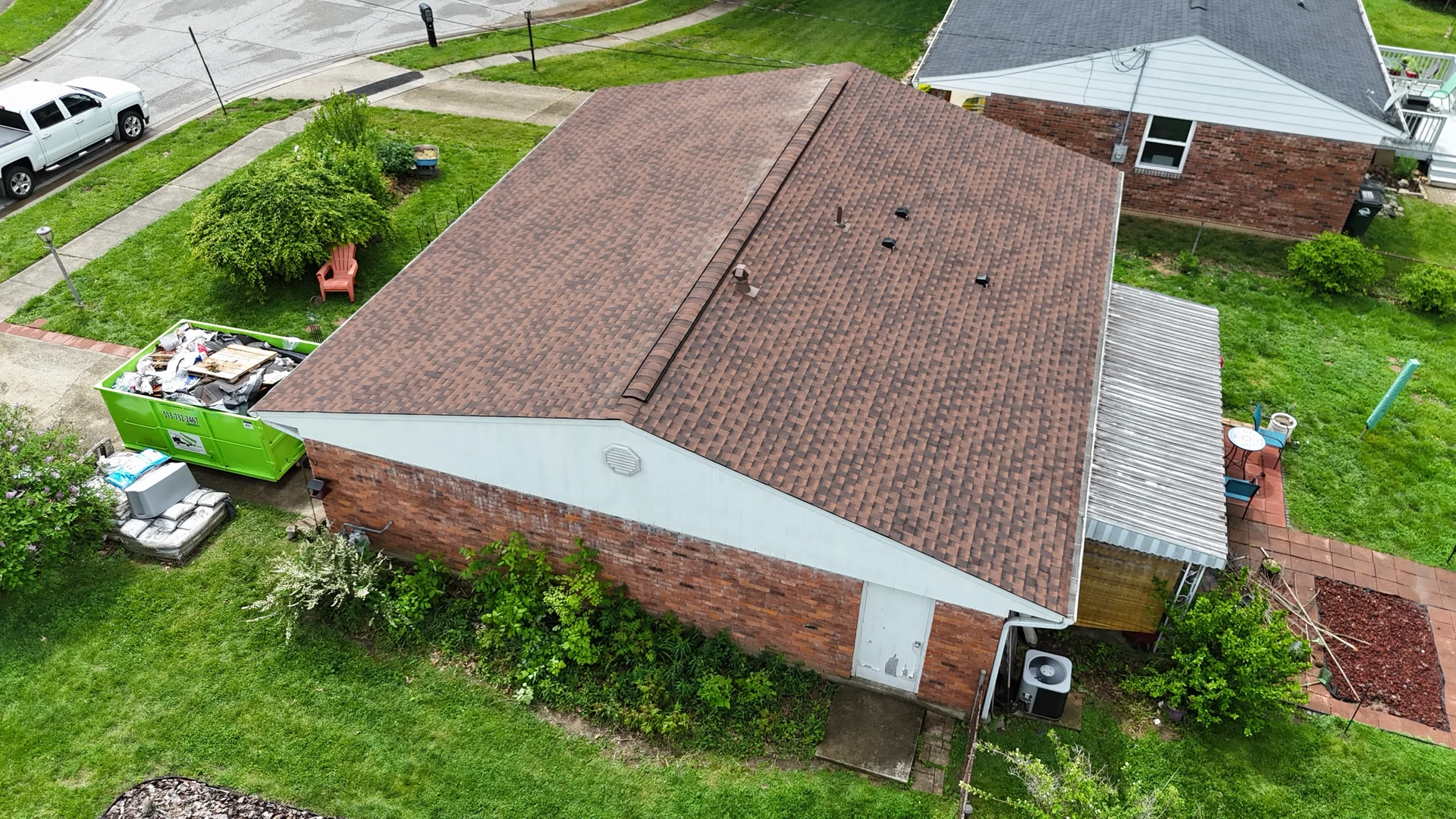
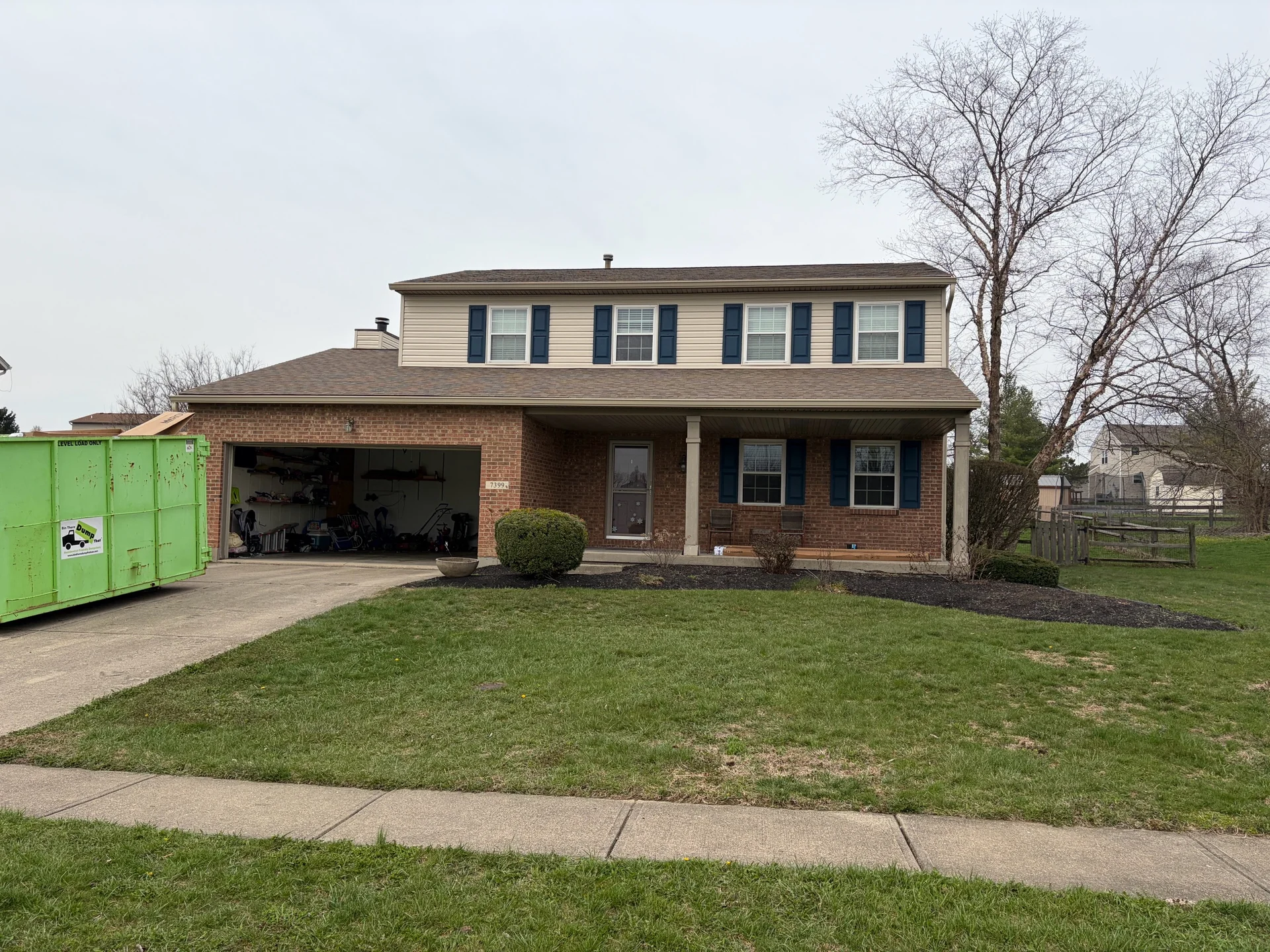
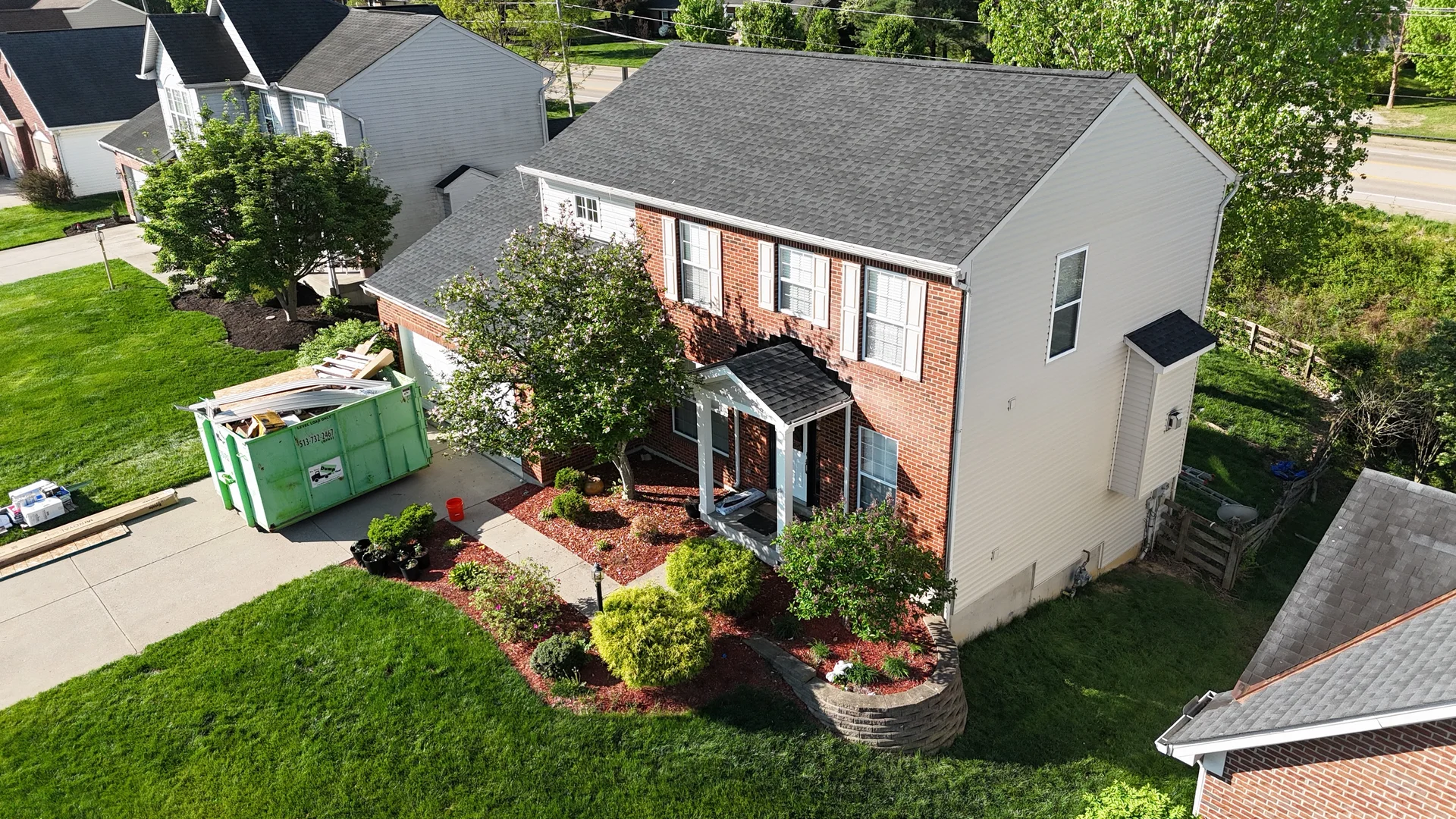
The gutters on this Finneytown home were no longer moving water away from the house the way they needed to, and it was showing up as leaking rather than as anything dramatic on the outside. Water at a foundation rarely announces itself. It seeps, and then one day the basement smells different.
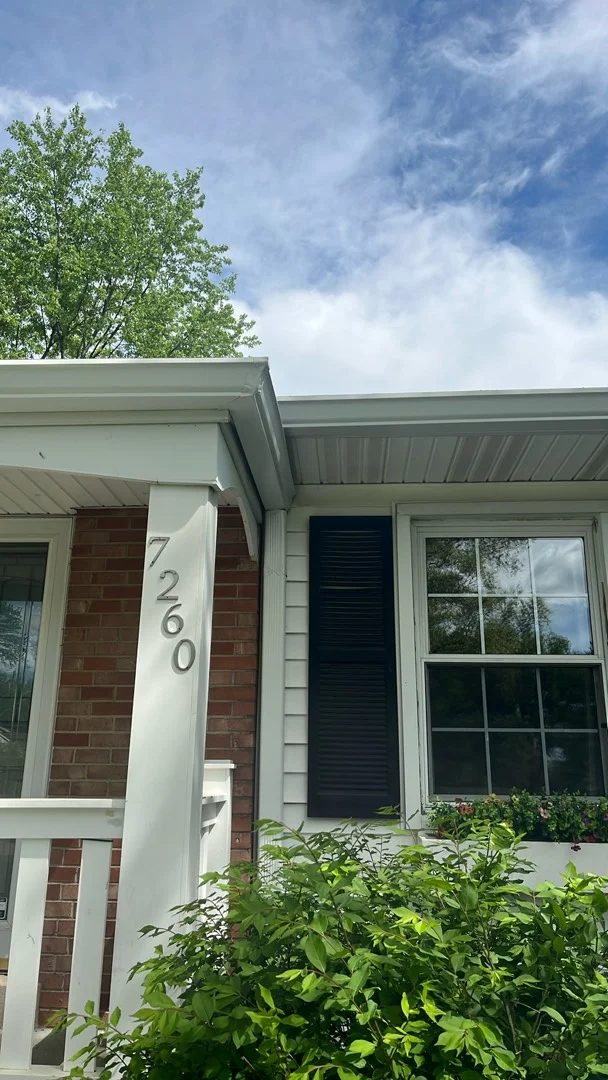
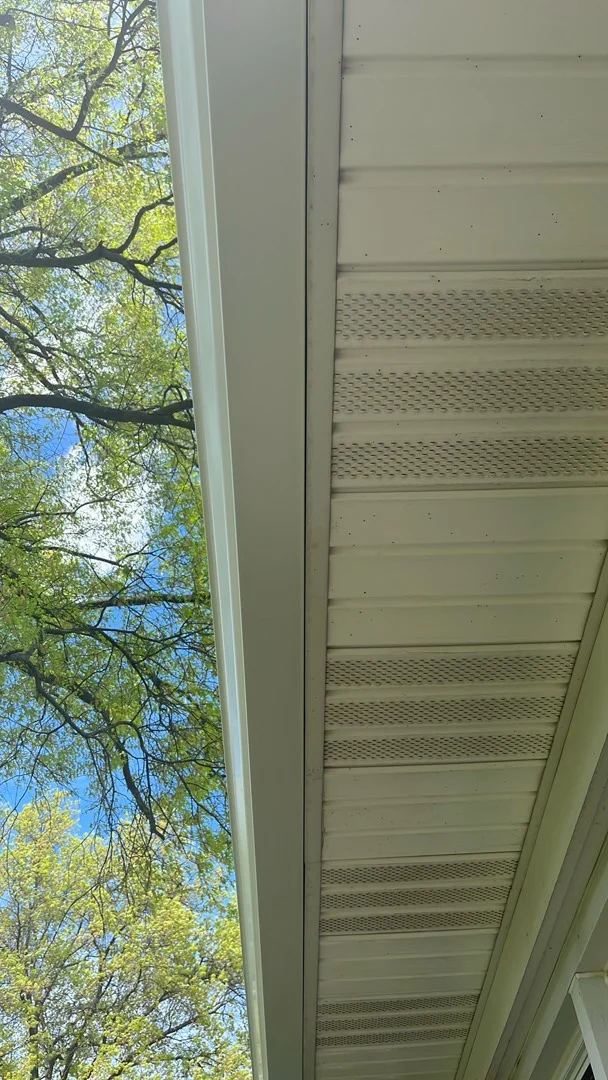
The house got a new 6-inch system, formed on site so it runs the length of each eave without a seam to work loose, and laid out around where the water actually needed to go rather than simply matching the old outlets. The photographs show the new white gutter tight to the eave with the vented soffit above it — worth noticing, because that soffit is part of how the attic breathes, and a gutter hung carelessly is a good way to interfere with it.
What the homeowner has now is a system that catches the roof and, more to the point, carries what it catches out past the foundation instead of setting it down beside it.
The gutters on this Finneytown home were no longer moving water away from the house the way they needed to, and it was showing up as leaking rather than as anything dramatic on the outside. Water at a foundation rarely announces itself. It seeps, and then one day the basement smells different.
The house got a new 6-inch system, formed on site so it runs the length of each eave without a seam to work loose, and laid out around where the water actually needed to go rather than simply matching the old outlets. The photographs show the new white gutter tight to the eave with the vented soffit above it — worth noticing, because that soffit is part of how the attic breathes, and a gutter hung carelessly is a good way to interfere with it.
What the homeowner has now is a system that catches the roof and, more to the point, carries what it catches out past the foundation instead of setting it down beside it.
Technical Discussion
The gutter is only half of it
When water shows up in a basement, the gutters get blamed. Often that is fair. But a surprising number of the gutters we are called out to look at are catching perfectly well — the problem is not what happens on the roof edge, it is what happens in the eighteen inches after the downspout ends.
Think about the volume for a second, because it is the part nobody pictures. An inch of rain on a modest roof is not a puddle, it is hundreds of gallons. All of it leaves through a handful of downspouts. If those downspouts end at a splash block a foot from the wall, what the gutter system has actually done is take the entire roof, concentrate it into three or four streams, and pour them into a few square feet of soil directly against the foundation. That is a worse outcome than having no gutters at all, where at least the water would have been spread evenly around the drip line.
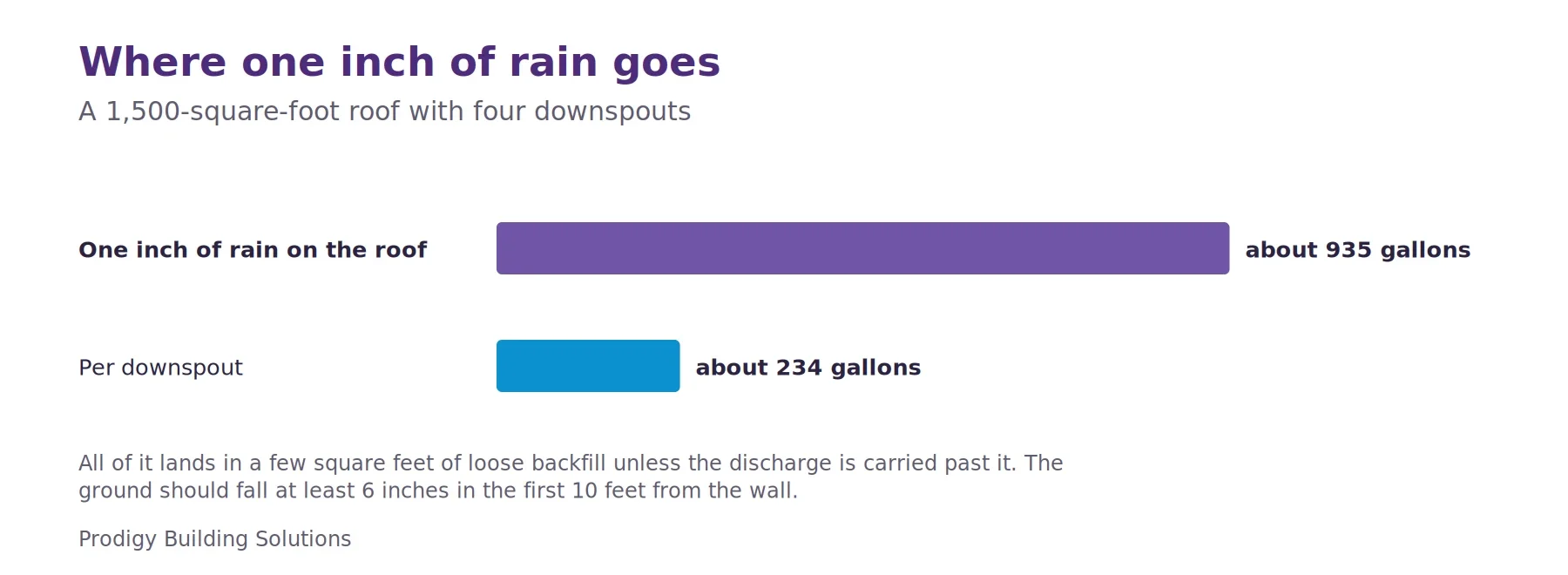
Figure 1 — Gutters concentrate the whole roof into a few outlets, so where those outlets end is the decision.
The volume is worth pricing out. One inch of rain on a 1,500-square-foot roof is about 935 gallons, and a house with four downspouts is putting more than 230 gallons out of each of them onto the soil at the foundation. The residential code asks for the ground to fall at least 6 inches in the first 10 feet away from a foundation, and a downspout extension or a buried line should carry water at least that far, past the loose backfill, before it is allowed to soak in.
And it is the worst possible ground to put it in. When the house was built, the excavator dug a hole wider than the foundation, the walls went up inside it, and the gap was backfilled. That backfill has never packed down to the density of the undisturbed clay around it and it never will. So there is a ring of looser soil going all the way around the house, from grade straight down to the footing, and it is the path of least resistance for anything you pour on top of it. Water in that ring goes down the outside of the wall, finds whatever the wall has in the way of cracks, cold joints or a tie hole, and comes through.
The fix is unglamorous and it is mostly about distance. Get the discharge out past the backfill — extensions long enough to clear it, or solid pipe buried and run to daylight or to a proper drain, so the water surfaces somewhere it can leave. Add outlets rather than relying on two, so no single downspout is carrying half a roof. And check that the ground actually falls away from the house for the first several feet, because a perfect downspout emptying onto ground that slopes back toward the wall has accomplished nothing.
What makes this worth taking seriously is the difference in what the two ends of the problem cost. A downspout extension is a trivial item on a gutter job. A buried line to daylight is a modest one. Interior drain tile, a sump, crack injection, excavating and re-waterproofing a wall, or repairing what settlement does to a foundation are not in the same category as any of those, and they are what you are buying instead if the water keeps arriving.
So here is the thing worth doing at your own house, and it costs nothing: next time it rains hard, put a coat on and walk the perimeter. Watch each downspout. See where the water lands, and then see whether it is still traveling away from the house six feet later or whether it has stopped and started soaking in. That two-minute walk will tell you more about your basement than any inspection of the gutters themselves.