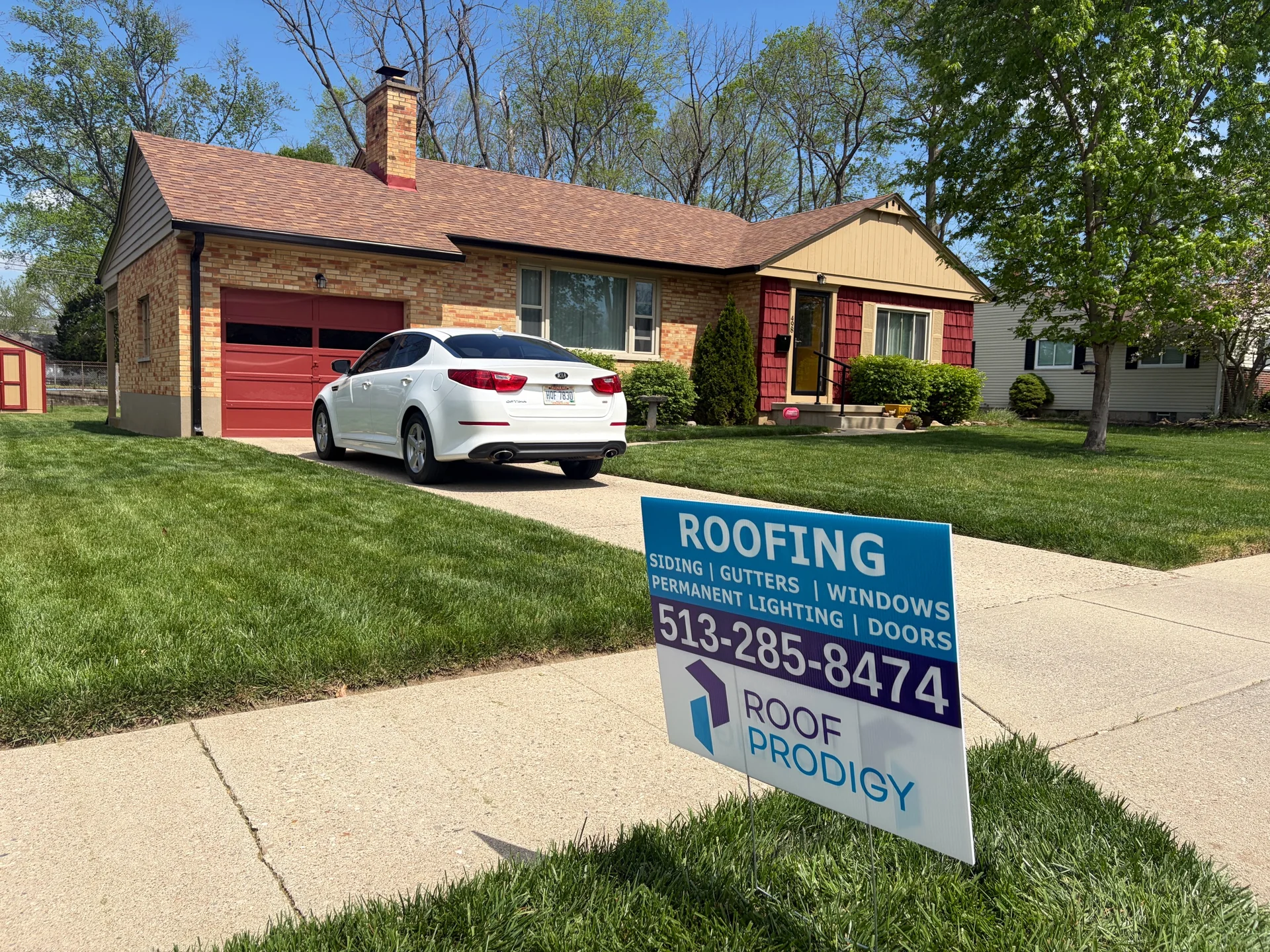
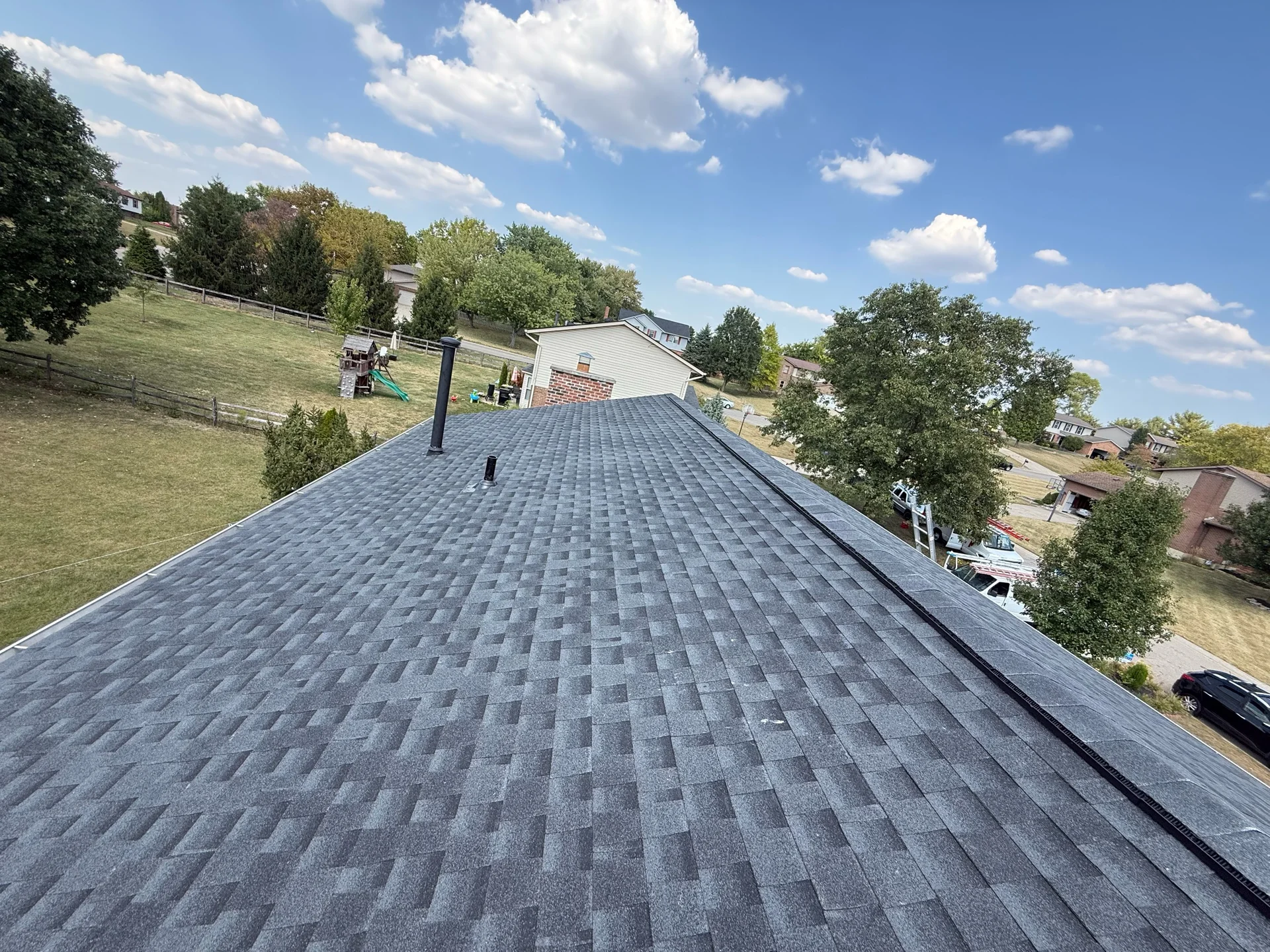
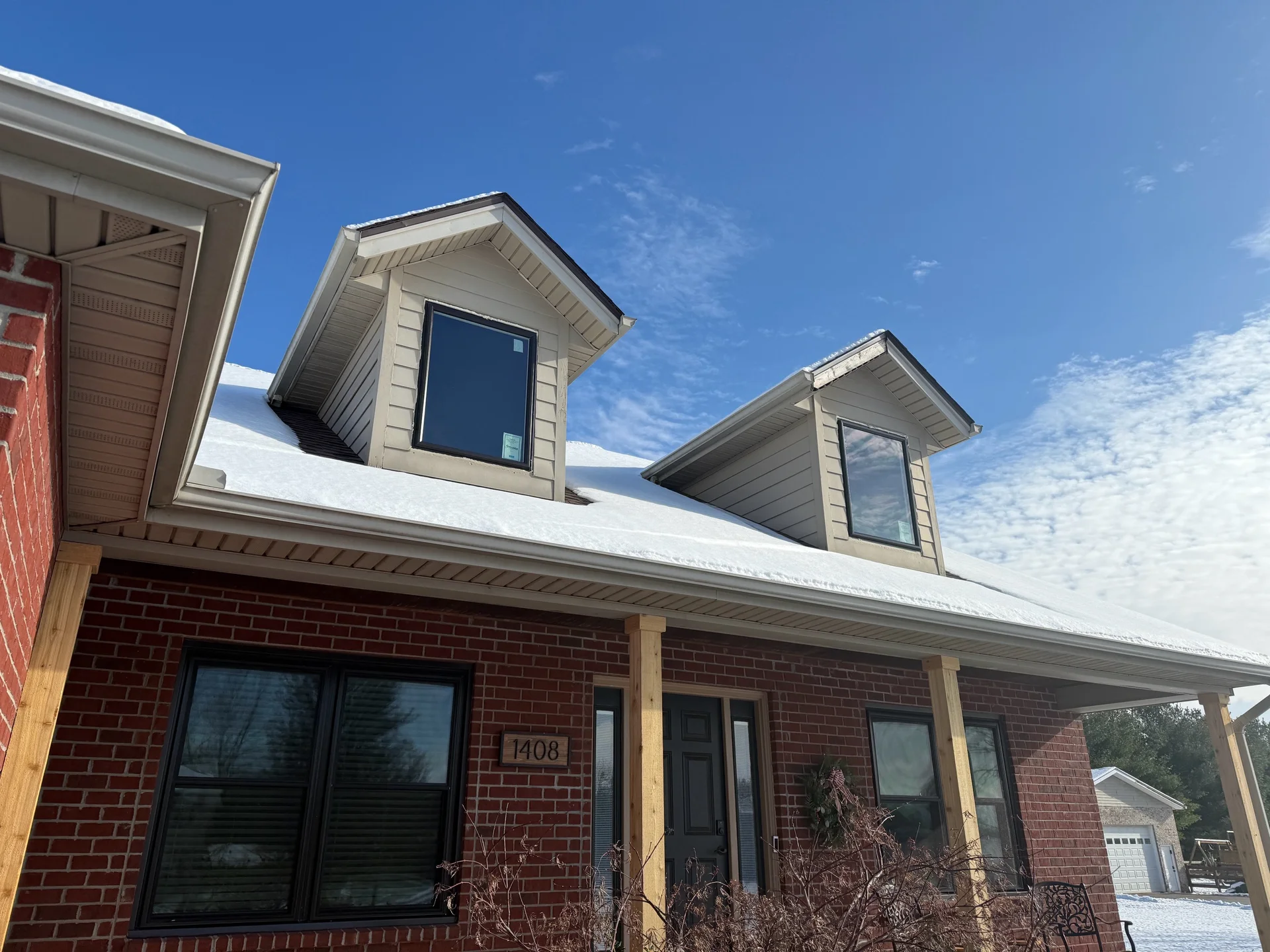
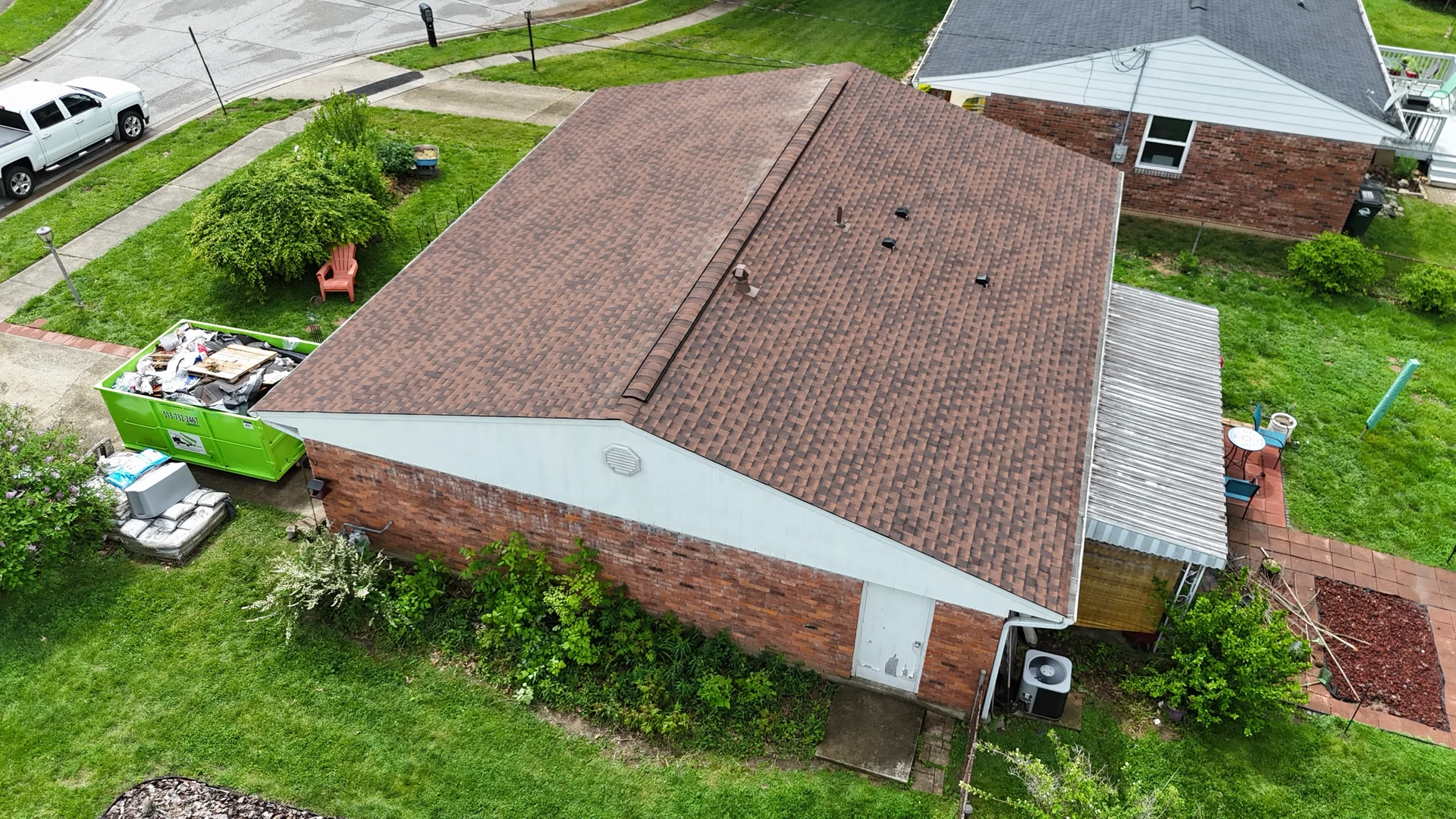
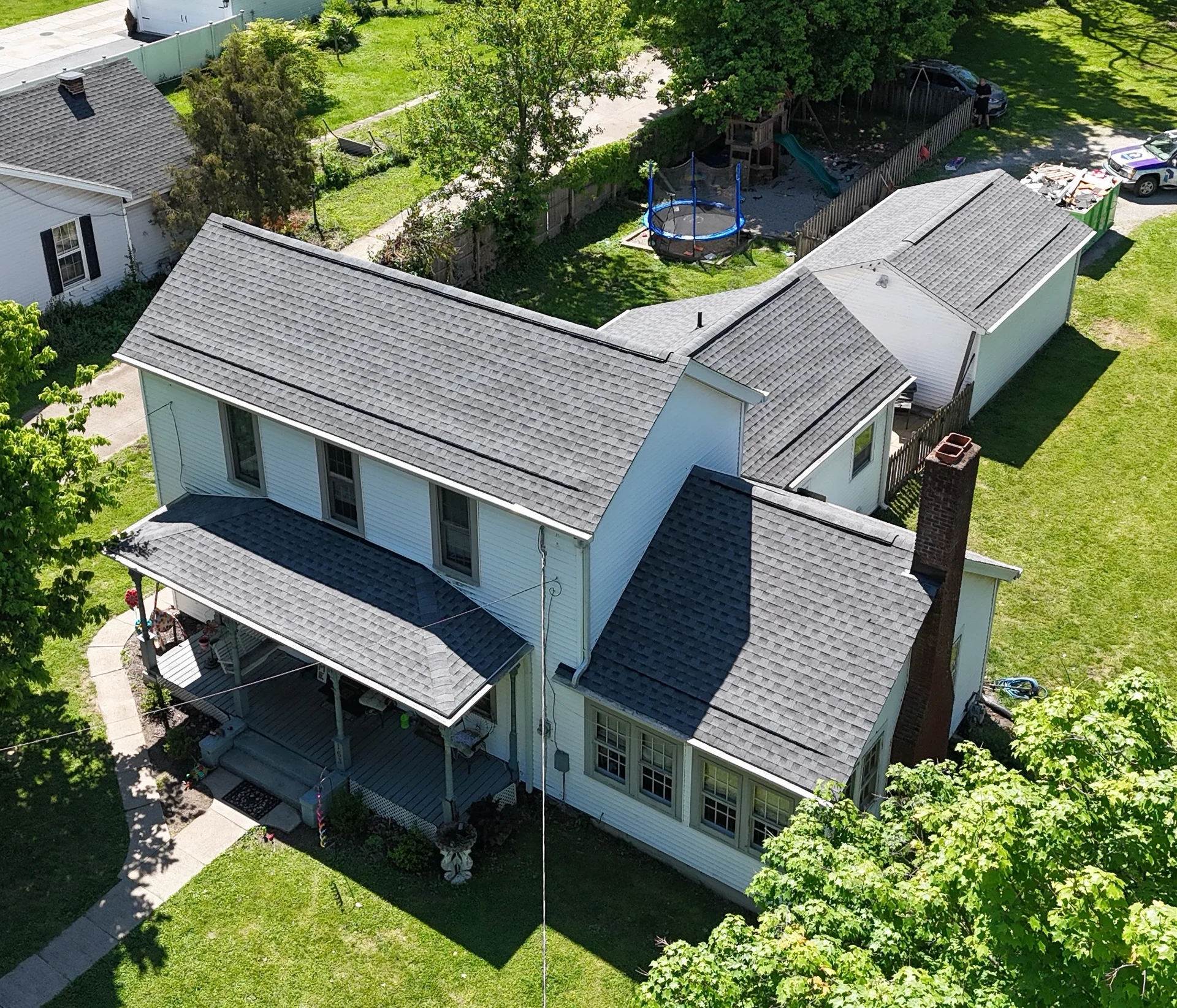
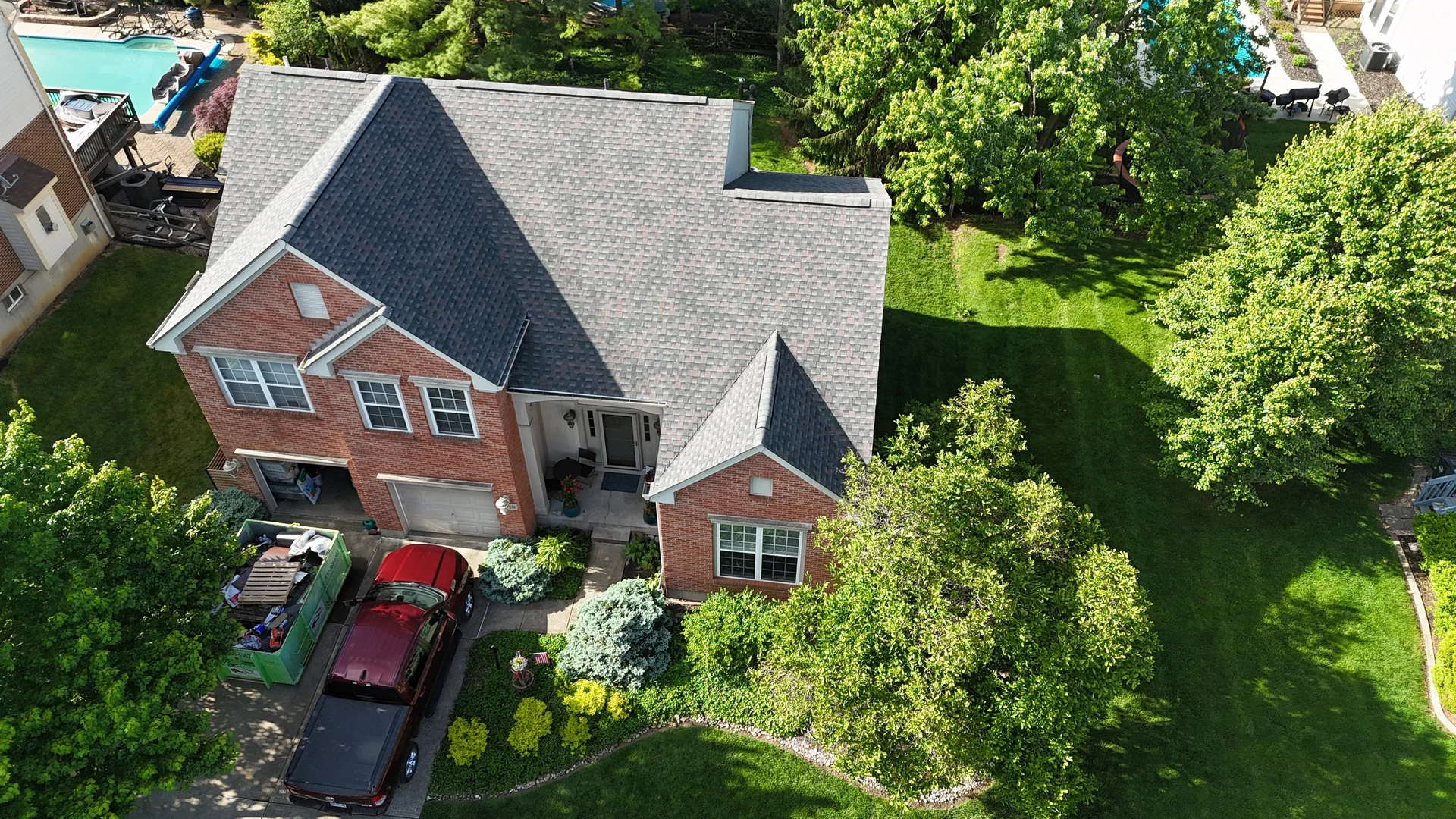
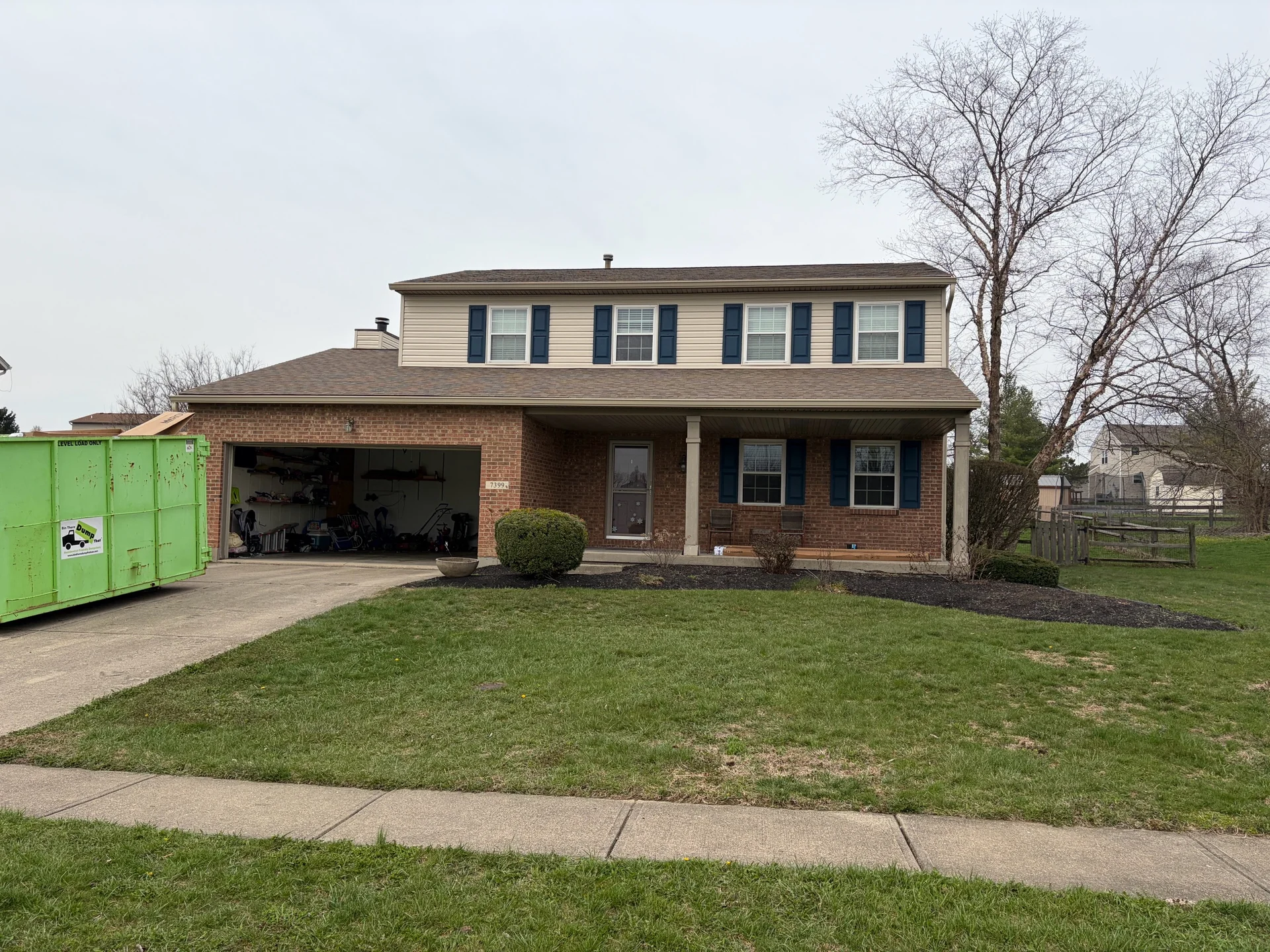
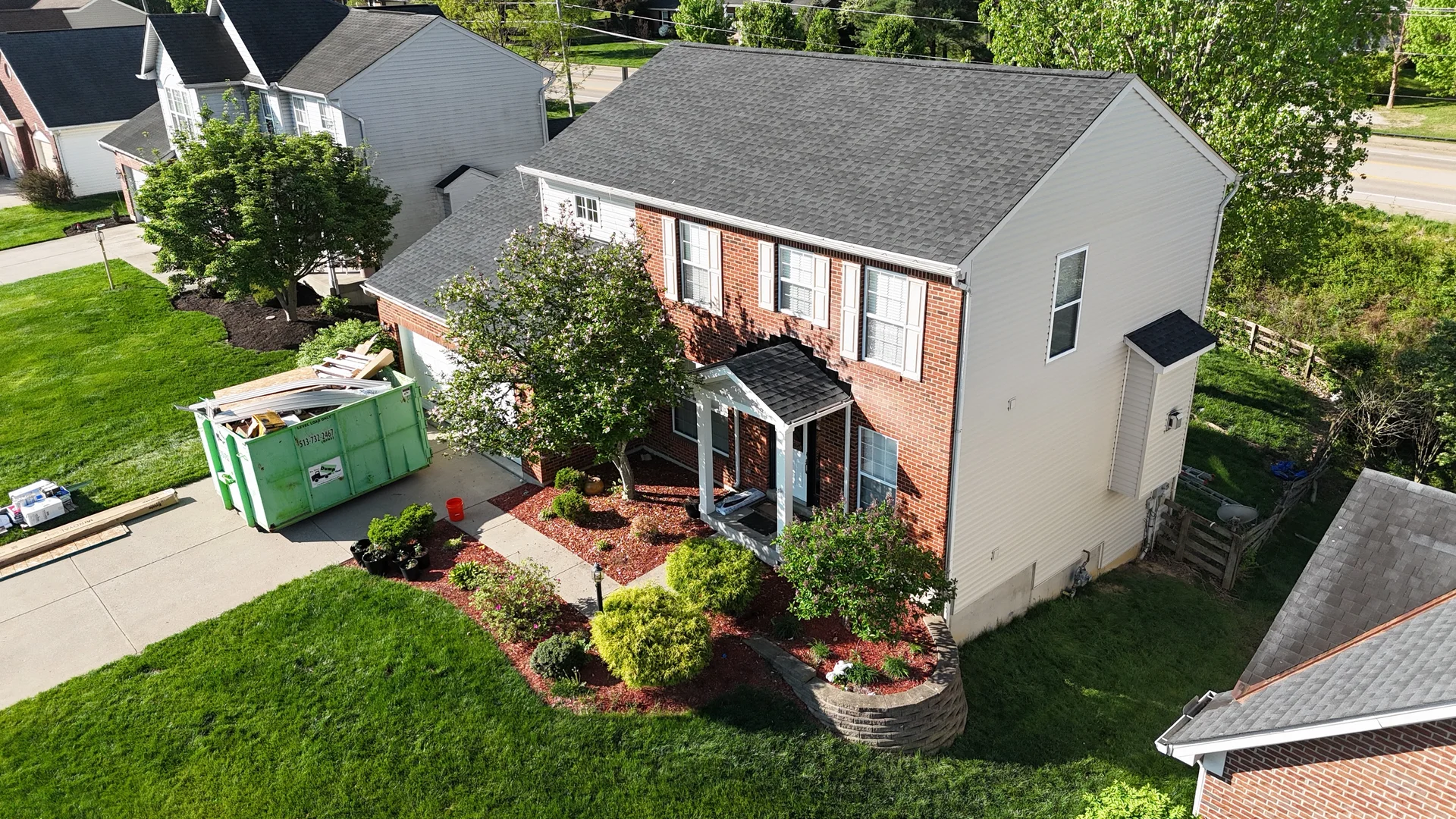
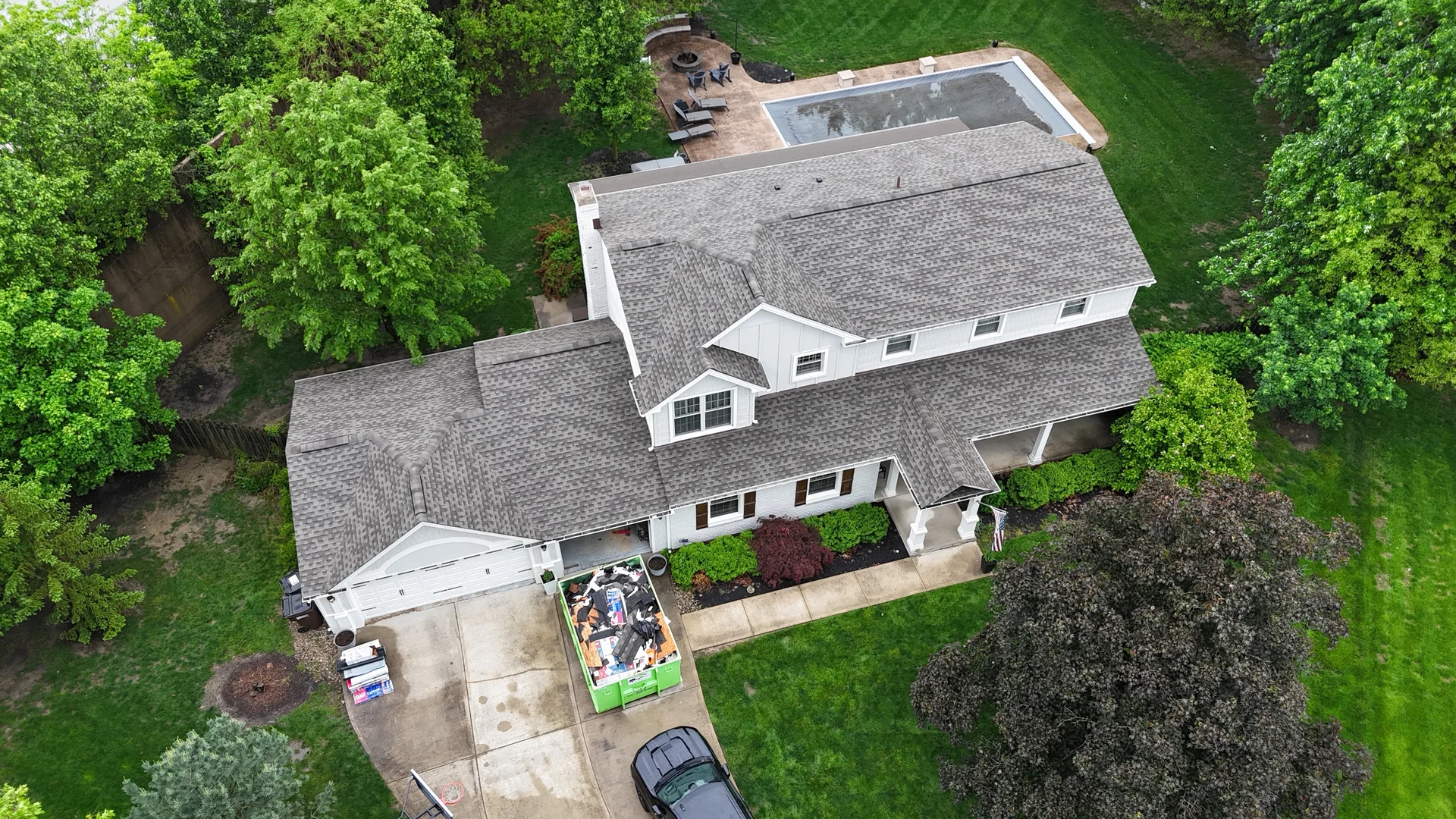
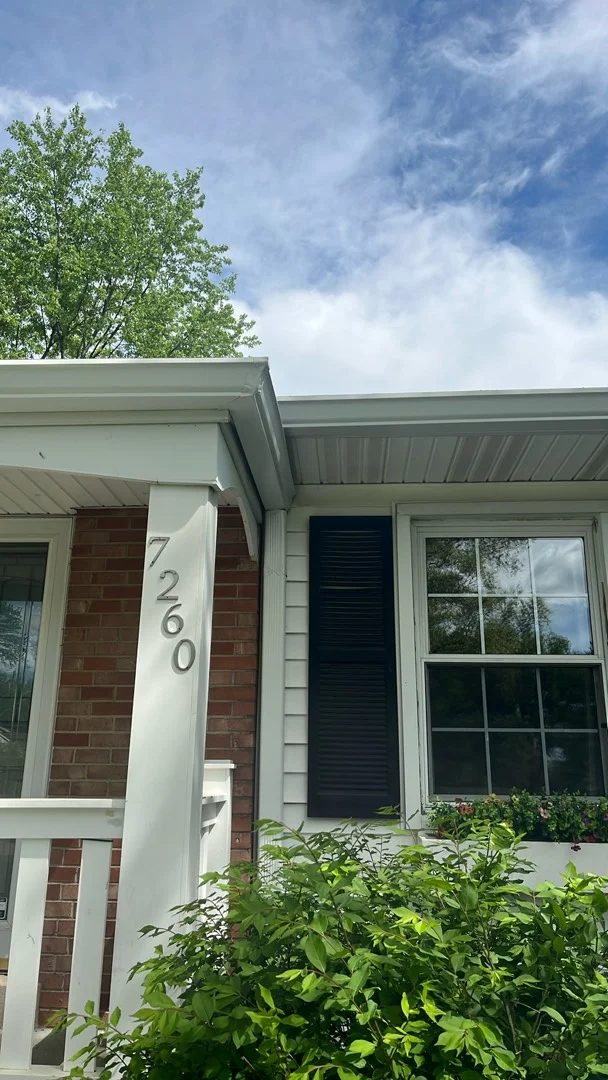
The gutters on this Fairfield house were the older spike-and-ferrule kind — long spikes driven straight through the front of the gutter and into the fascia. Most people who have lived with them know the sound of one working its way loose, and the ladder trip every couple of years to tap it back in.
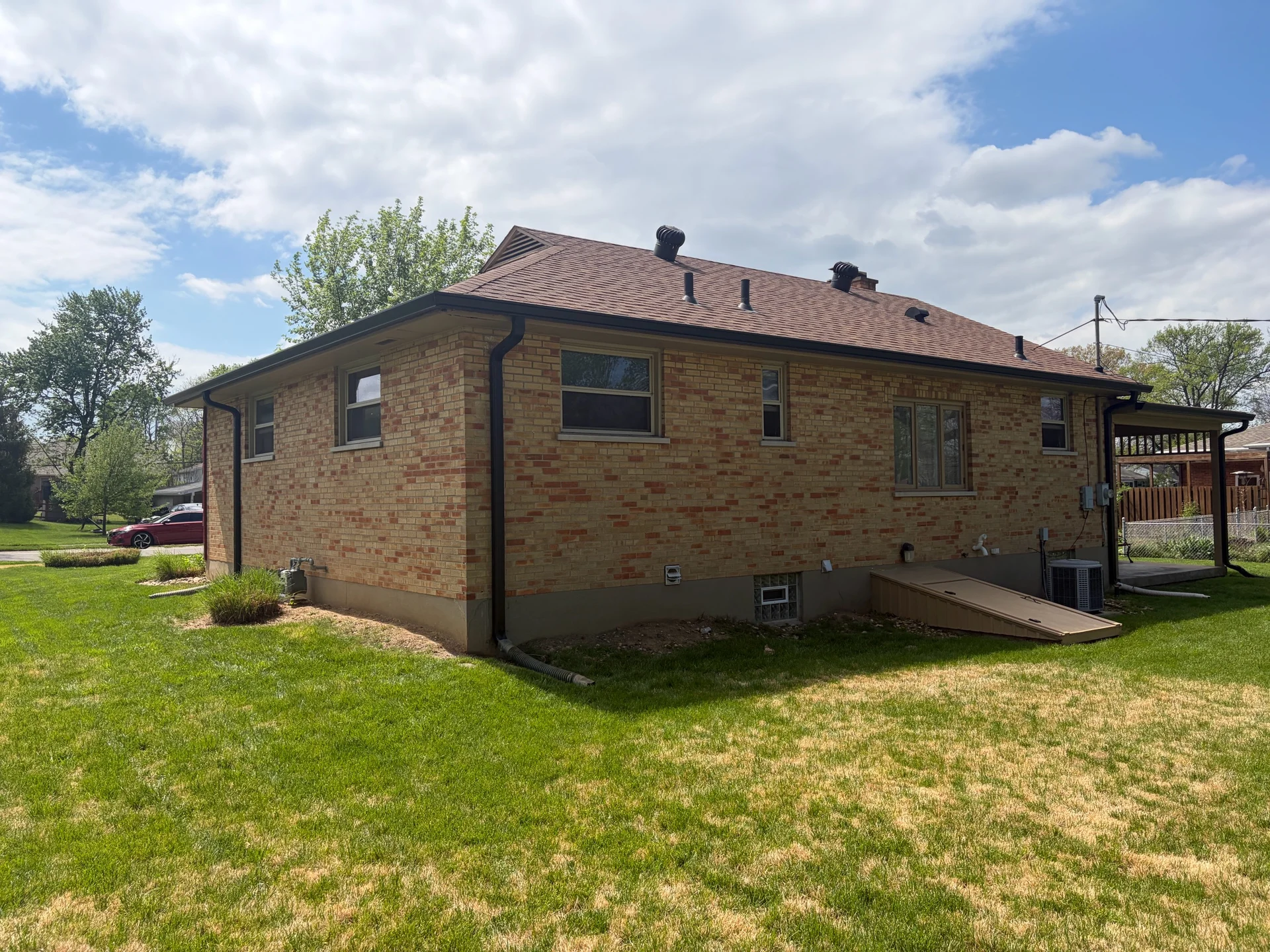
The whole system came off and was hauled away, and the fascia was checked while it was exposed and there was something to see, because a gutter is only ever as good as the board it is screwed to. The new run is 6-inch seamless, formed to the length of each eave and set with pitch toward every outlet, hung on hidden hangers that screw into the fascia from inside the gutter rather than spikes relying on friction — stronger, and invisible from the ground.
The downspouts went up a size as well: 3x4 in place of the standard 2x3, with outlets, elbows and straps to match. That was not a default upgrade thrown in for the sake of it. It was the answer to a specific question — how much water this particular roof puts over the edge in a hard rain, and how fast the system has to get rid of it.
The gutters on this Fairfield house were the older spike-and-ferrule kind — long spikes driven straight through the front of the gutter and into the fascia. Most people who have lived with them know the sound of one working its way loose, and the ladder trip every couple of years to tap it back in.
The whole system came off and was hauled away, and the fascia was checked while it was exposed and there was something to see, because a gutter is only ever as good as the board it is screwed to. The new run is 6-inch seamless, formed to the length of each eave and set with pitch toward every outlet, hung on hidden hangers that screw into the fascia from inside the gutter rather than spikes relying on friction — stronger, and invisible from the ground.
The downspouts went up a size as well: 3x4 in place of the standard 2x3, with outlets, elbows and straps to match. That was not a default upgrade thrown in for the sake of it. It was the answer to a specific question — how much water this particular roof puts over the edge in a hard rain, and how fast the system has to get rid of it.
Technical Discussion
Six inches, and why it is not just a bigger gutter
The default on a gutter replacement is to put back what was there. It is easy to quote, easy to explain and it feels safe. What it actually does is inherit whoever sized the original, which on most houses was the builder, fitting 5-inch gutter and 2x3 downspouts because that is what goes on nearly every house in the subdivision regardless of what is above it. Replacing in kind is not a decision about your roof. It is a copy of somebody else's decision about roofs in general.
A gutter is sized by what the roof above it actually sheds, and that comes down to three things. The first is the area draining to that run — not the length of the gutter, the square footage of roof pouring into it. A long plane emptying onto one eave means the far end of that gutter is carrying everything from every foot upstream of it, and the volume at the outlet is nothing like the volume at the middle.
The second is pitch, which is the one people leave out. A steep roof does not just deliver the same water more quickly, it delivers it with momentum. In a downpour some of it arrives moving fast enough to shoot straight over the front lip of the gutter without ever slowing down, which is why a steep roof is treated, for sizing purposes, as though it were a considerably larger flat one. Two houses with identical footprints and different roof pitches do not want the same gutter.
The third is rainfall, and the number that matters is intensity, not the annual total. Southwest Ohio does not get exotic amounts of rain across a year. What it gets is bursts — a July thunderstorm that puts down more in twenty minutes than the previous two weeks of gray drizzle. A gutter system is sized for the worst ten minutes of that storm. Handling a steady soaking rain proves nothing at all, which is why so many homeowners are certain their gutters are fine right up until the afternoon they are not.
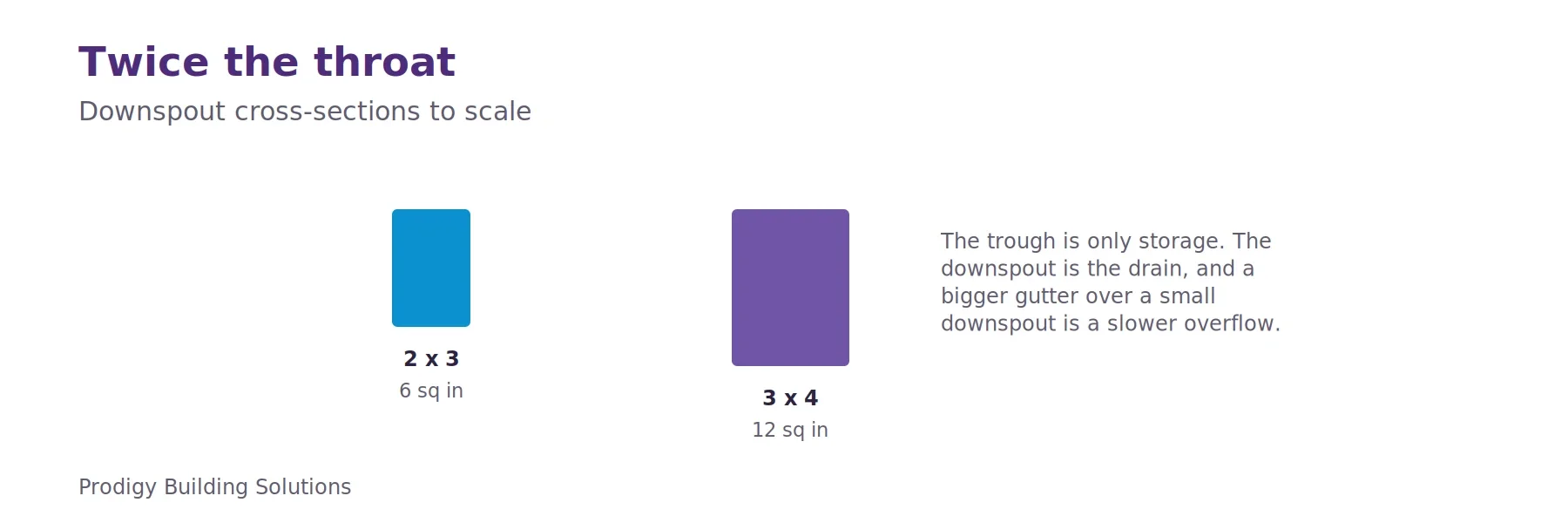
Once you are sizing for that, the arithmetic gets straightforward. A 6-inch trough holds meaningfully more per foot than a 5-inch and, just as usefully, sits with its front edge further out to catch water coming off a steep plane. But the trough is only storage. The downspout is the drain, and that is where most undersized systems are really failing: a 2x3 downspout offers about six square inches of cross-section, a 3x4 offers twelve. That is double the throat, out of a size change that costs very little. A big gutter over a small downspout is not a solution, it is a slower overflow — the water still has to get out through the same hole.
Figure 1 — Going from 2x3 to 3x4 doubles the outlet for a small change in cost.
You can see all of this in where a gutter spills. Undersized systems do not overflow evenly along their length. They overflow at the far end of long runs, and at miters, because water arriving at a corner has to change direction: it rides up the outside of the turn and goes over the front. If your gutters overflow at the same corner every heavy storm and nowhere else, that is not a clog and cleaning them will not fix it. It is a corner being asked to turn more water than it can hold.
Which is the useful test on your own house. Go out during real rain, not drizzle, and look. Water sheeting over the front lip, water running behind the gutter, a curtain at one miter — those are capacity symptoms, and they are telling you that the system was sized for a different roof than the one you own.