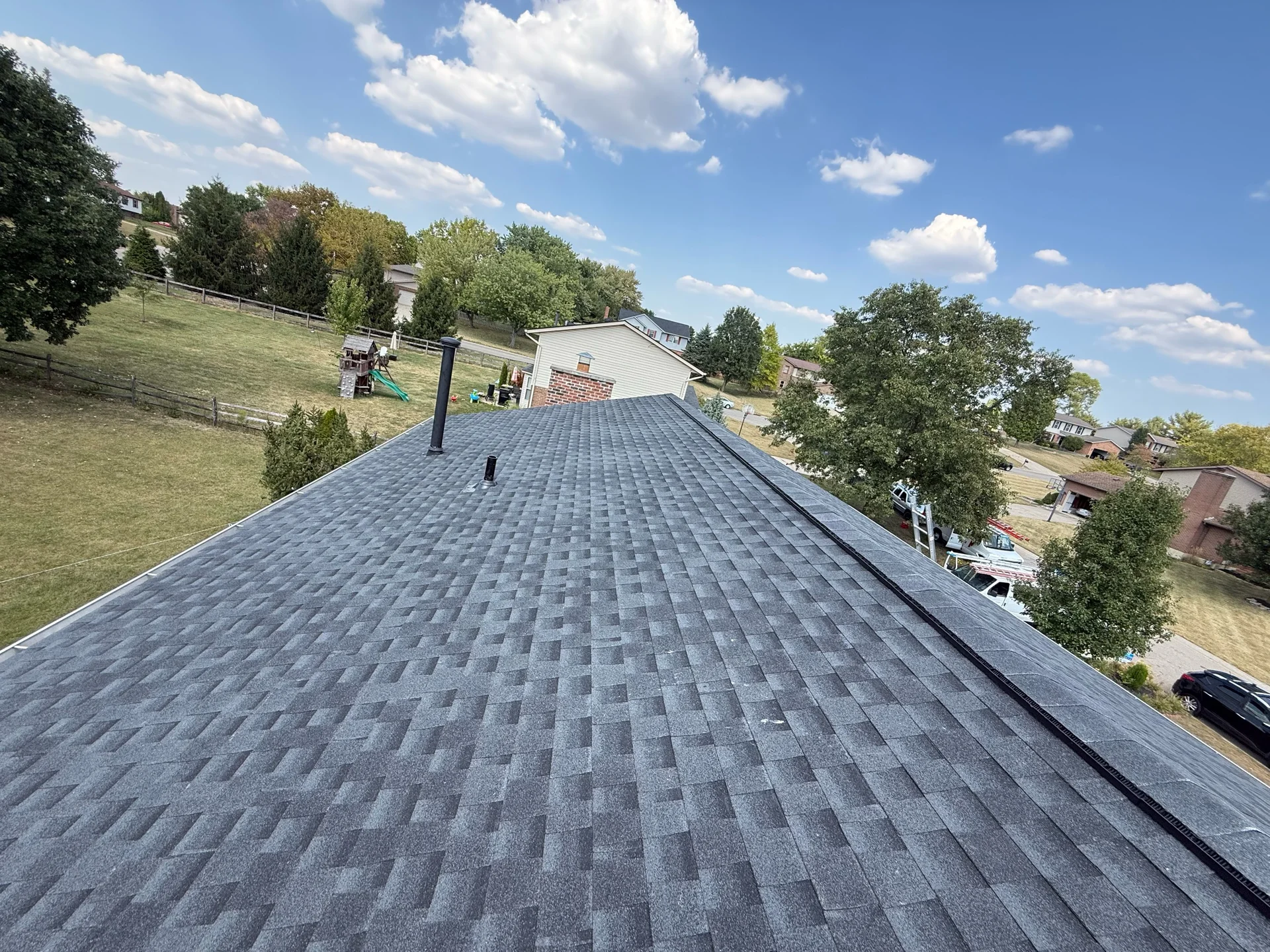
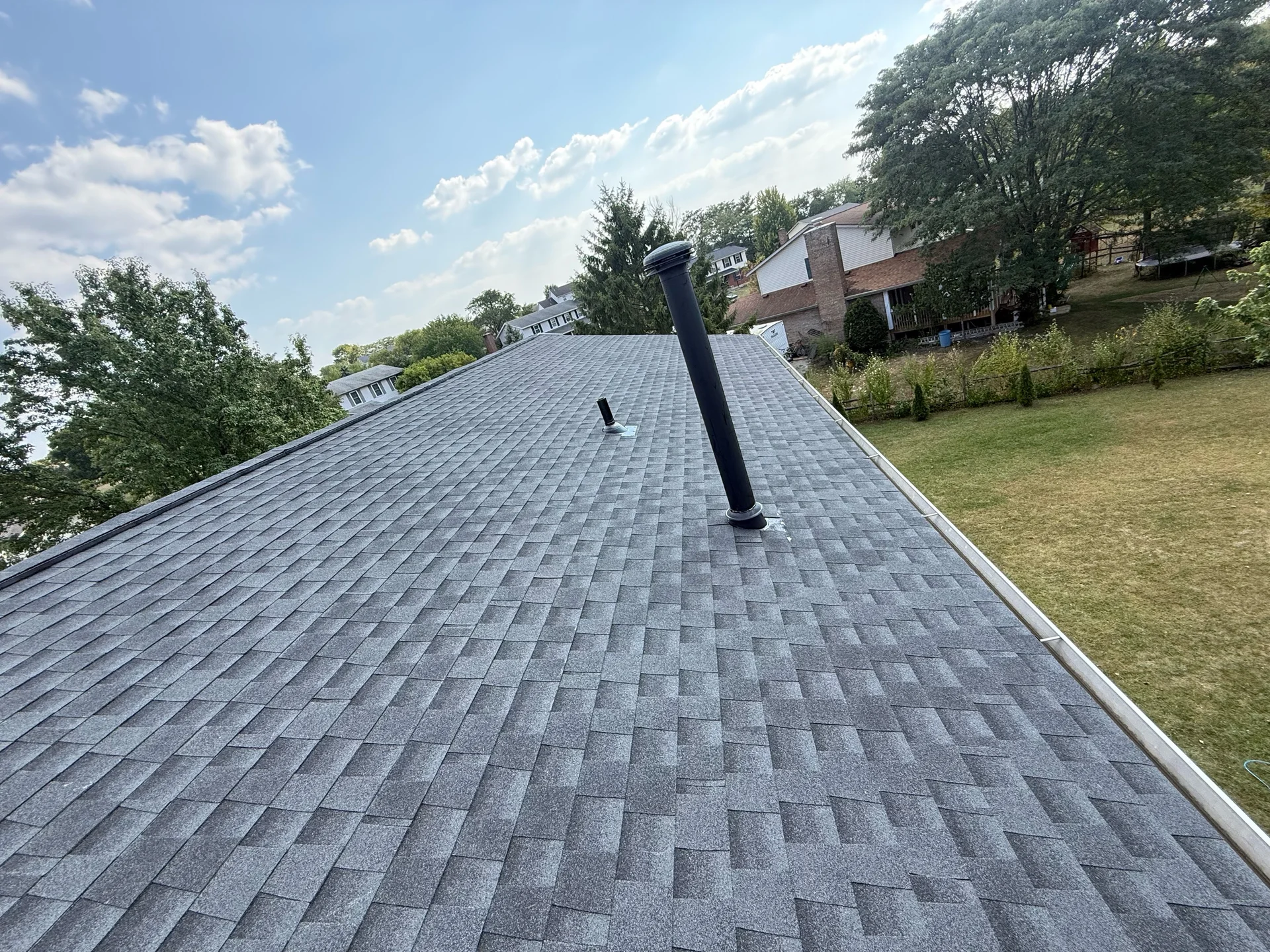
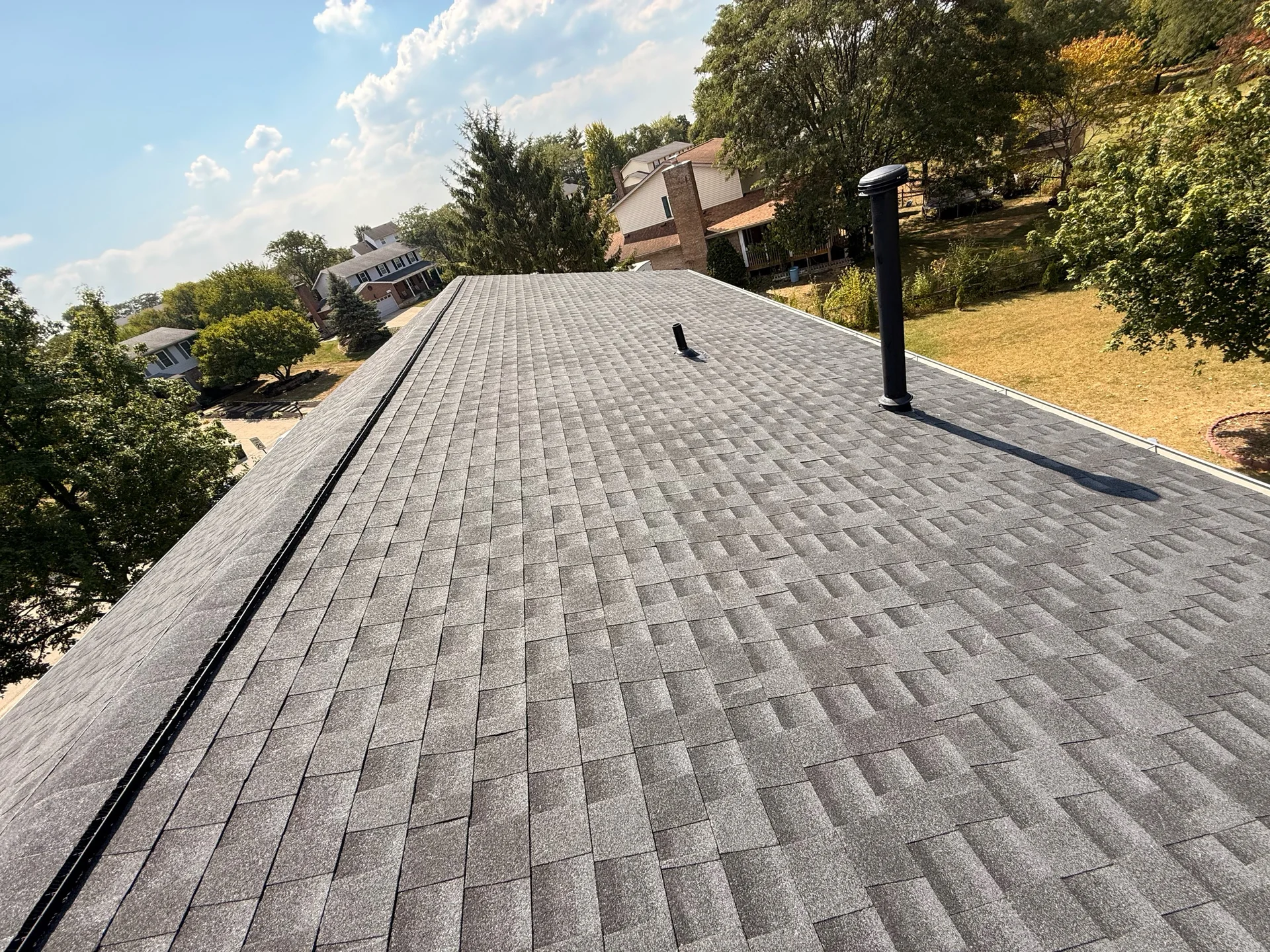
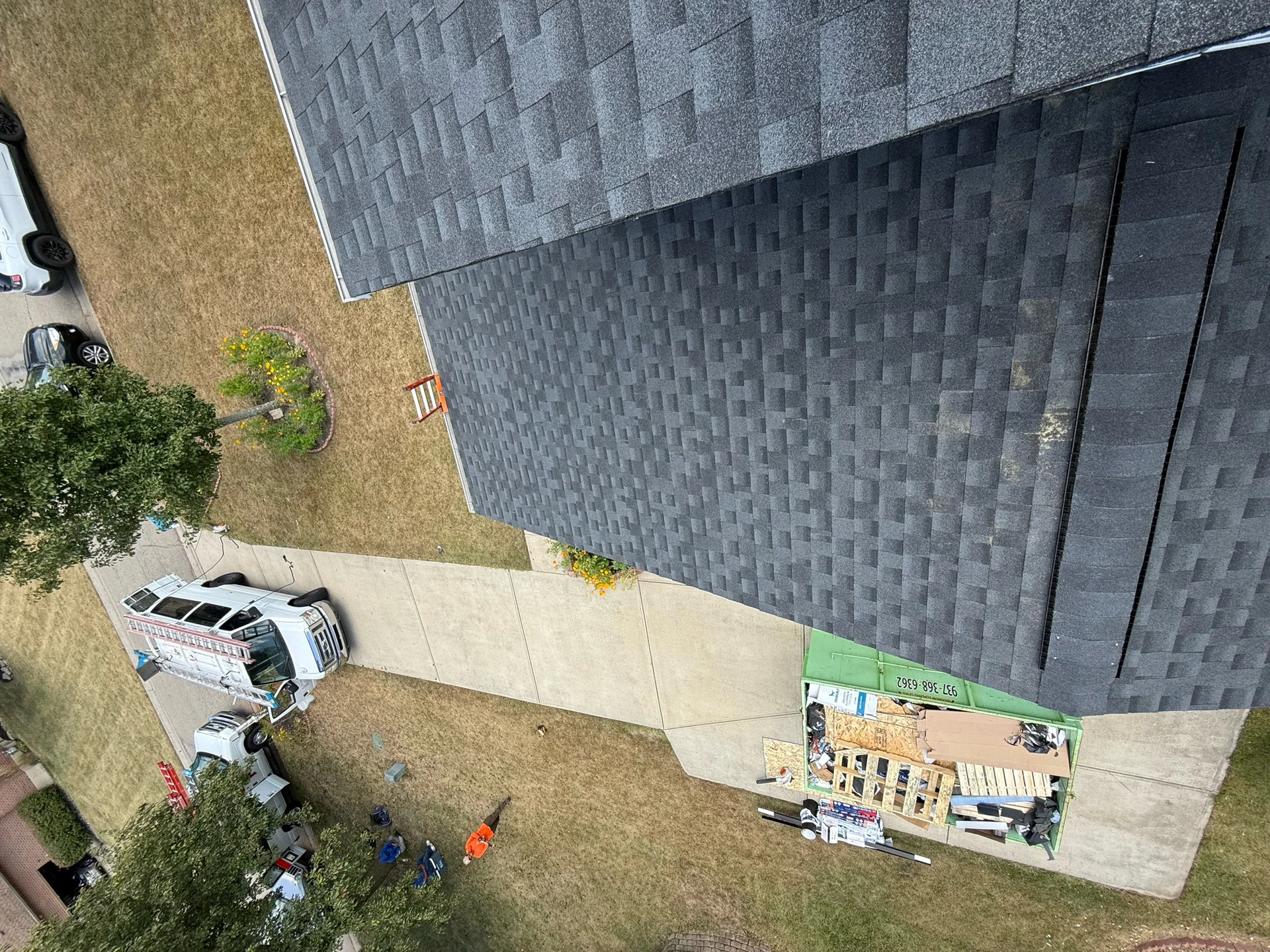
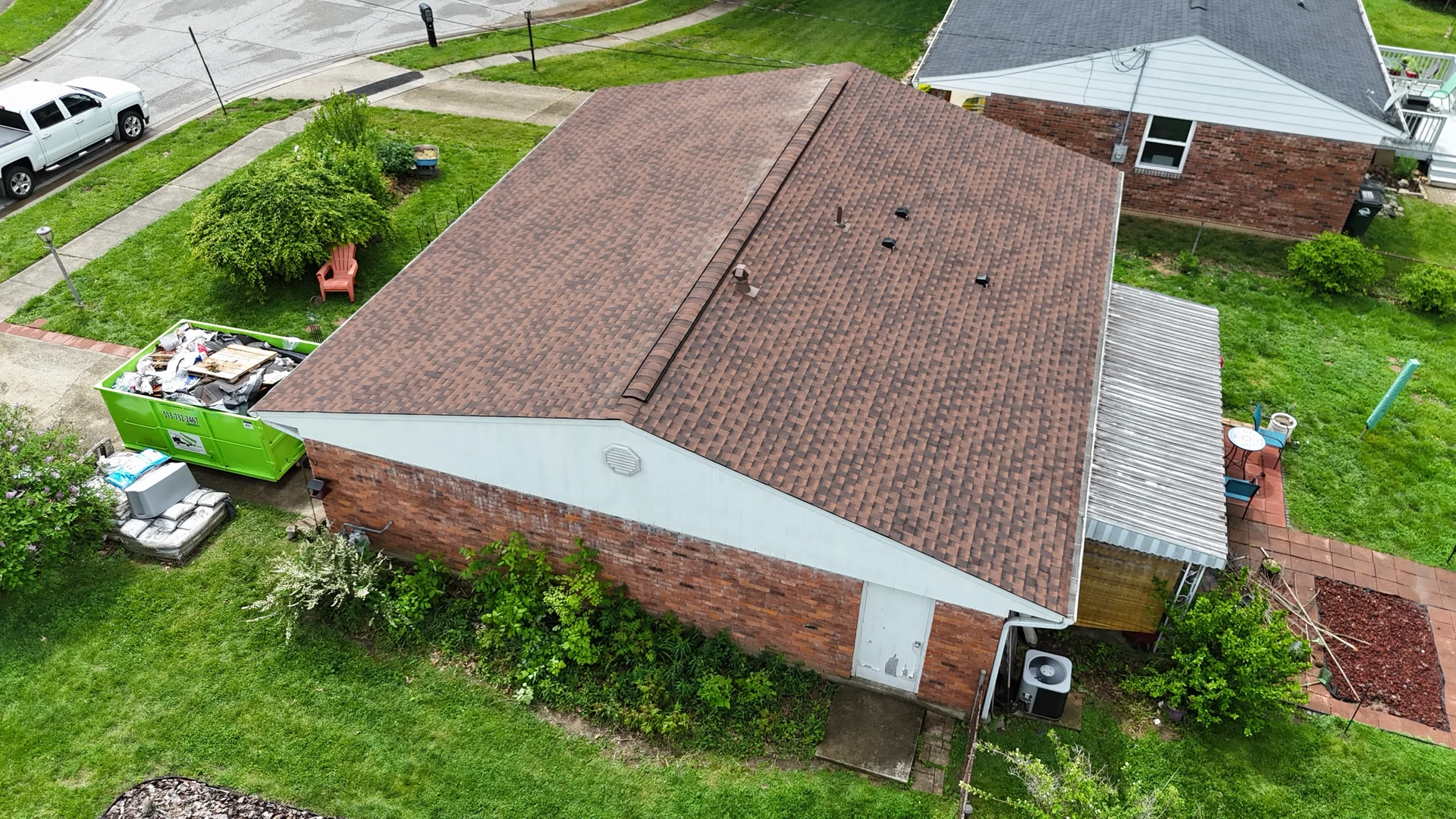
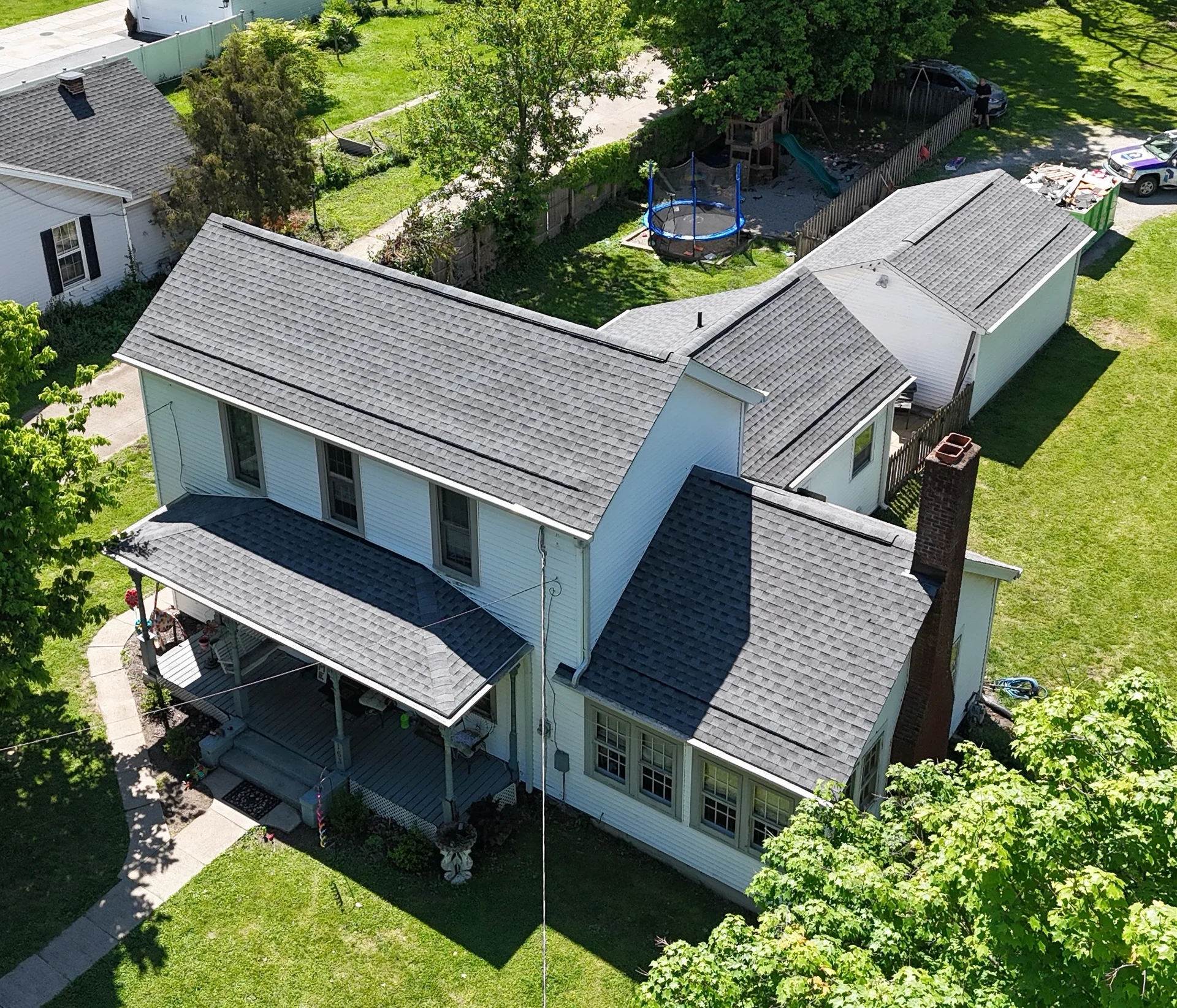
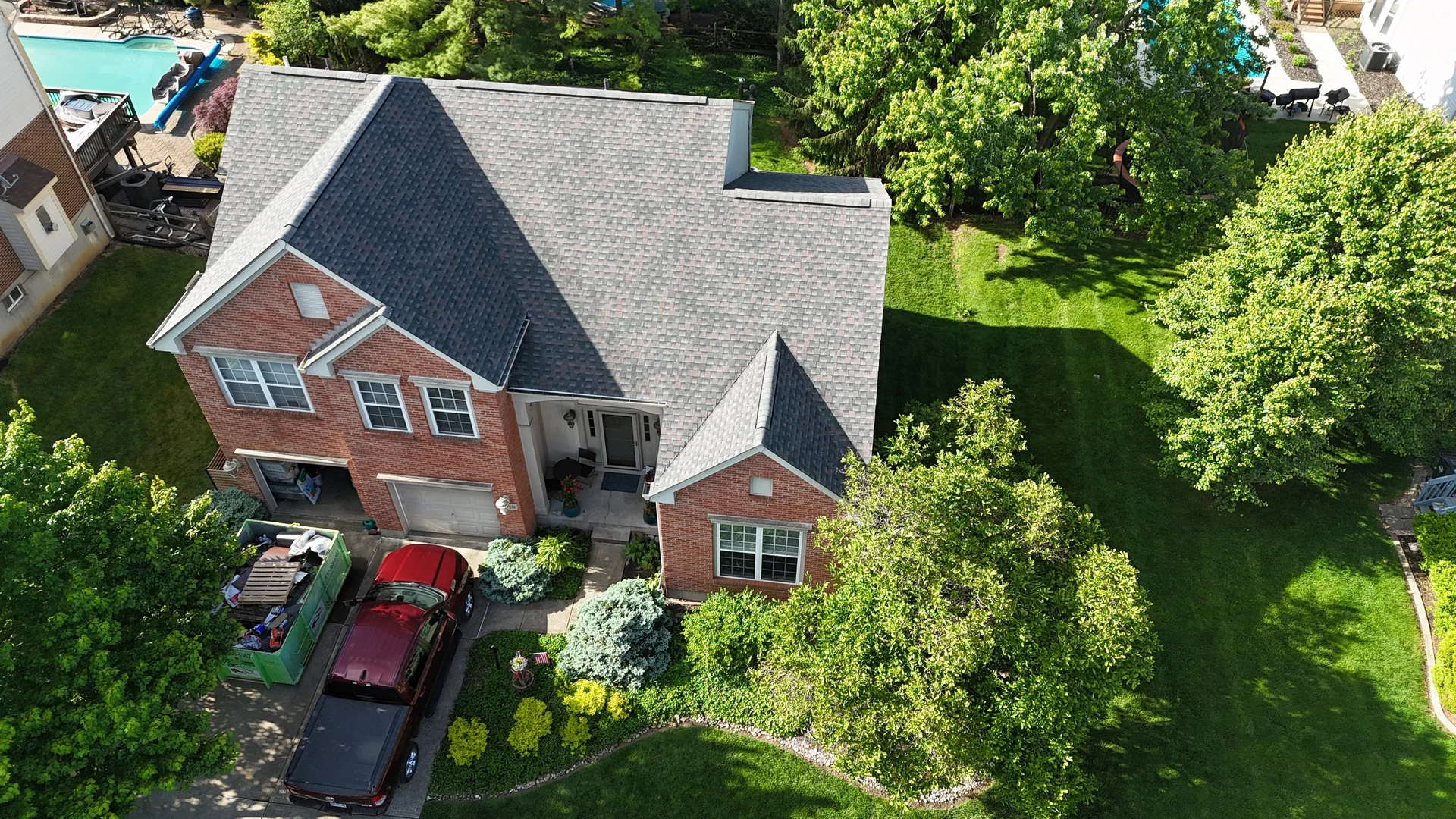
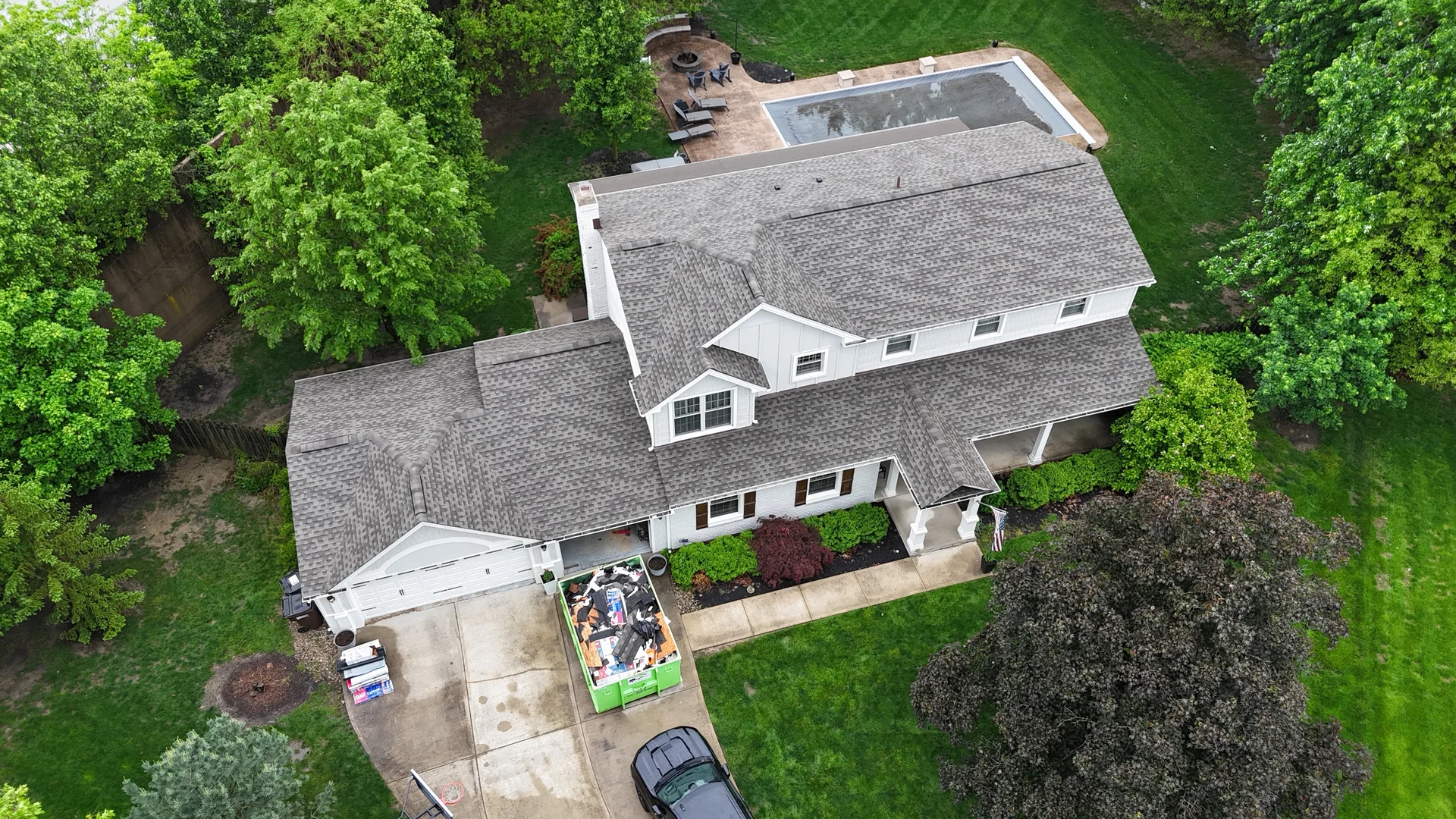
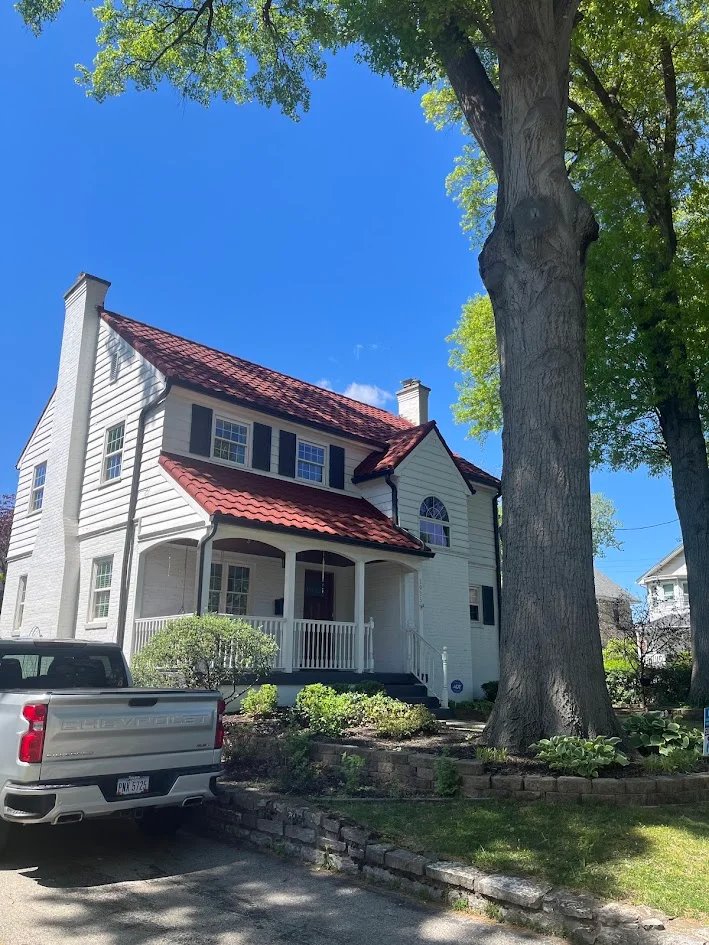
This Liberty Township home sits on an open lot with farmland behind it, and one long uninterrupted plane of roof facing the weather. The old roof had run its course and was replaced with a GAF Timberline HDZ system in charcoal.
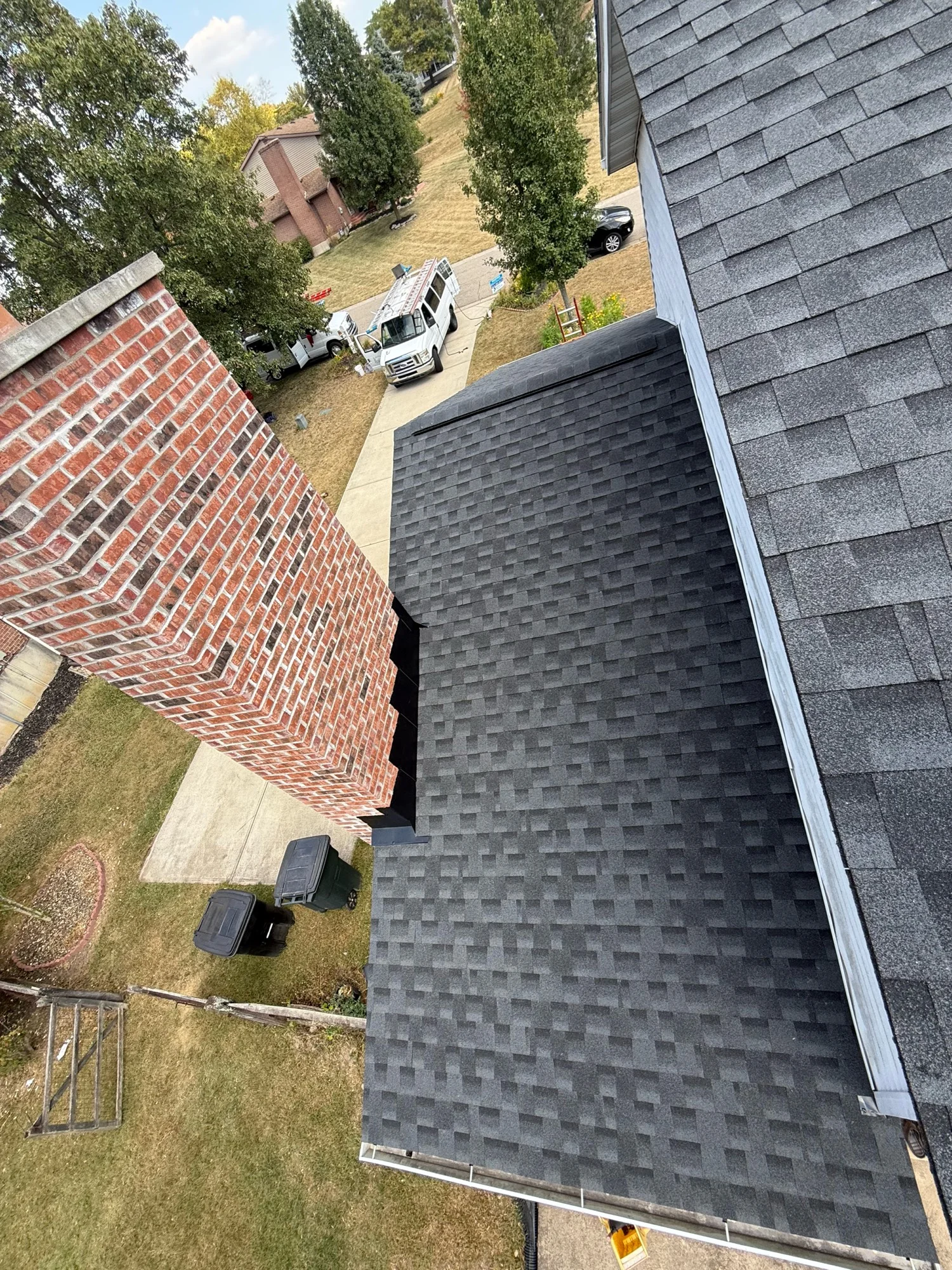
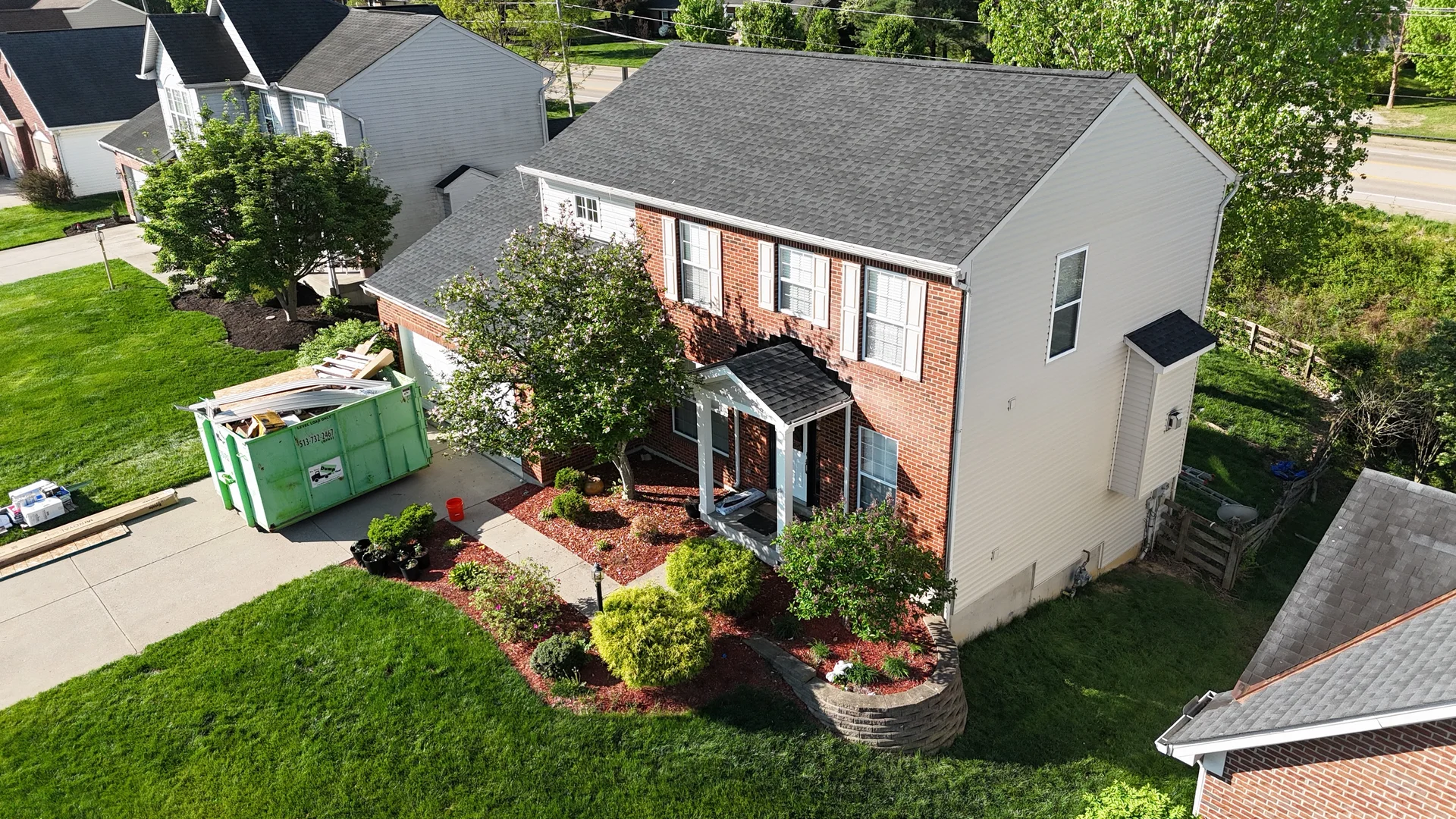
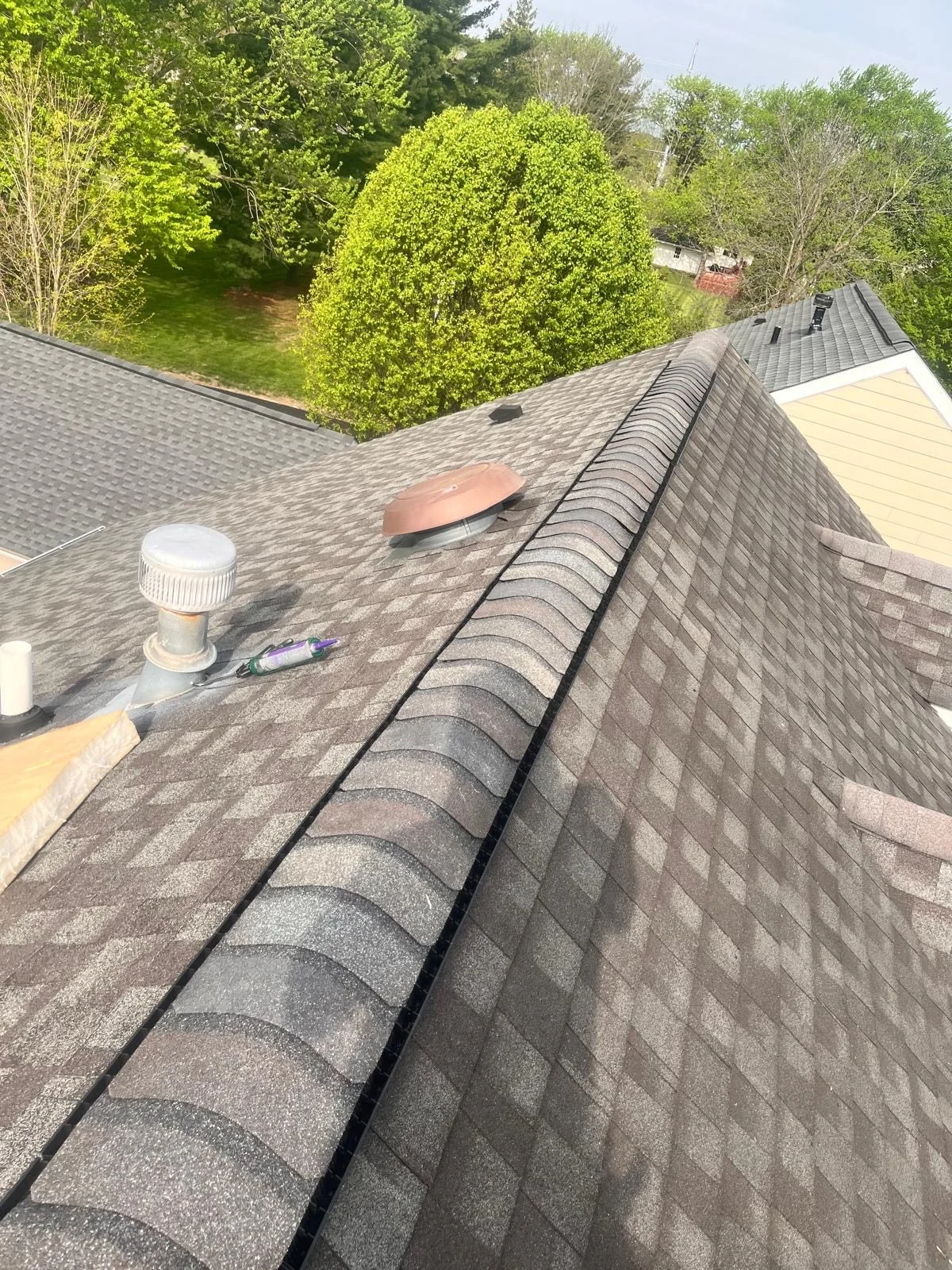
Before the quote, the roof was looked at as an assembly rather than as a surface: the condition of the deck under the old shingles, whether the attic was ventilated well enough to keep a new roof from cooking itself, and every place something comes through the roof plane or runs into something else. On this house that meant flue pipes — one out in the field and two more up at the ridge — and the run where the roof meets the red brick chimney wall and terminates into the gutter.
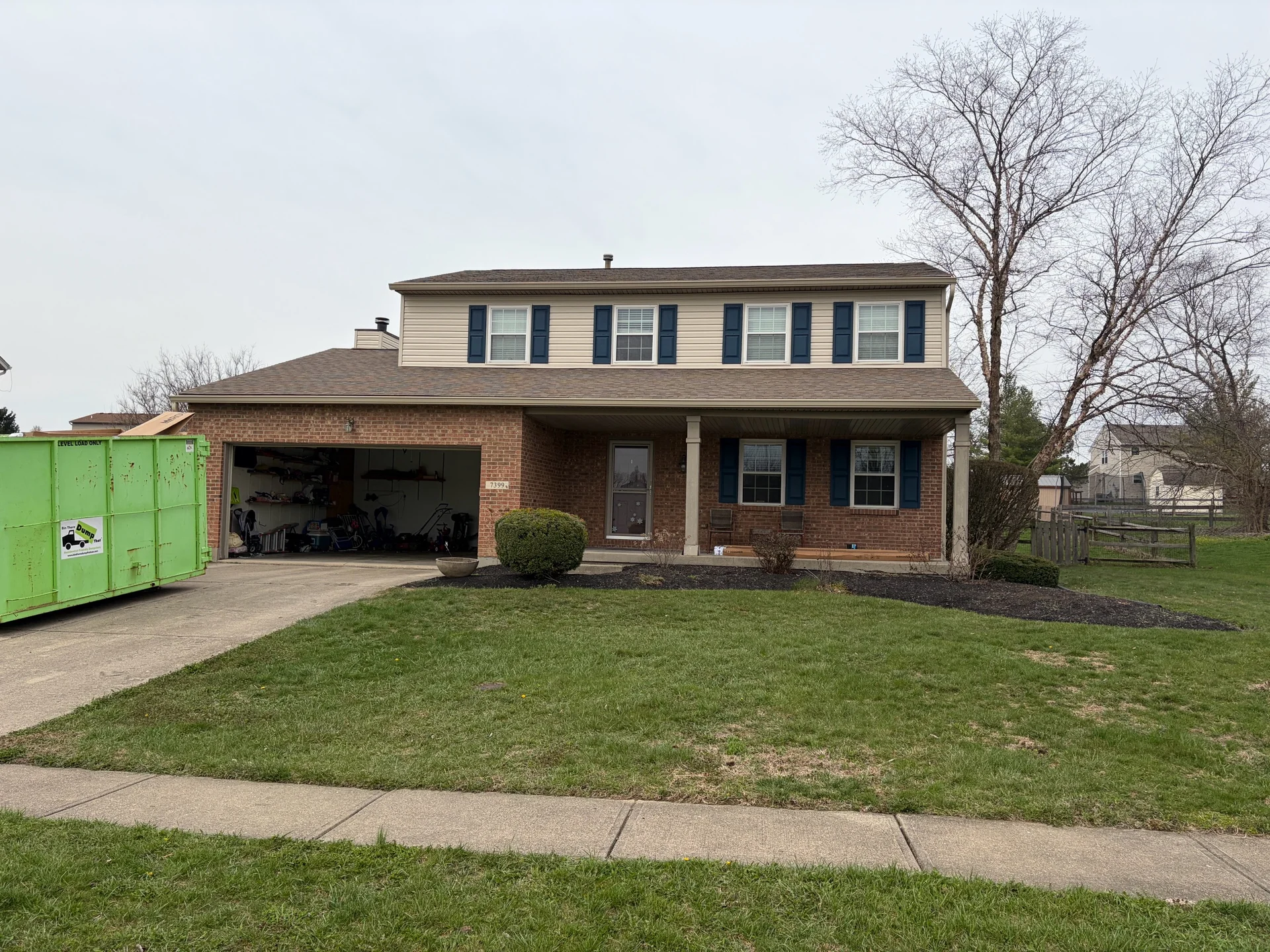
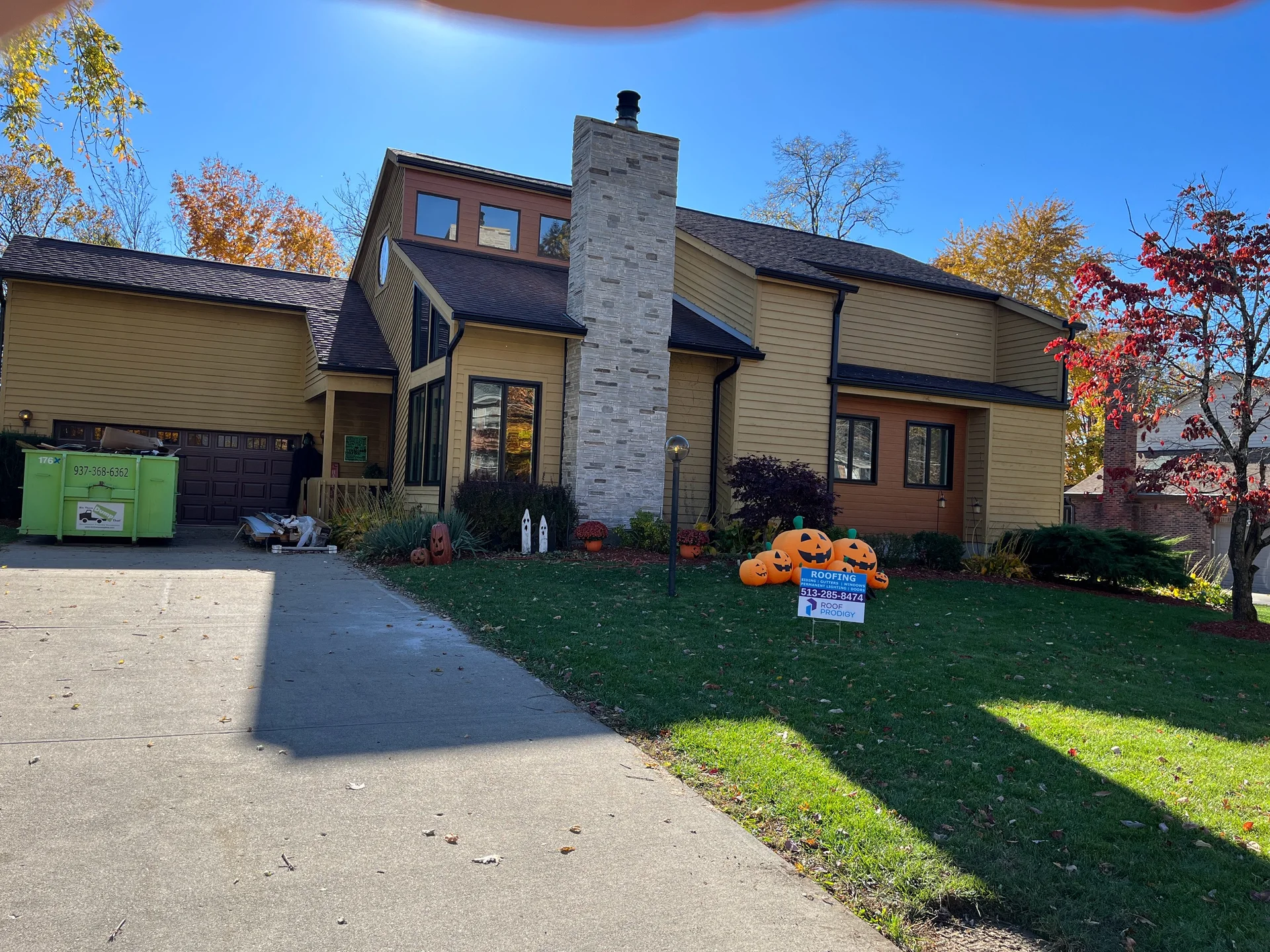
The work went in as a tear-off, with a dumpster in the drive and the old roof coming off before any new material went down. What the homeowner has now is a new field of shingles and, more to the point, new metal and new seals at every place that field is interrupted.
This Liberty Township home sits on an open lot with farmland behind it, and one long uninterrupted plane of roof facing the weather. The old roof had run its course and was replaced with a GAF Timberline HDZ system in charcoal.
Before the quote, the roof was looked at as an assembly rather than as a surface: the condition of the deck under the old shingles, whether the attic was ventilated well enough to keep a new roof from cooking itself, and every place something comes through the roof plane or runs into something else. On this house that meant flue pipes — one out in the field and two more up at the ridge — and the run where the roof meets the red brick chimney wall and terminates into the gutter.
The work went in as a tear-off, with a dumpster in the drive and the old roof coming off before any new material went down. What the homeowner has now is a new field of shingles and, more to the point, new metal and new seals at every place that field is interrupted.
Technical Discussion
The parts of a roof that wear out first
The middle of a shingle field is the easy part of a roof. Courses overlap, water runs downhill, and there is nothing to get wrong that a competent crew would get wrong. This Liberty Township roof has three flue pipes, one in the field and two at the ridge, and a long run where the roof meets the brick chimney wall. Those are the places the roof depends on something other than shingles, and the somethings have shorter lives than the shingles do.
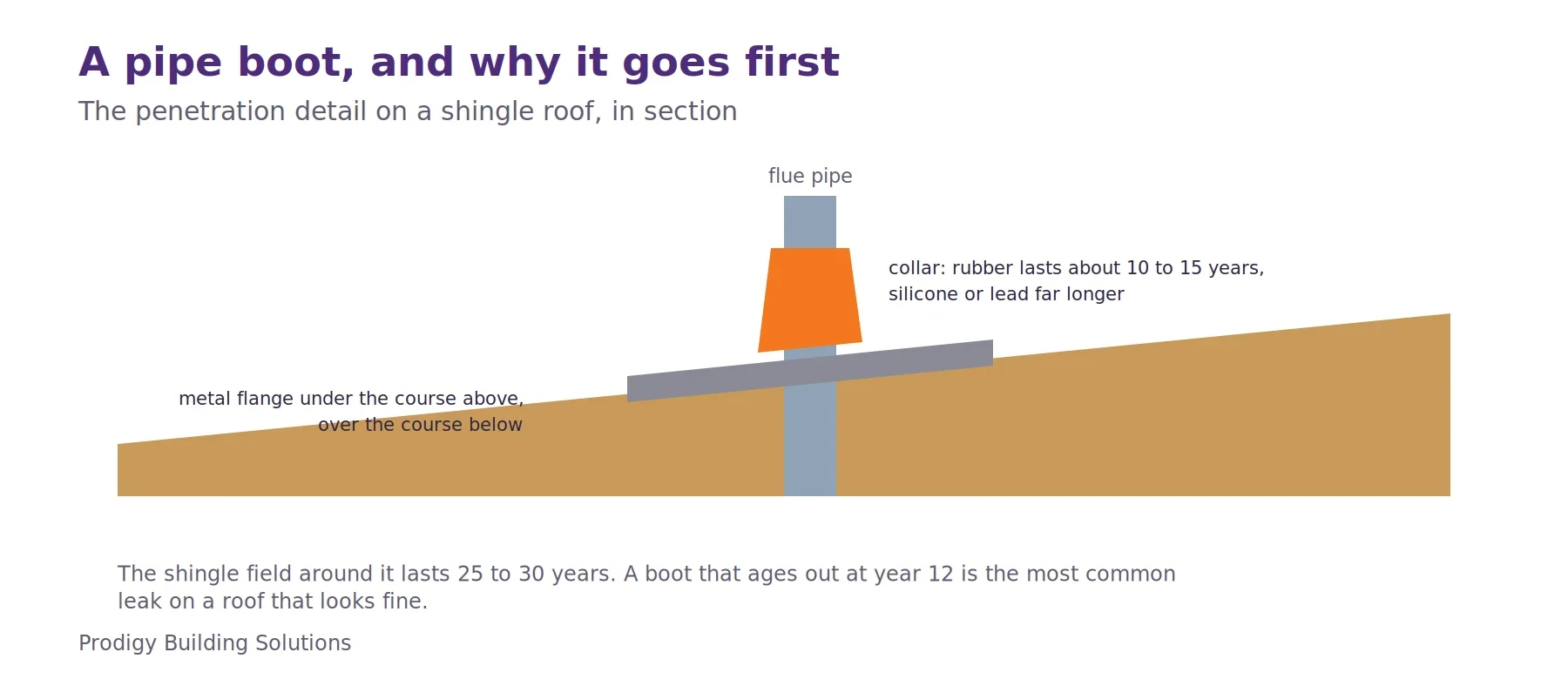
Figure 1 — The boot, not the shingle, is usually where a roof leaks first.
Pipe boots
A plumbing or flue penetration is sealed by a boot, a metal flange with a collar that grips the pipe. The standard collar is a rubber ring, and rubber in full sun hardens and splits in something like 10 to 15 years, well short of the 25 to 30 years a laminated shingle field can last. That is the most common single source of a leak on a roof that otherwise looks fine. On a replacement every boot comes off with the old shingles and a new one goes in, set so the shingle above laps the flange and the flange laps the shingle below. Where a boot sits on a roof the owner does not want to revisit, a silicone collar or a lead boot with no rubber part at all outlasts the standard one.
The roof-to-wall line
Where the roof runs along the chimney wall, water is turned by metal: a piece of step flashing per course, each one bent to run at least 4 inches up the wall and 4 inches onto the roof and lapped at least 2 inches over the one below, covered by counter flashing let into the brick. It is woven in as the courses go up, which is why it cannot be added after the fact without lifting shingles, and why a tear-off is the moment it gets renewed.
The edges
At the ridge the vent and cap are new. At the eaves new drip edge and gutter apron carry water off the deck into the gutter instead of behind it, and 36 inches of ice-and-water shield sits under the first courses. The cheap version of a tear-off skips most of this: new shingles laid to old metal, old boots, old sealant. From the driveway the two roofs are identical.
When you compare quotes for the same shingle, the difference is usually in these lines. A proposal that is quiet about the boots, the step flashing and the edge metal is quiet about the parts that fail first.