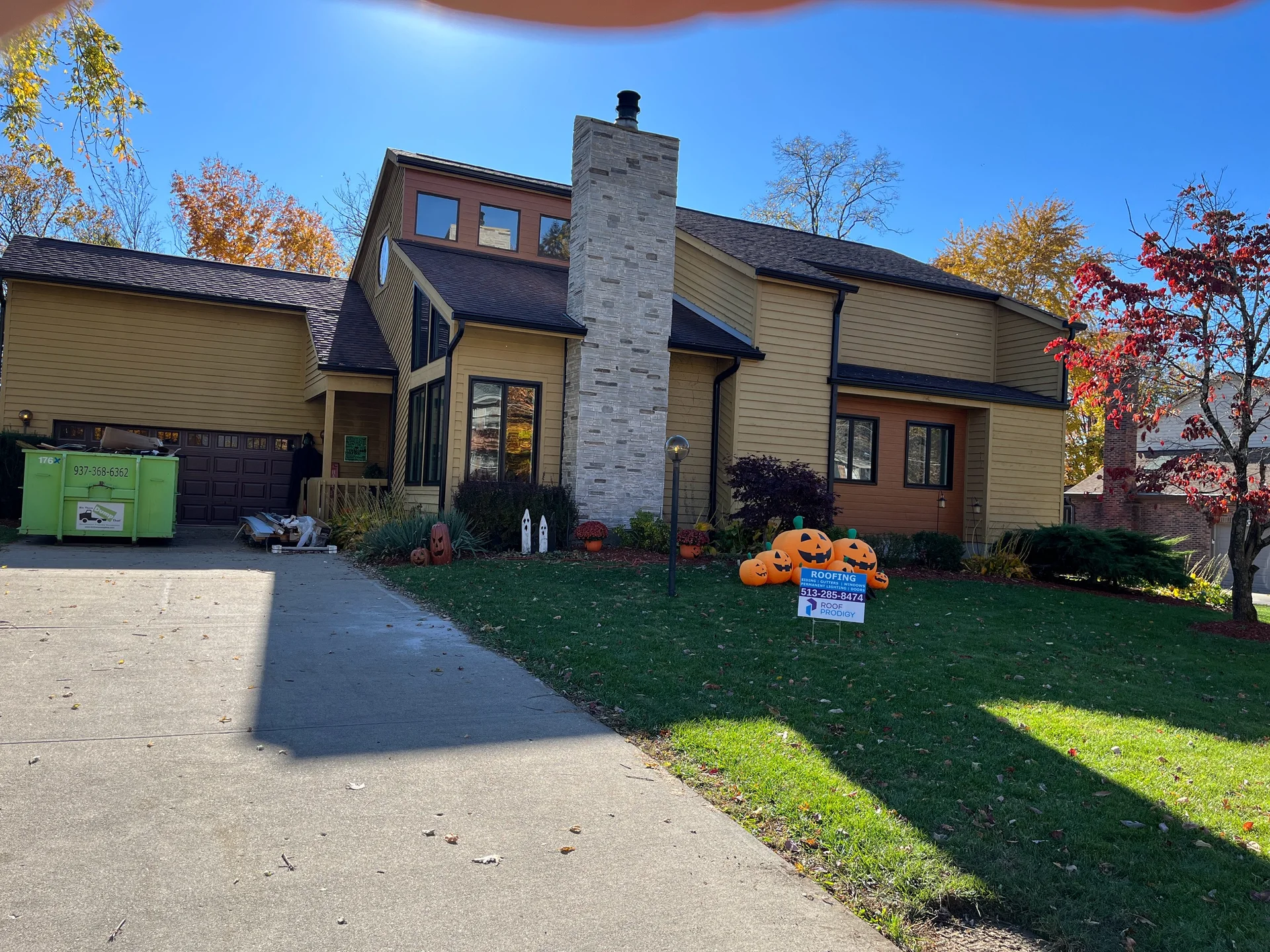
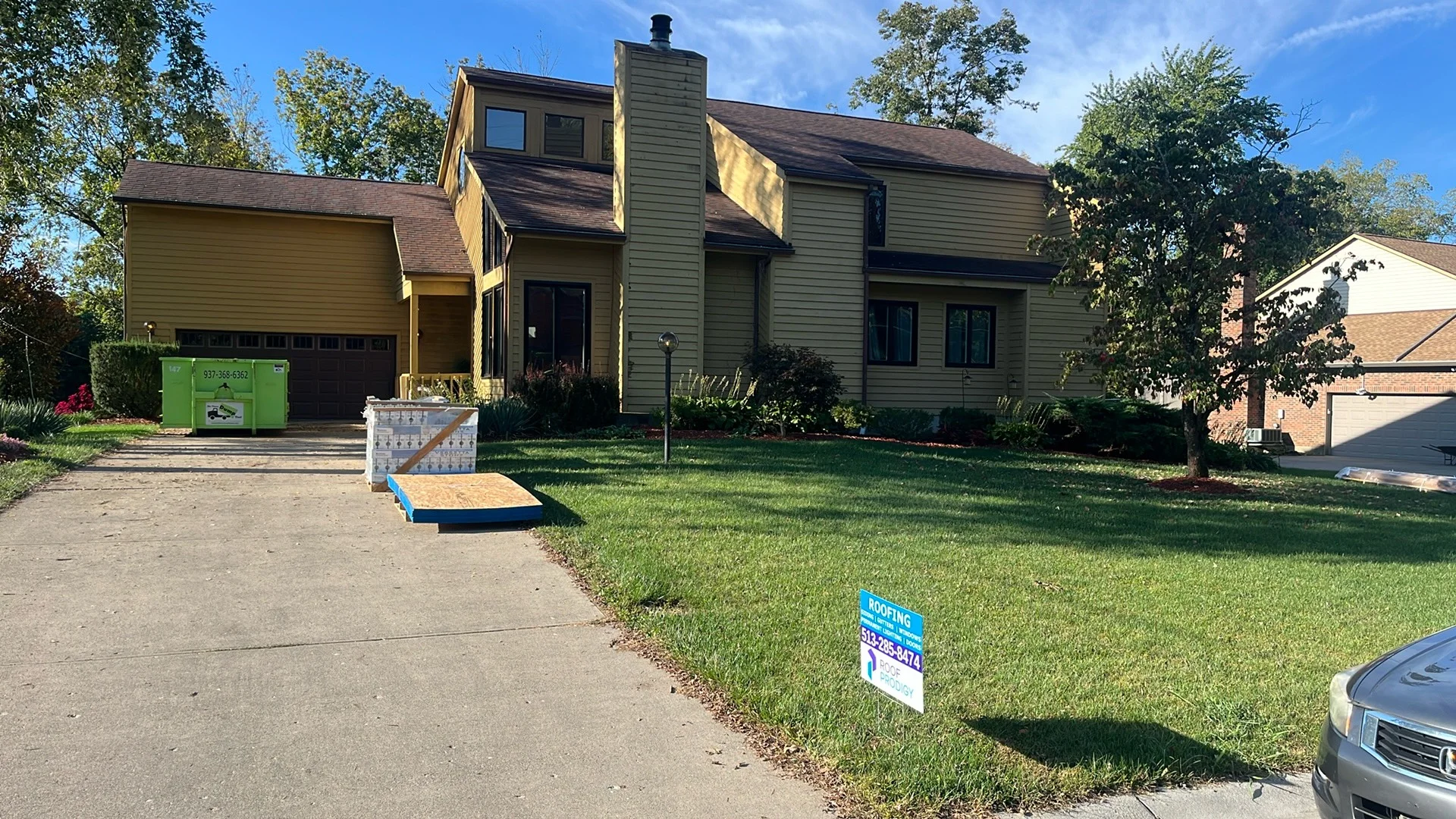
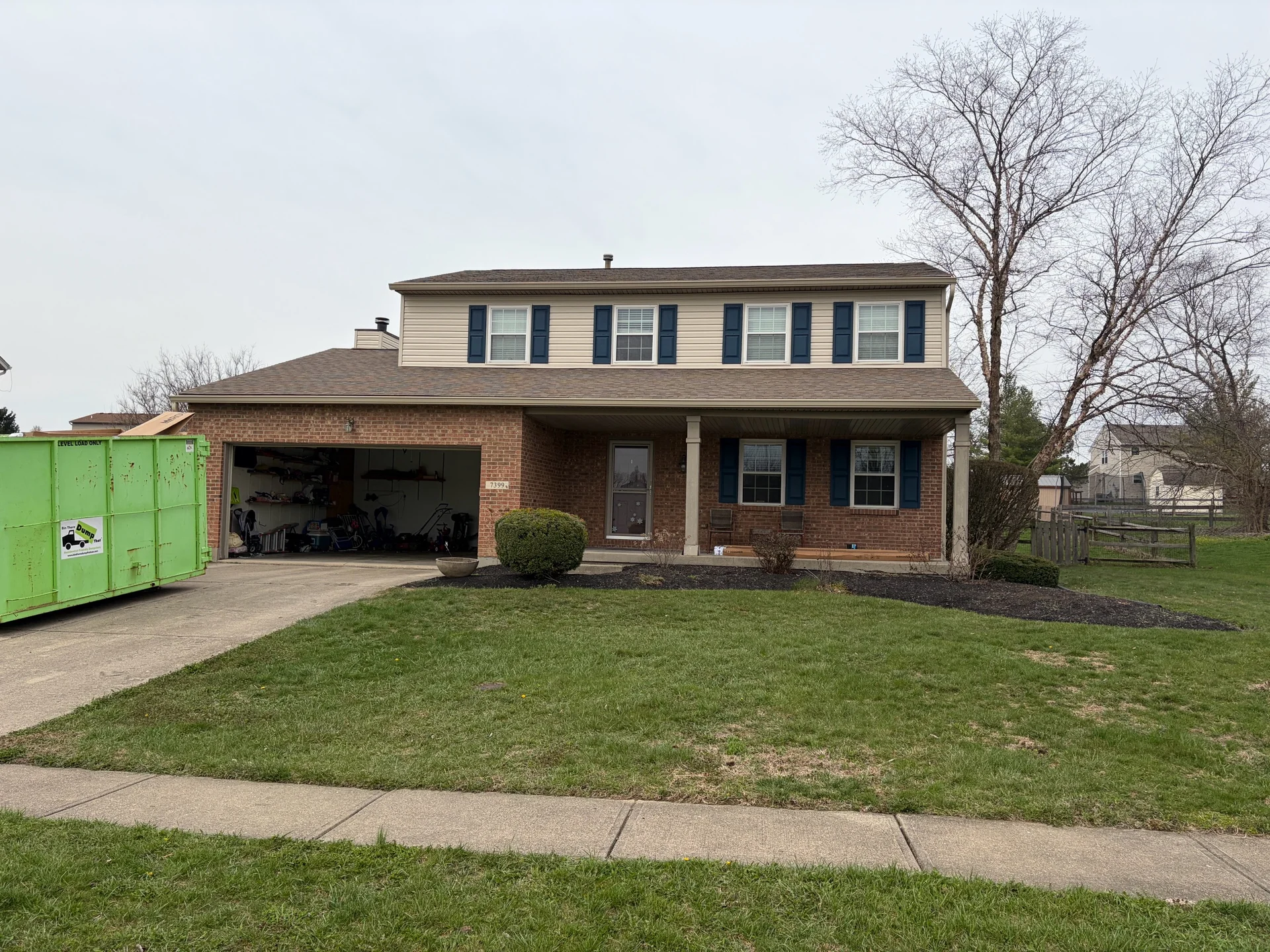
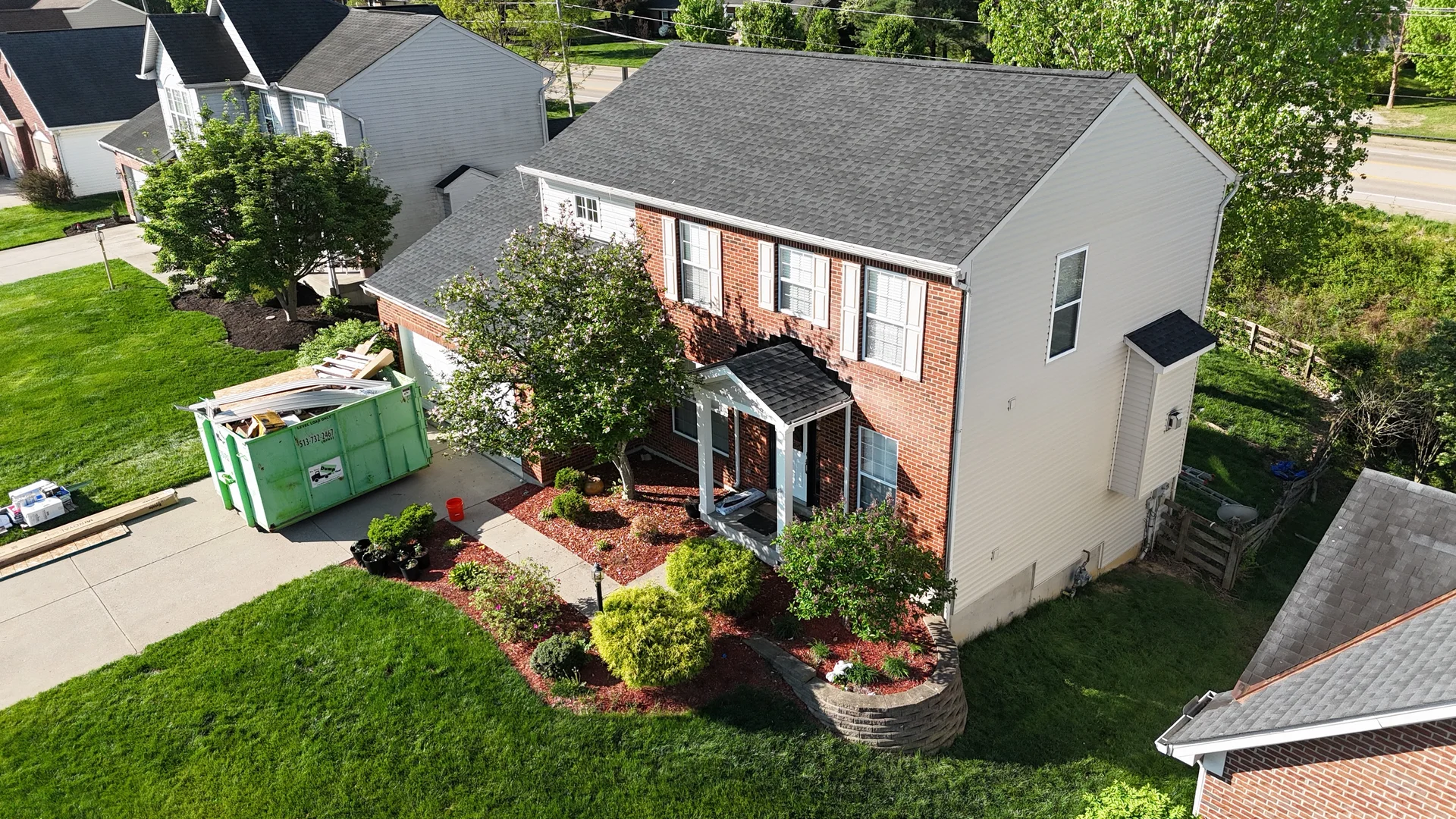
This Pisgah house had wood siding that had started to rot away — worst around the chimney, and across the front of the house. Wood will do that wherever water is concentrated and slow to dry, and a chimney manages both at once.
The chimney was rebuilt in stone, and stone veneer was carried through the other areas marked for it on the elevation drawings, which were color-keyed so there was no argument on site about where one system stopped and the other started. Everywhere else the old wood came off and the wall went back as a build-up rather than a surface: vapor barrier, house wrap, then a maintenance-free lap cladding, with J-channel, trim pieces and corner posts closing every edge and penetration.
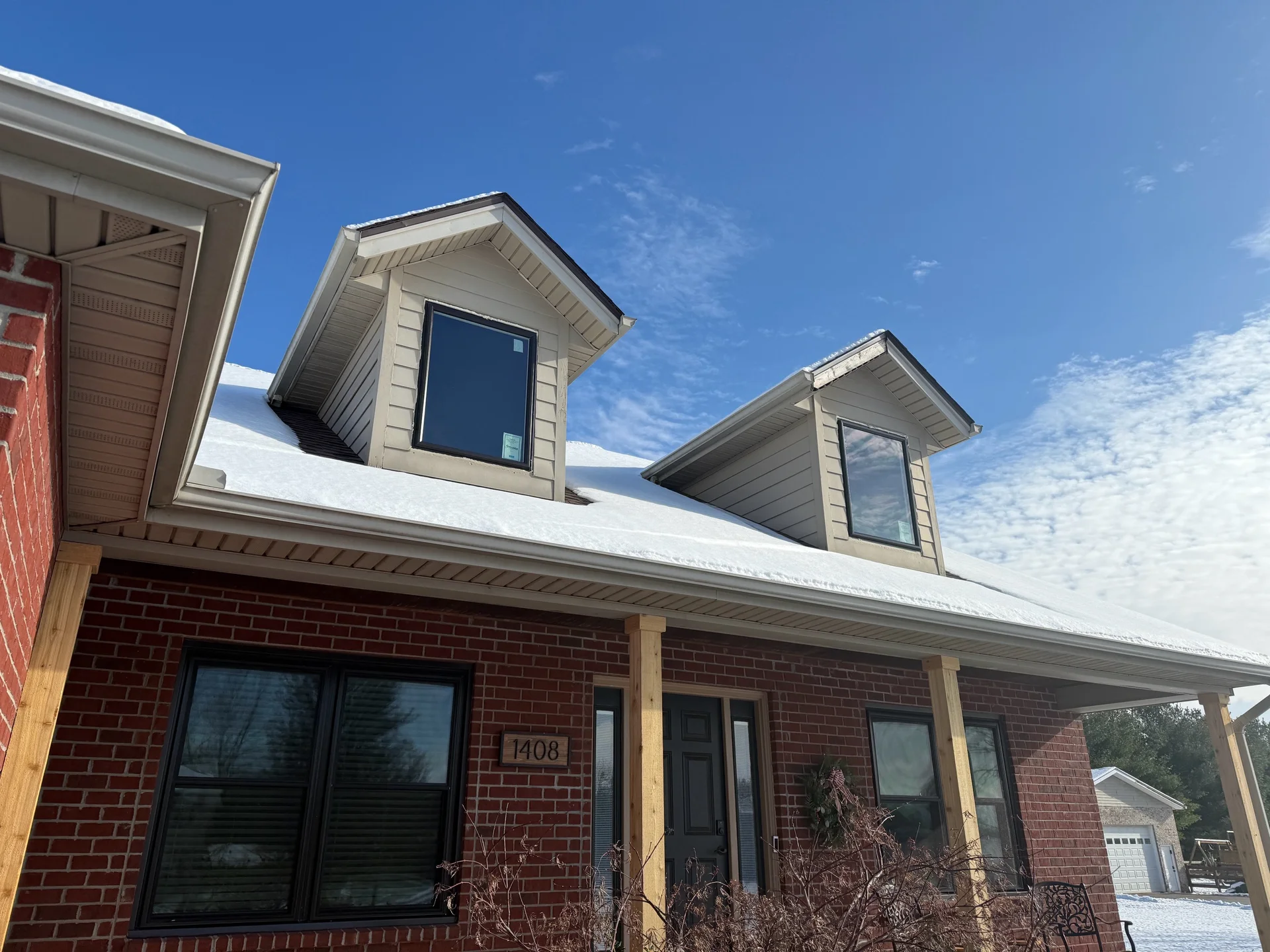
The finished house is tan lap siding against a stone chimney. The practical difference for the homeowner is that the painting cycle is over, and the junction that failed the first time has been rebuilt rather than sealed up and hoped about.
This Pisgah house had wood siding that had started to rot away — worst around the chimney, and across the front of the house. Wood will do that wherever water is concentrated and slow to dry, and a chimney manages both at once.
The chimney was rebuilt in stone, and stone veneer was carried through the other areas marked for it on the elevation drawings, which were color-keyed so there was no argument on site about where one system stopped and the other started. Everywhere else the old wood came off and the wall went back as a build-up rather than a surface: vapor barrier, house wrap, then a maintenance-free lap cladding, with J-channel, trim pieces and corner posts closing every edge and penetration.
The finished house is tan lap siding against a stone chimney. The practical difference for the homeowner is that the painting cycle is over, and the junction that failed the first time has been rebuilt rather than sealed up and hoped about.
Technical Discussion
Why the rot started at the chimney
Rot is not random. It appears where water is delivered in quantity and where the wall cannot dry afterwards, and a chimney is one of the few places on a house that reliably produces both conditions in the same square foot.
Start with the delivery. A chimney interrupts a wall and usually a roof plane as well. Water that falls across a wide stretch of roof gets steered around the chase and arrives at its two sides in a narrow band — the same volume, through a much smaller opening. On top of that, masonry is absorbent and a chimney is a tall vertical face standing out in the weather, so wind-driven rain hits it, runs down it and lands on whatever is below. The siding under a chimney is not seeing average rainfall. It is seeing several times average.
Now the drying, which is the half that actually kills the wood. The chimney is where the wall stops, so it is where every piece of siding has a cut end. End grain drinks water many times faster than a face does, and those cut ends are butted into masonry with a flashing behind them and a bead of sealant in front. Sealant has a service life measured in years, not decades, and it is being asked to bridge two materials that expand and contract at different rates through every freeze and every August. The joint works itself open. Once it is open, water is inside the wall in the one location with the least air movement and the least sun, and it stays there.
This is why re-cladding a house without touching that junction only buys a few years. New siding over the same flashing, tucked against the same masonry, sealed with a fresh bead, is the identical detail started over — and the wood behind it is often already soft, so the new cladding is being hung on a wall that is quietly failing behind it. The siding looks finished from the driveway on the day it goes up. That was true the first time too.
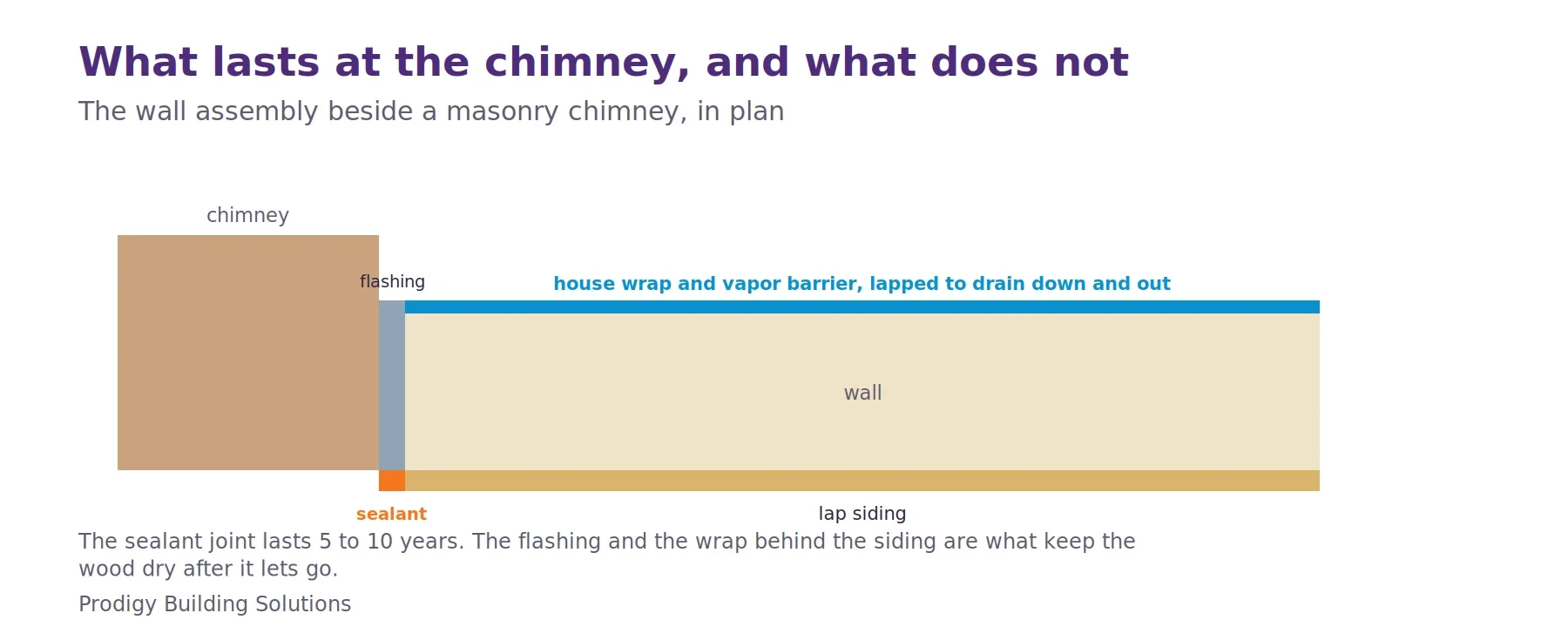
Figure 1 — Cladding is a first line, not a seal. The layers behind it are built to drain.
The sealant is the part with a date on it. A good exterior sealant joint lasts somewhere between 5 and 10 years before it loses adhesion on one side, and a masonry-to-siding joint moves through every freeze and every August, so it is usually at the short end. The flashing and the house wrap behind the cladding are what last: a properly lapped wall drains water that gets past the surface down and out at the bottom, so the joint at the chimney can fail and the wood behind it still stays dry.
On this house the chimney itself was rebuilt, which meant that junction was made new rather than patched around. Behind the new cladding the wall got a vapor barrier and house wrap, so there is a continuous layer whose job is to handle whatever gets past the outer surface. That is the change in thinking worth taking away: cladding is not a seal, it is a first line, and the wall behind it should be built on the assumption that some water will get through — because at a chimney, some water always does.
If you have rot showing up at a chimney, the question to ask a contractor is not which siding is going on. It is what is happening at that junction, what the flashing will look like, and what is going behind the new material. If the answer is a fresh bead of caulk, you are buying the same wall again.