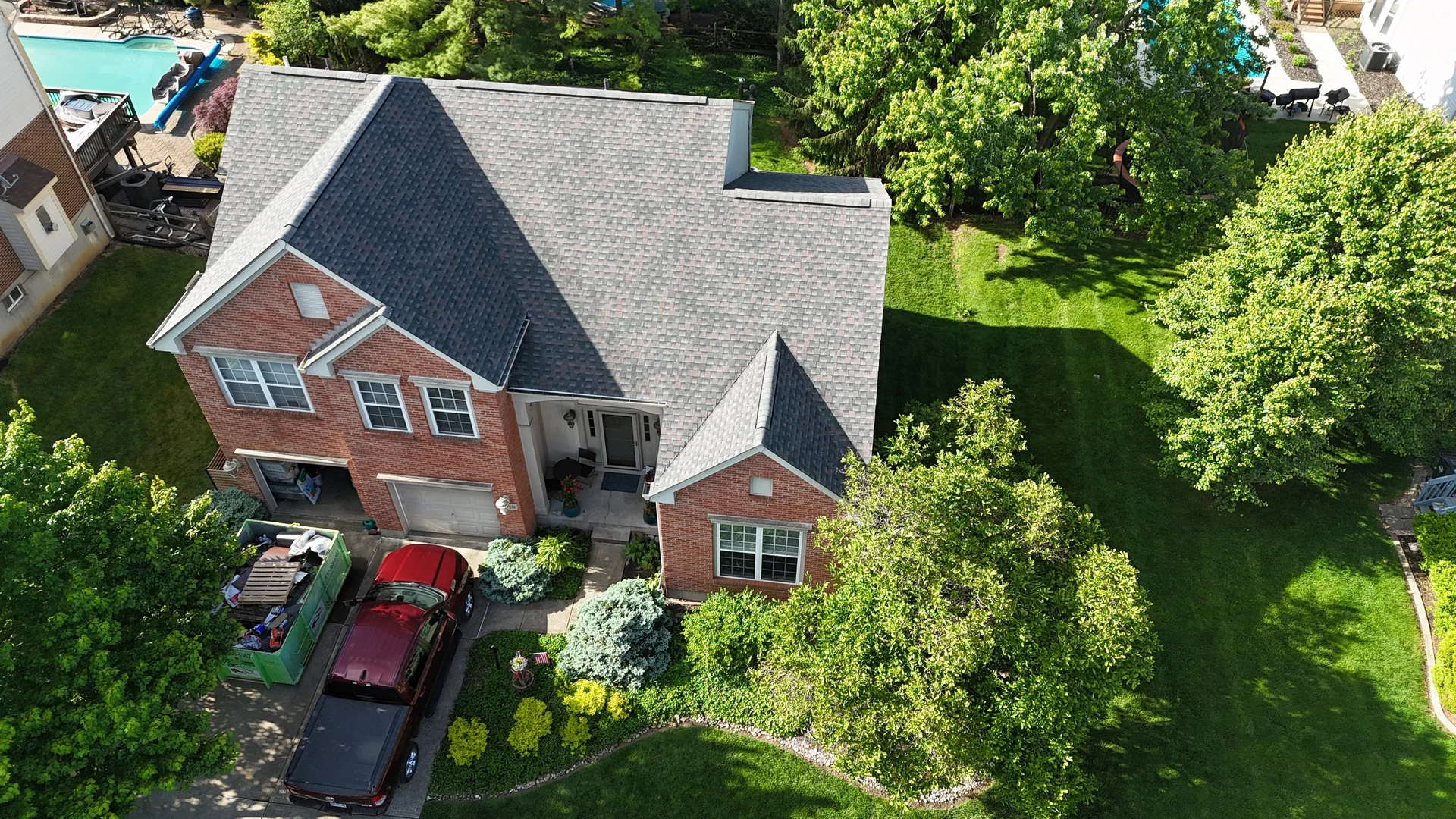
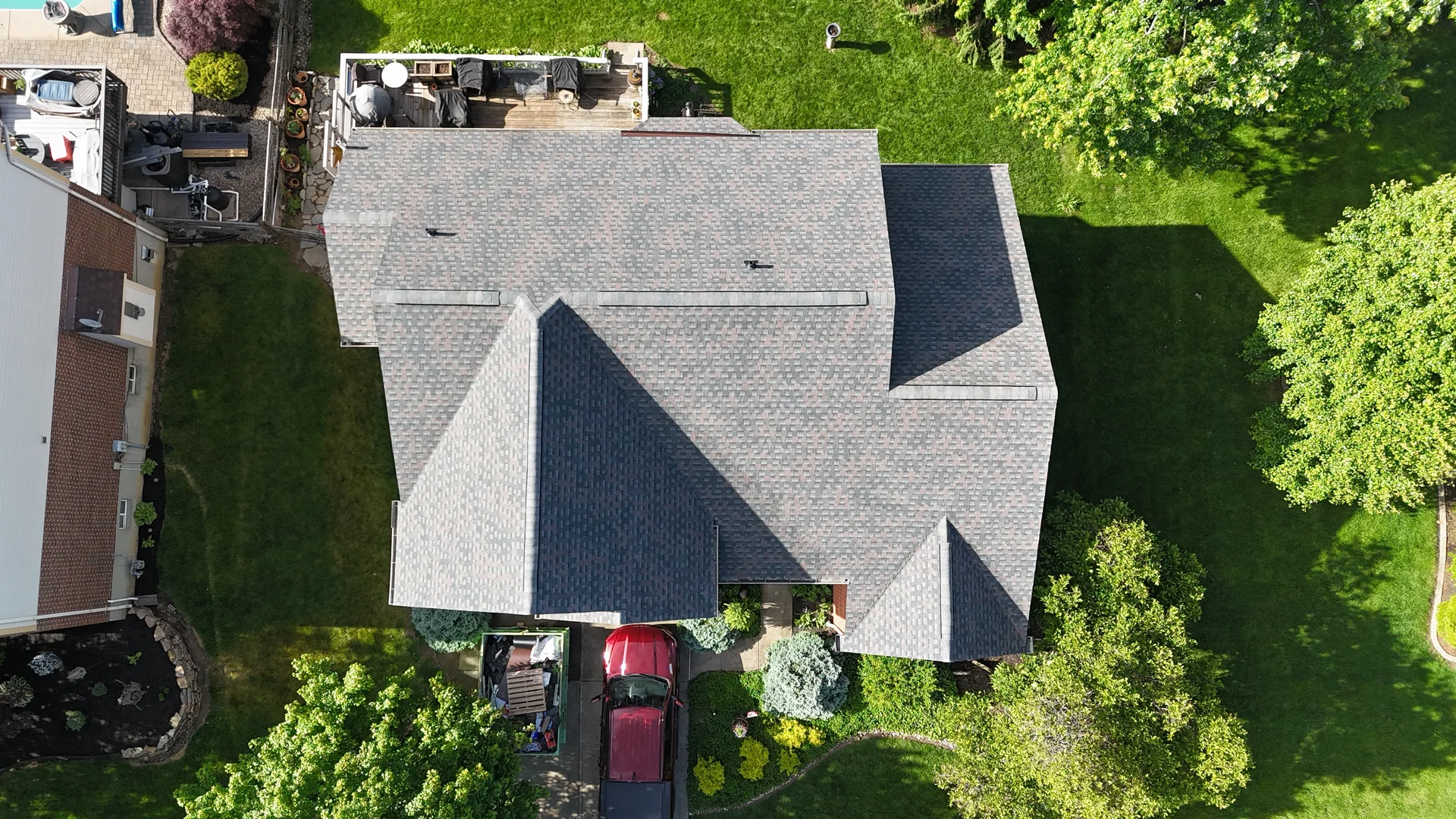
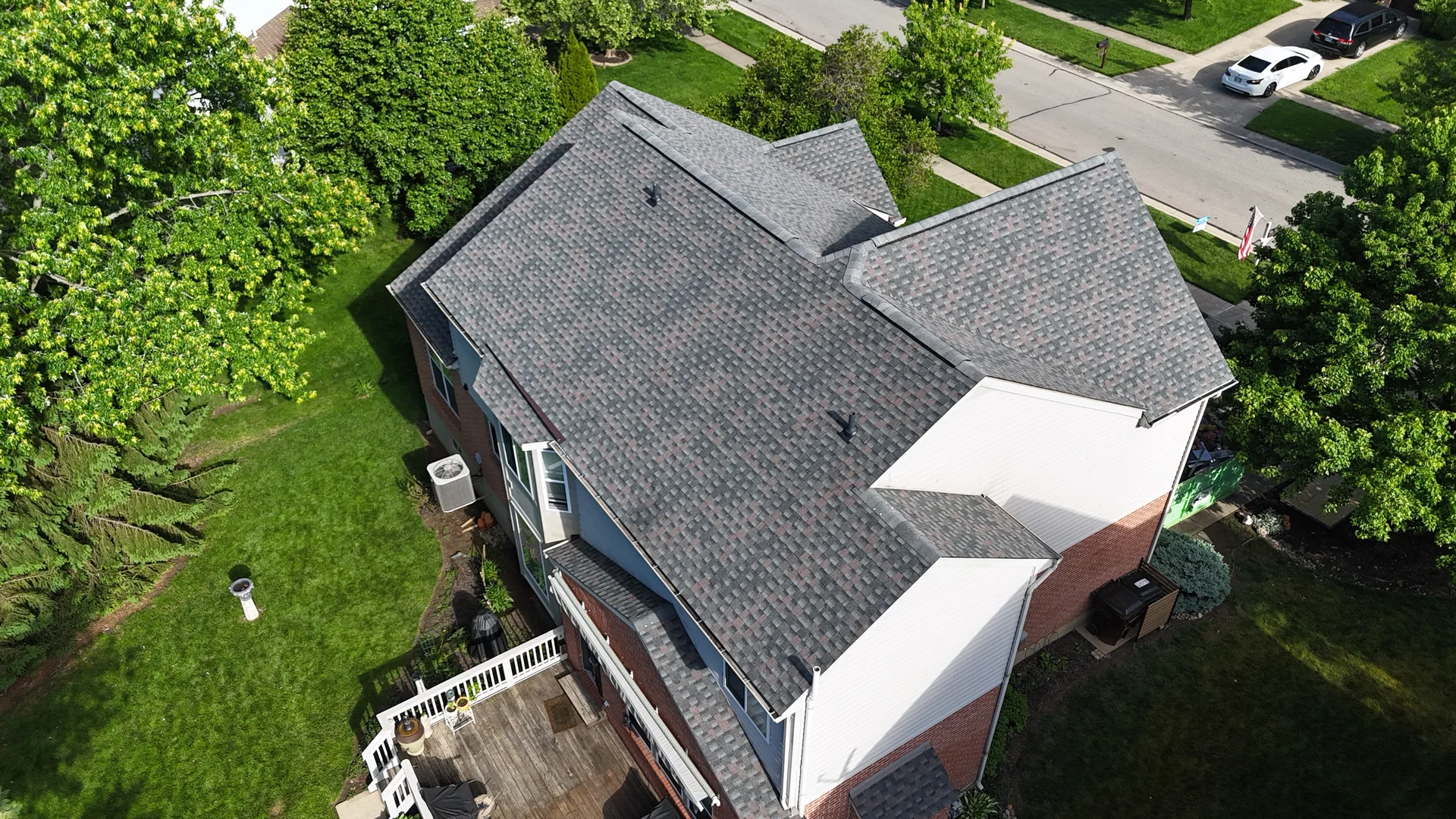
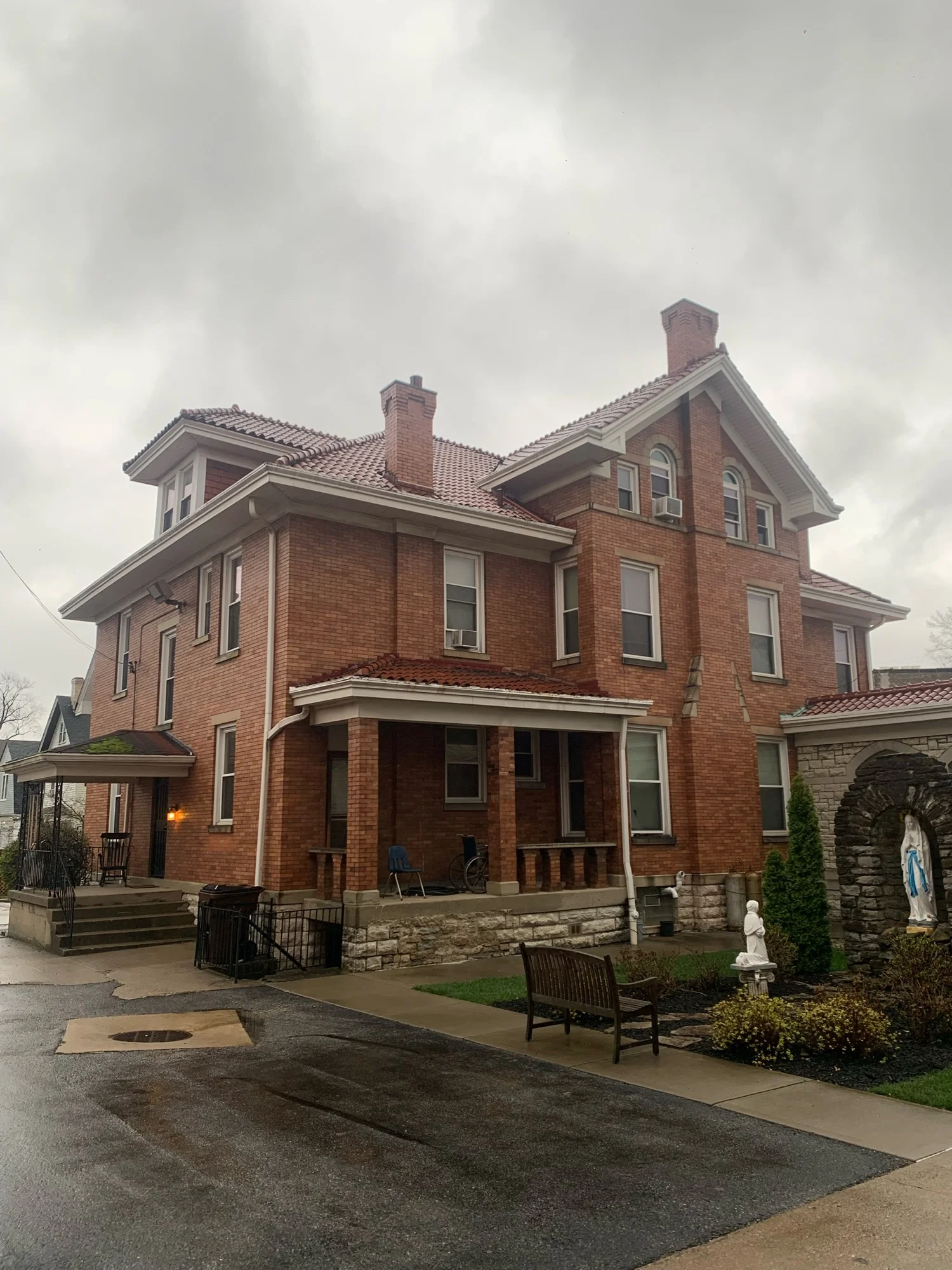
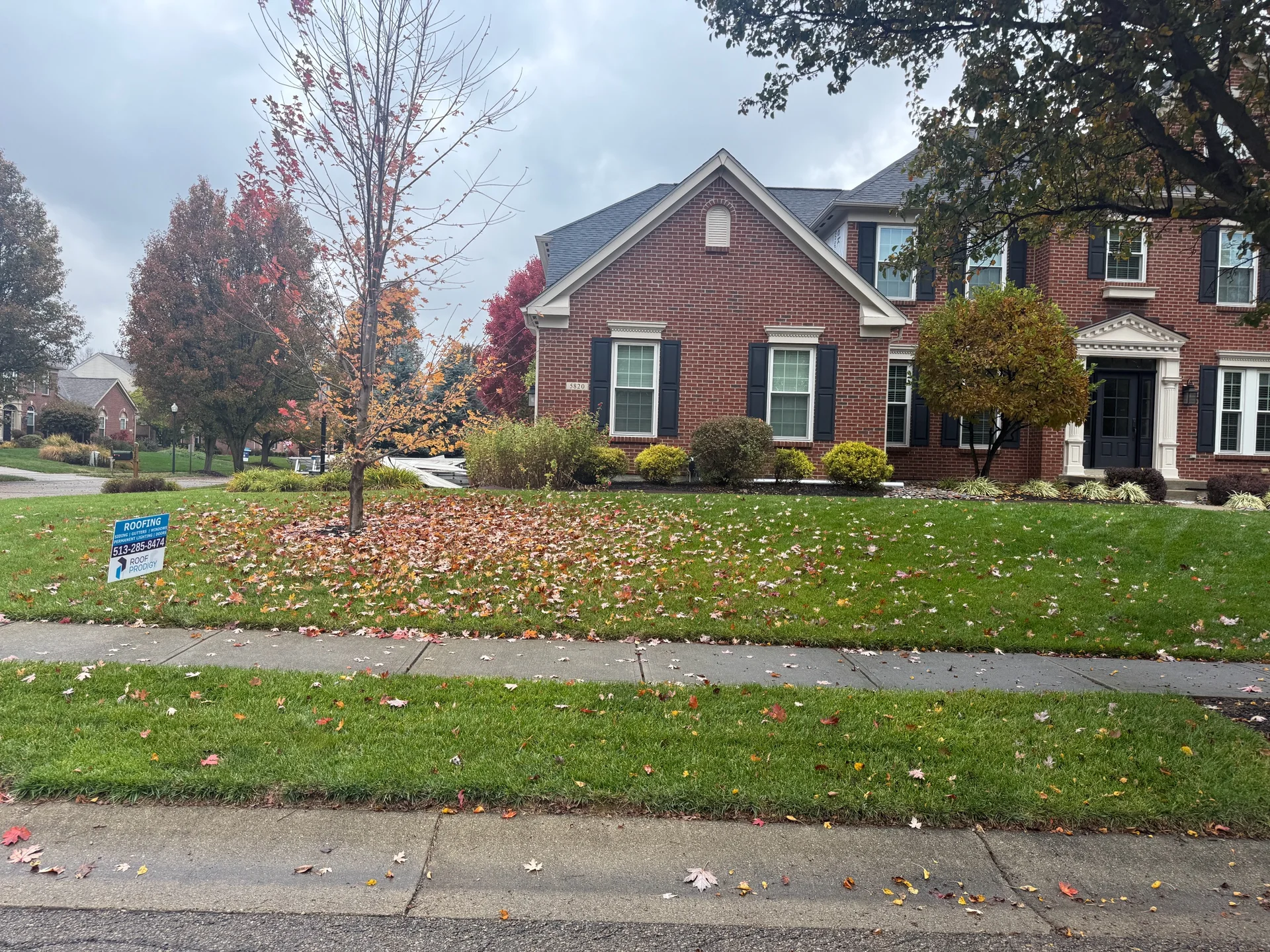
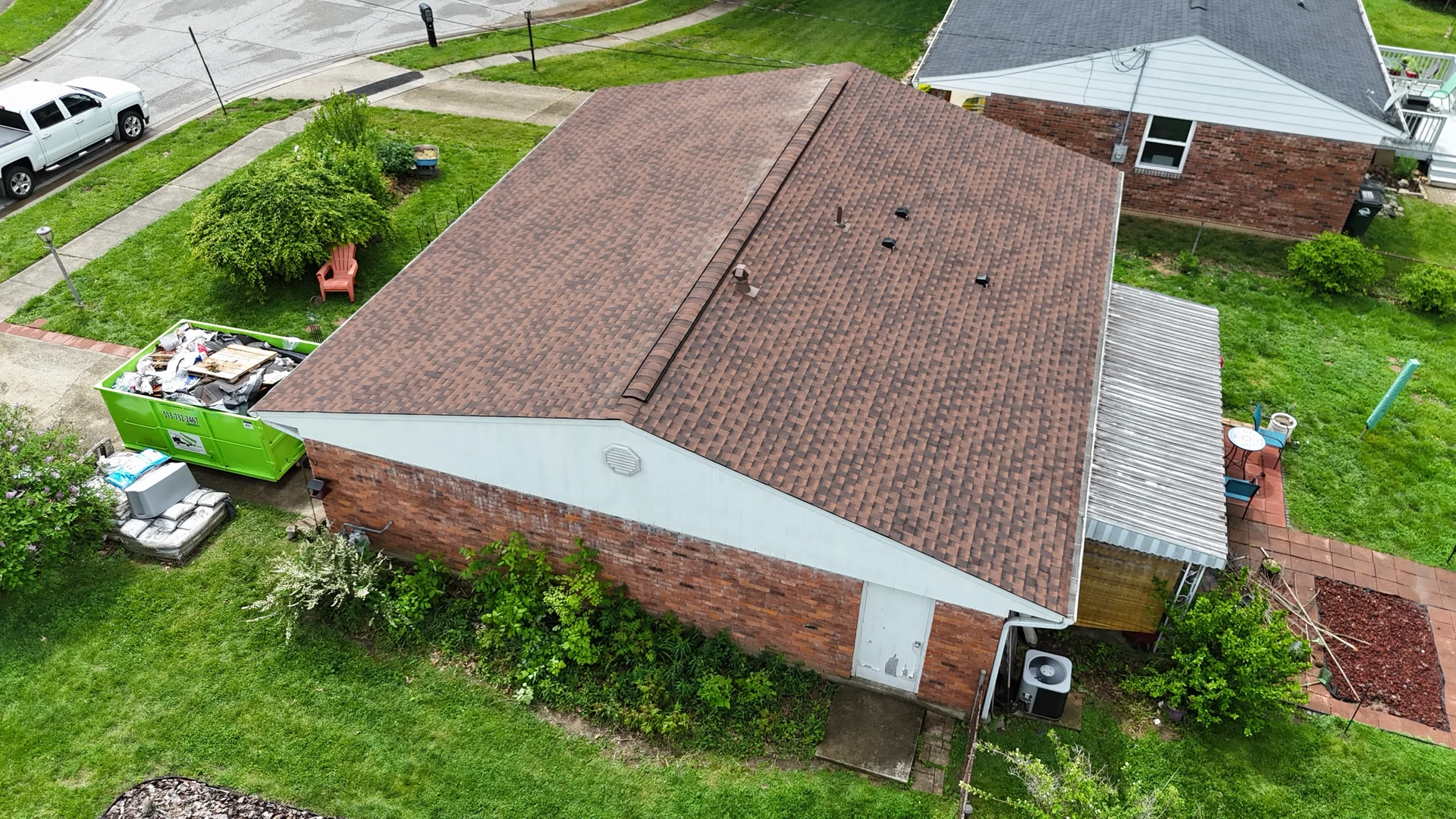
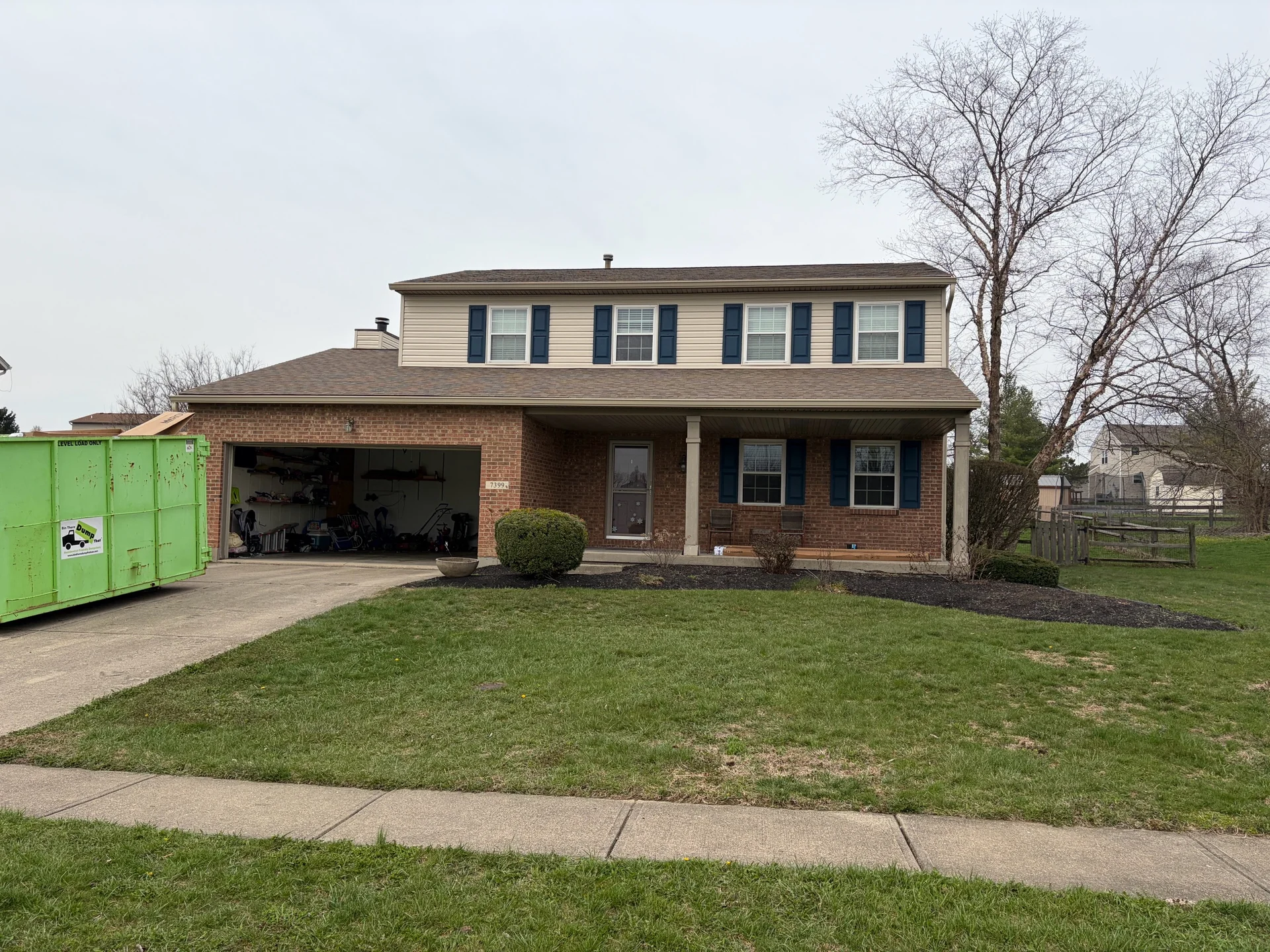
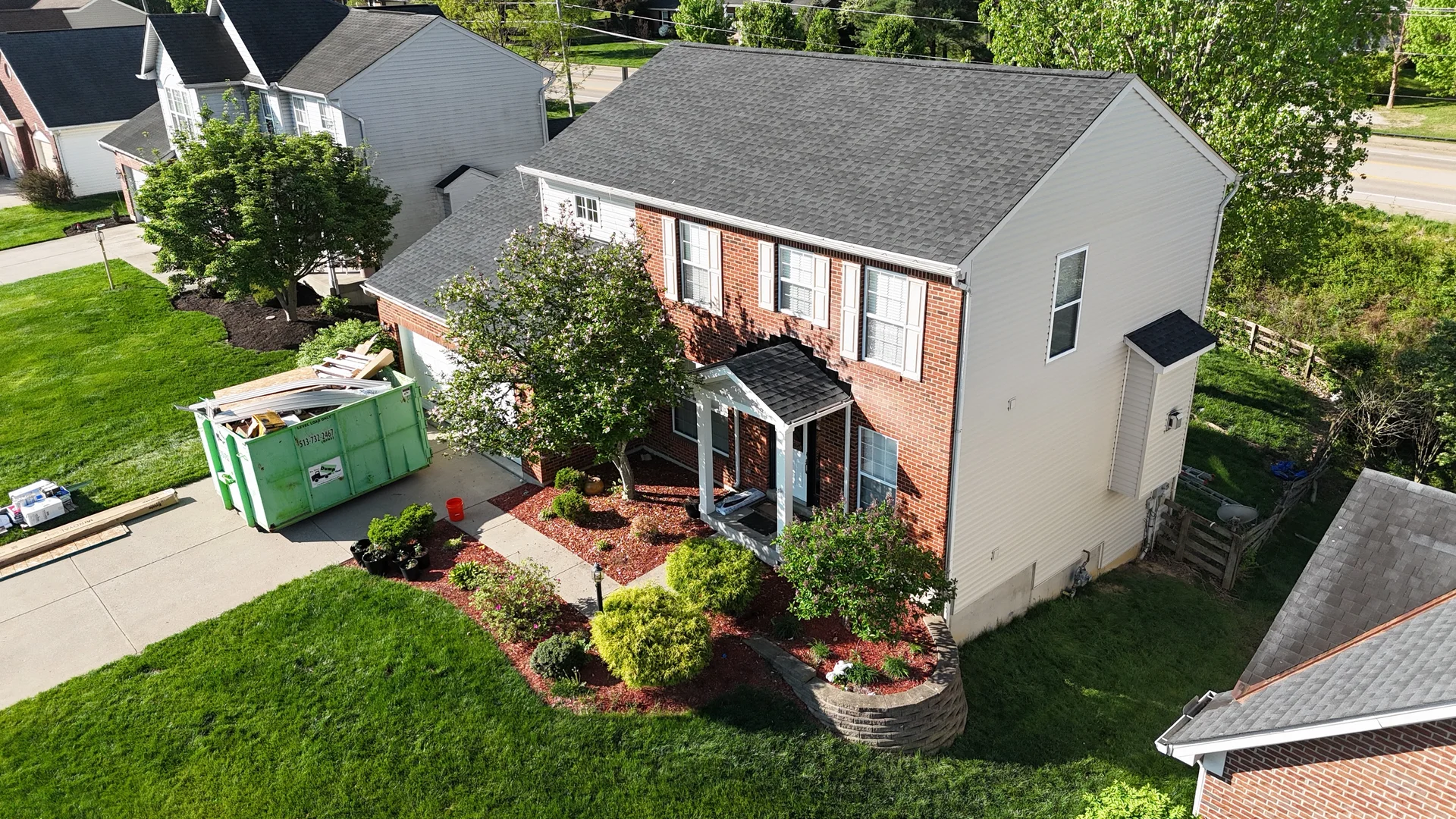
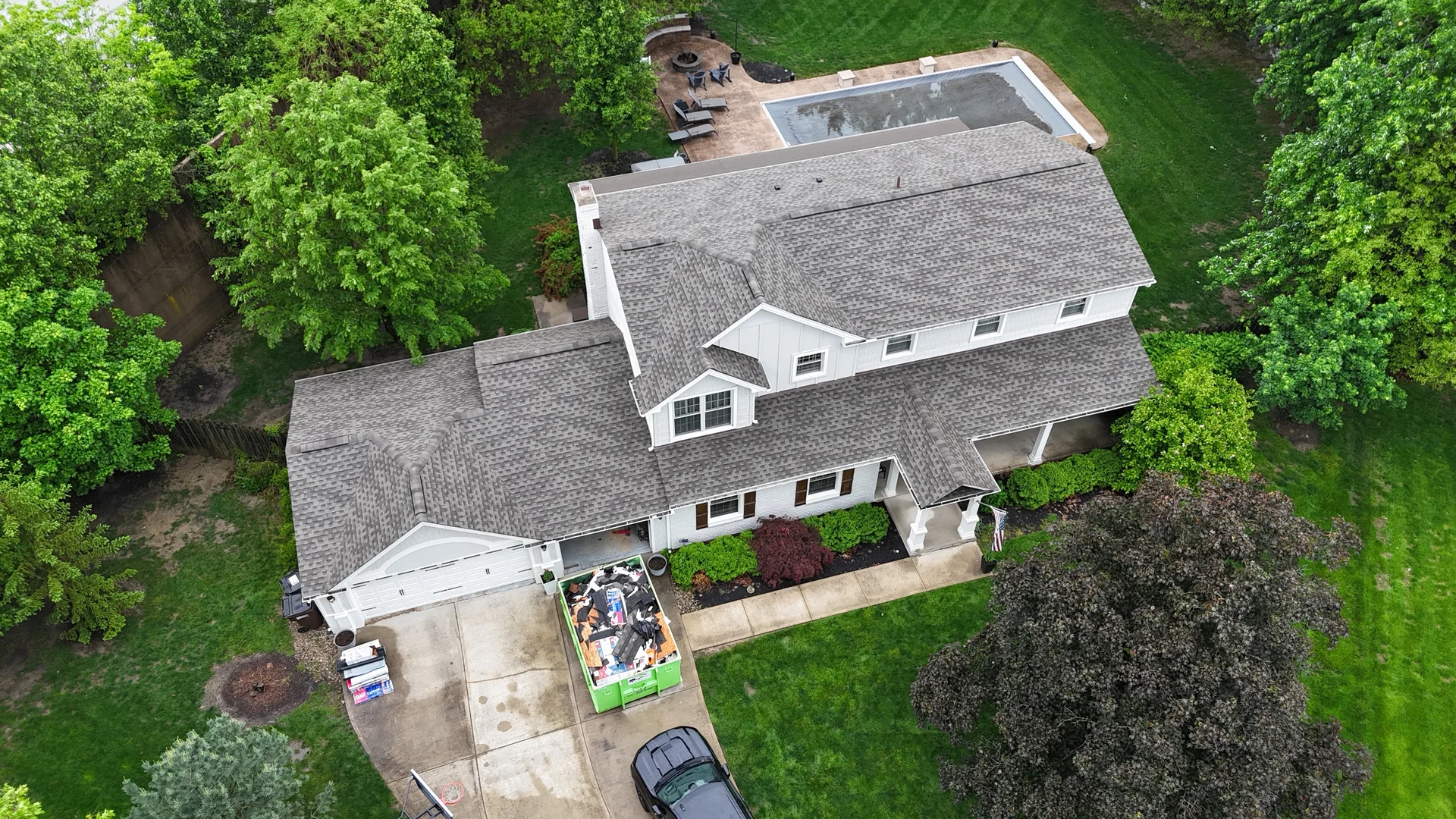
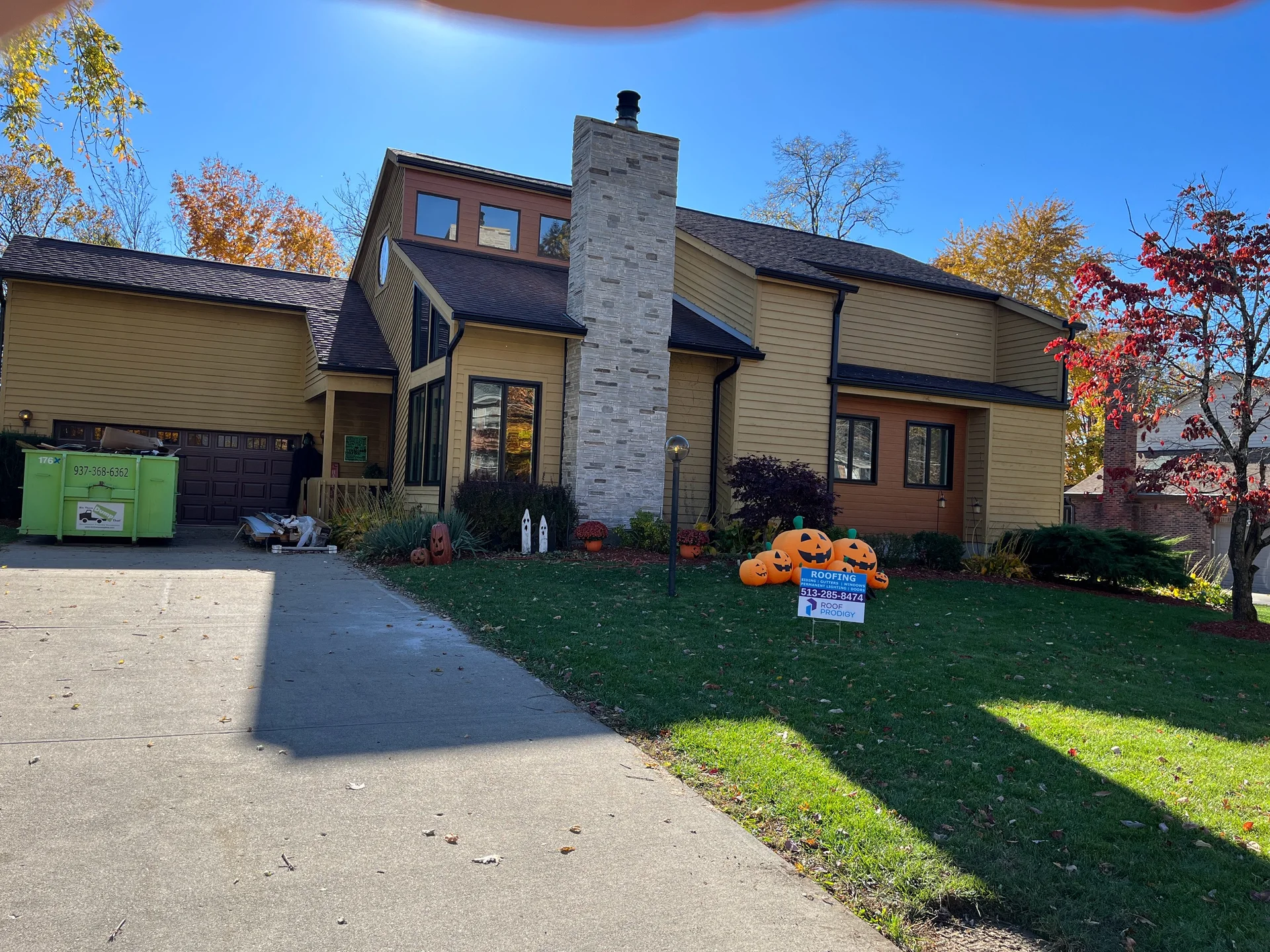
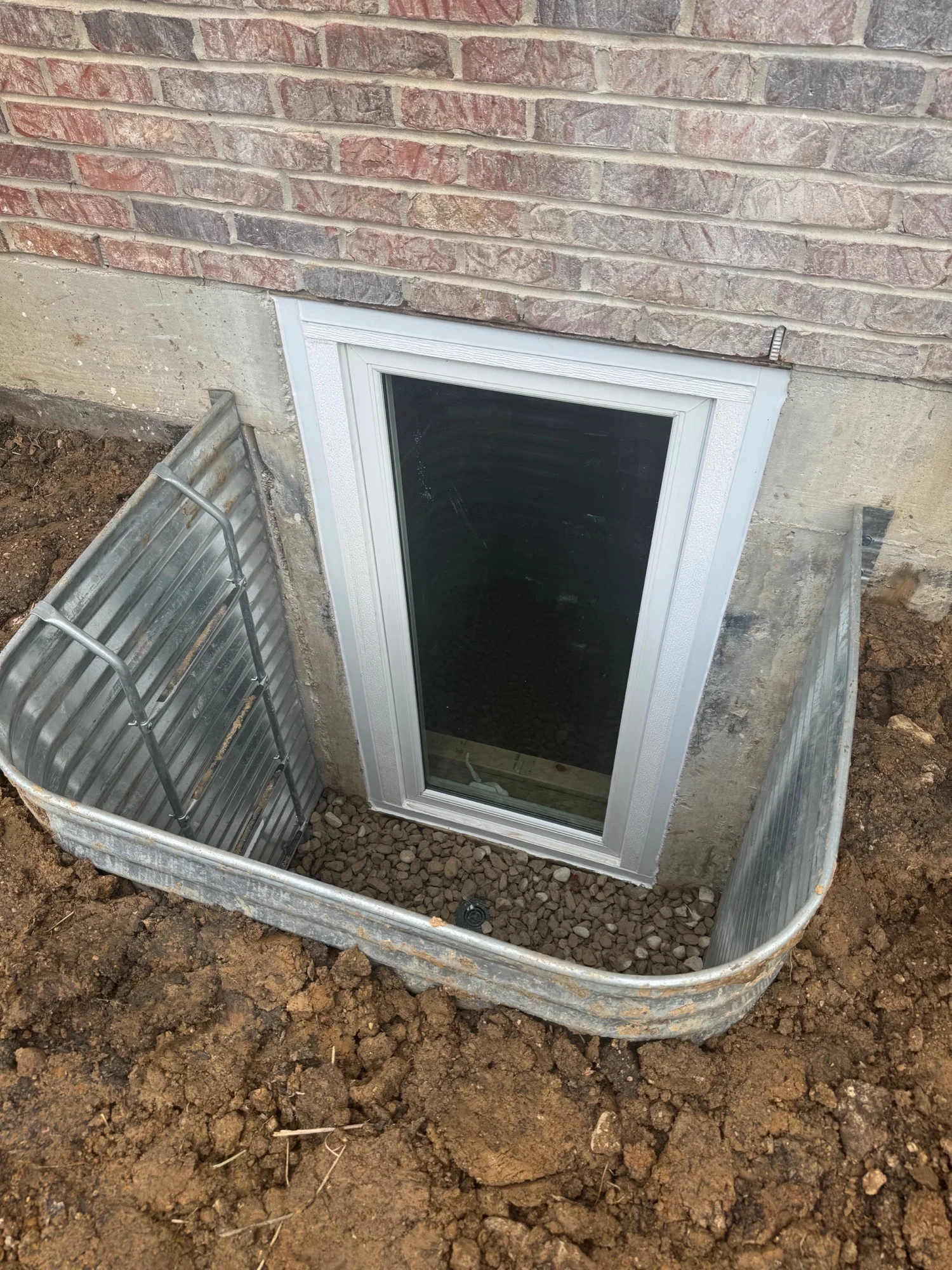
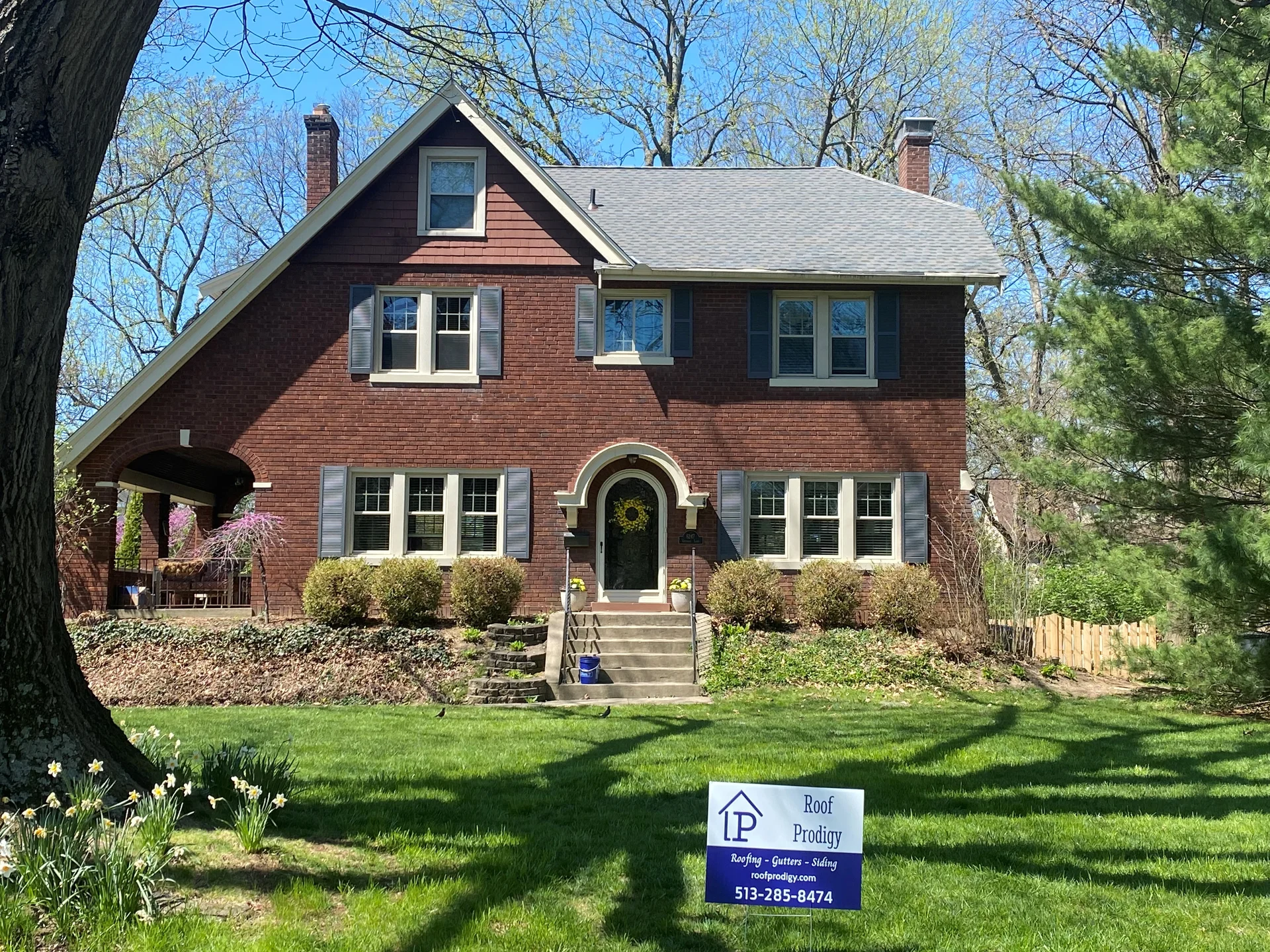
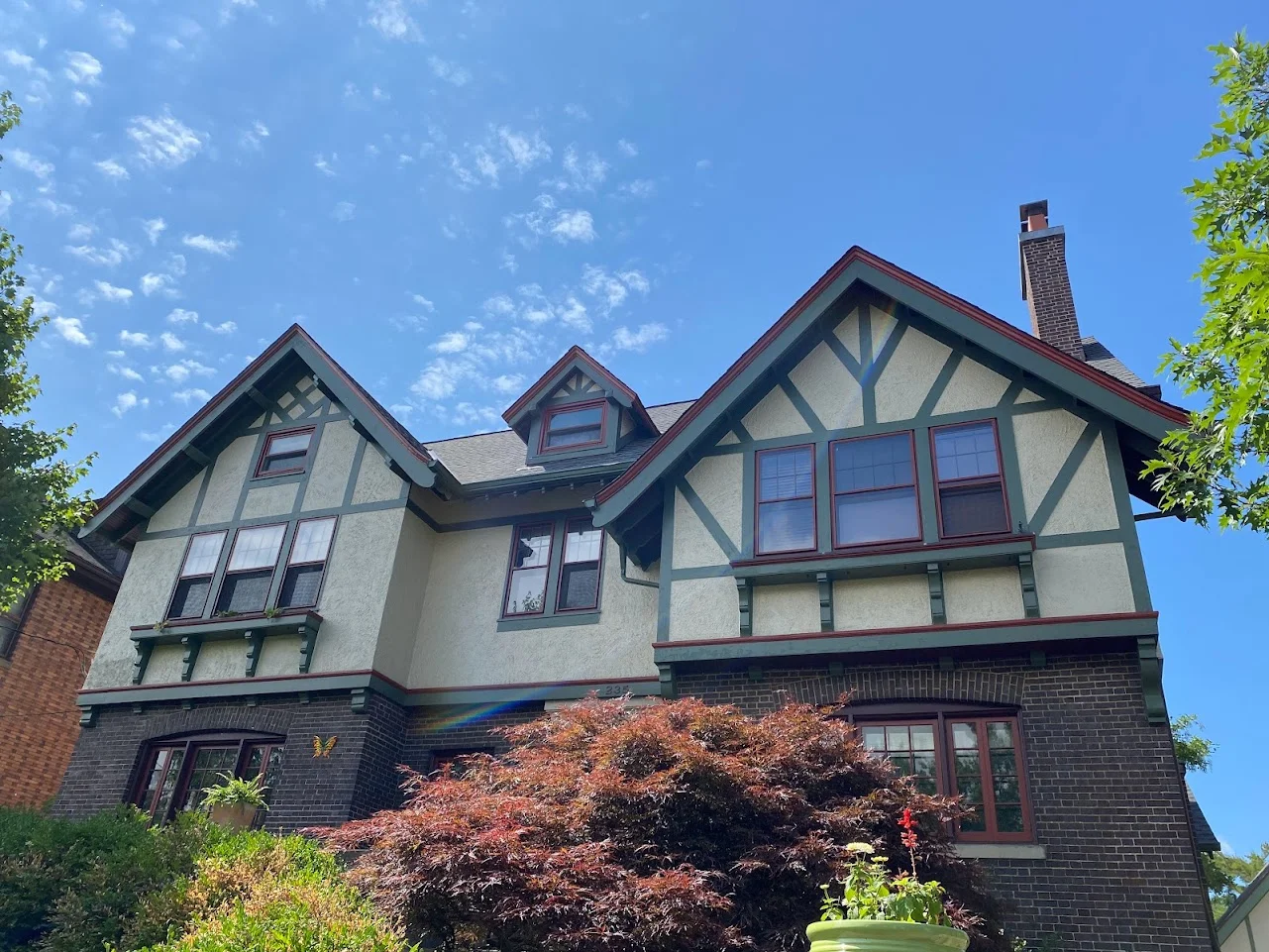
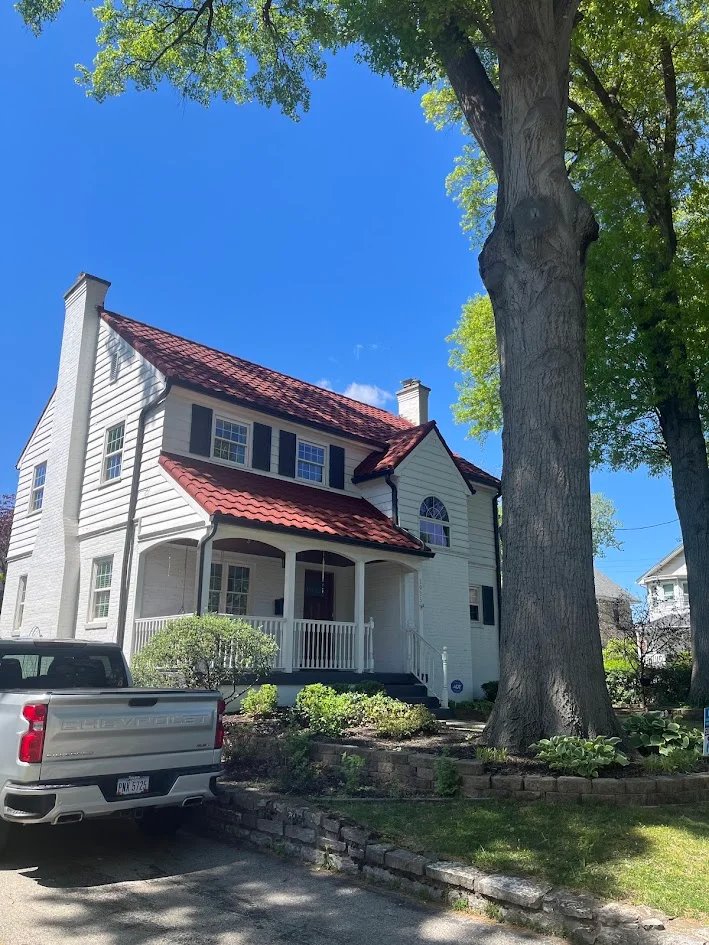
This brick home in Hamilton had a roof that had moved from worn to risky. Nothing had failed dramatically yet, but the covering had very little left to give, and the next hard storm was a question of when rather than whether.
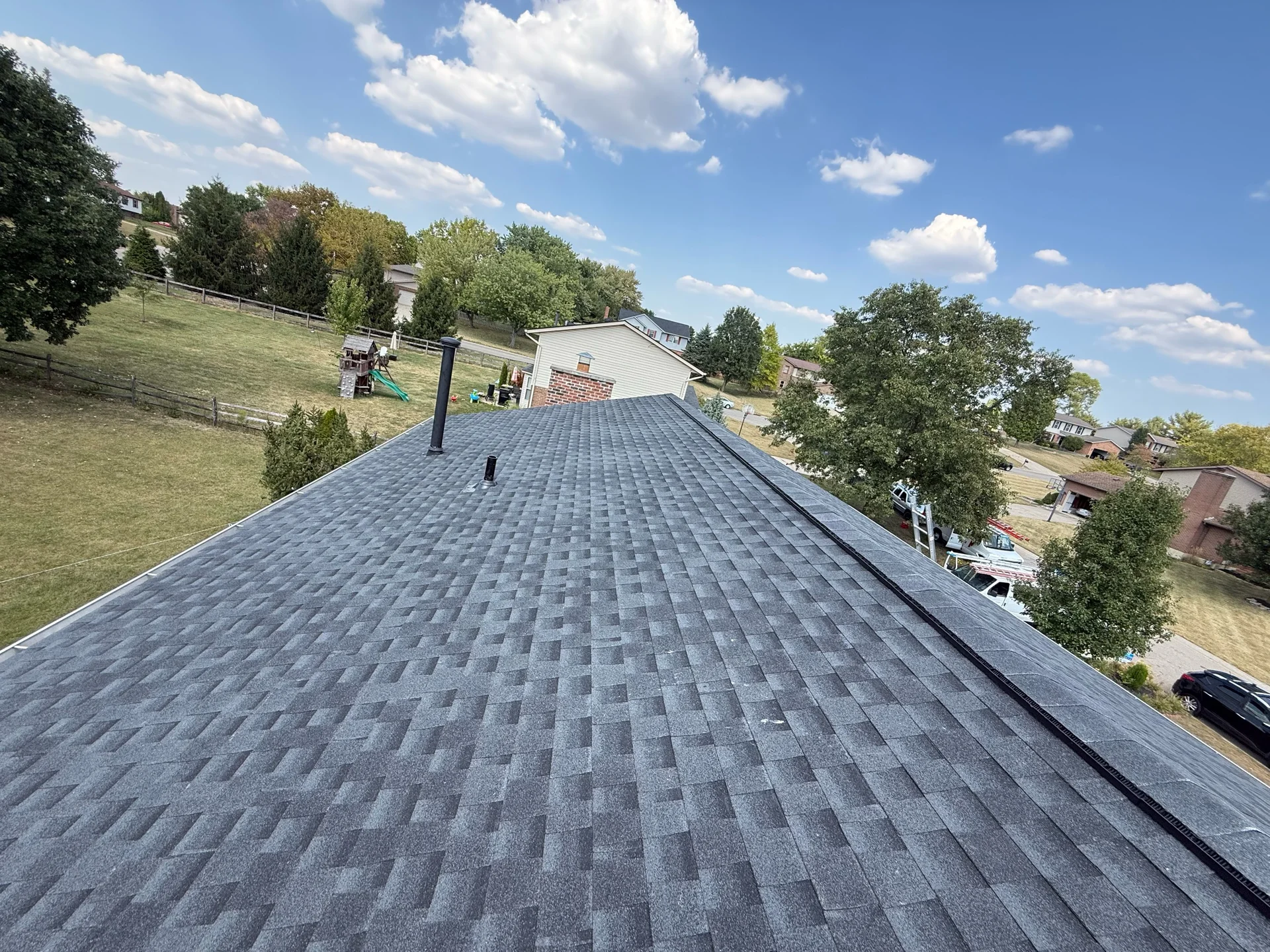
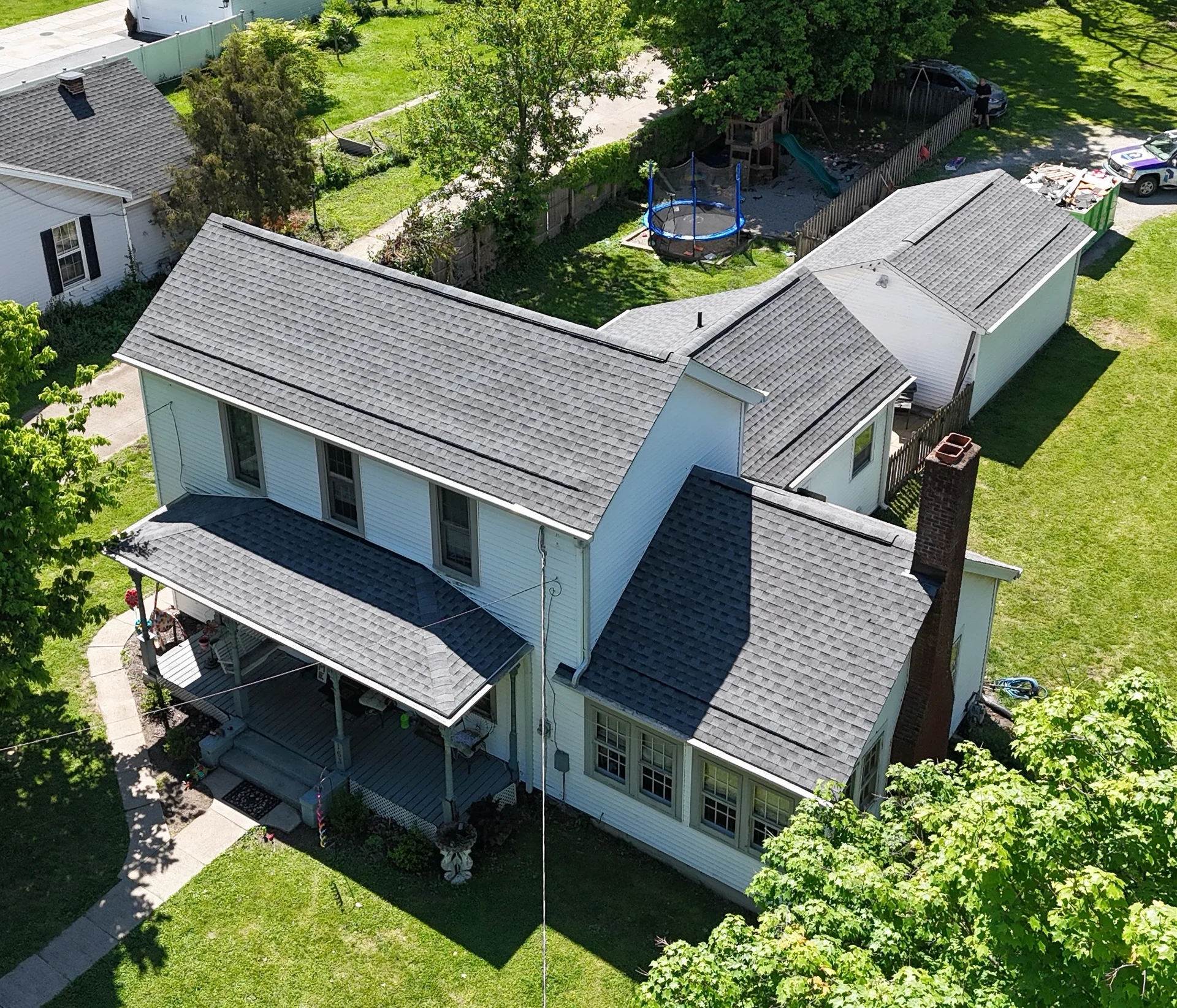
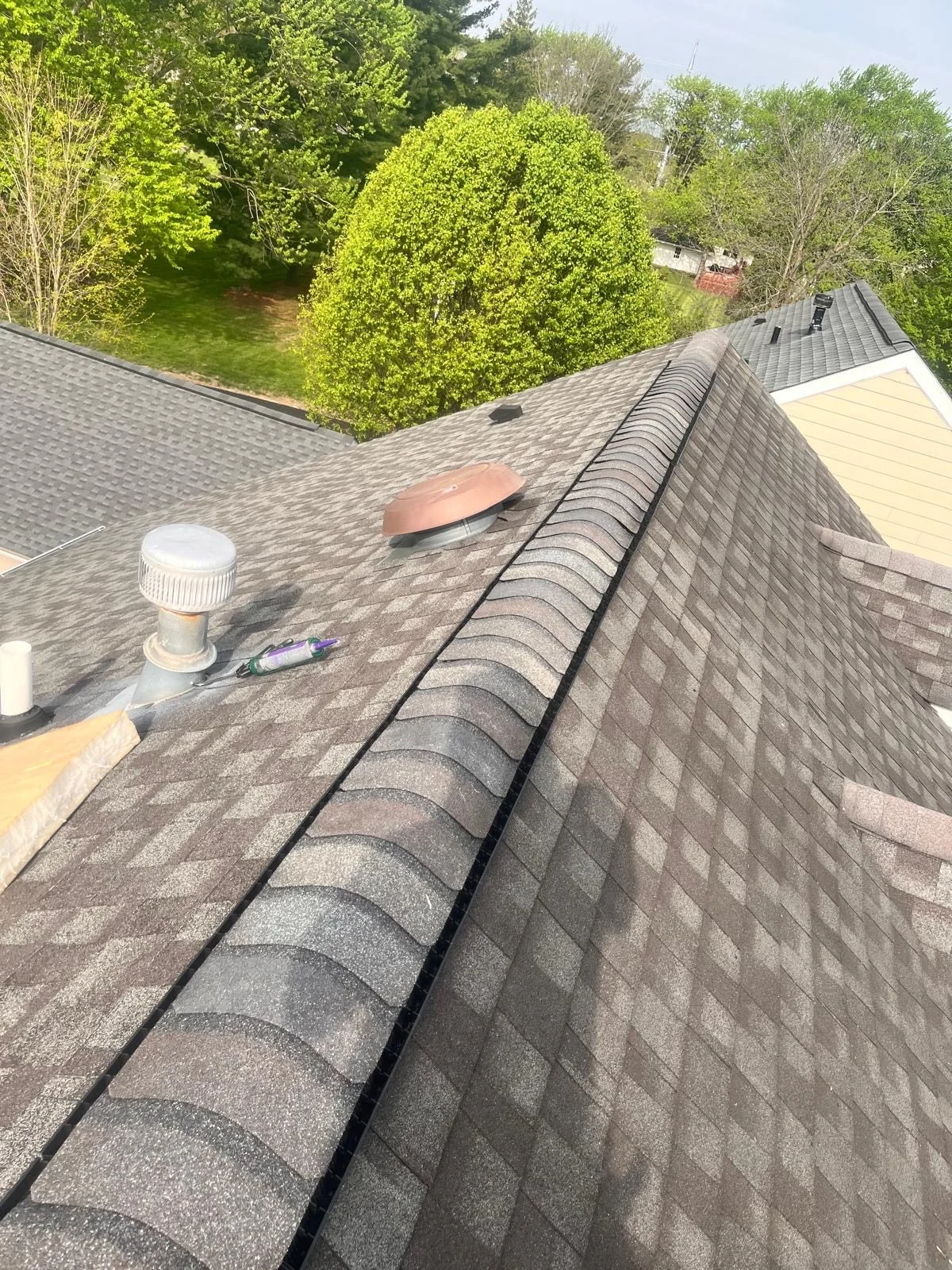
The homeowners went with a full tear-off and replacement instead of chasing repairs across a roof that was going to need doing anyway. The new shingle is GAF Timberline HDZ in Williamsburg Slate — a gray with enough variation in it to read like stone from the street, which suits brick better than a flat color does. It carries across the main planes, the chimney side, and the porch roof at the back.
It went on as a complete GAF Silver Pledge system, which brings 50-year coverage on the material and 10-year coverage on the workmanship. Those are two different promises about two different kinds of failure, and the shorter one is the one most homeowners should be asking about.
This brick home in Hamilton had a roof that had moved from worn to risky. Nothing had failed dramatically yet, but the covering had very little left to give, and the next hard storm was a question of when rather than whether.
The homeowners went with a full tear-off and replacement instead of chasing repairs across a roof that was going to need doing anyway. The new shingle is GAF Timberline HDZ in Williamsburg Slate — a gray with enough variation in it to read like stone from the street, which suits brick better than a flat color does. It carries across the main planes, the chimney side, and the porch roof at the back.
It went on as a complete GAF Silver Pledge system, which brings 50-year coverage on the material and 10-year coverage on the workmanship. Those are two different promises about two different kinds of failure, and the shorter one is the one most homeowners should be asking about.
Technical Discussion
Fifty years on the shingle, ten on the work
The two numbers are different because they answer different questions, and the shorter one is not the lesser one.
Material coverage answers: did the shingle itself fail? Granules shedding early, mats cracking, layers separating — a defect in the product as it left the plant. That is the manufacturer's own factory, their own quality control, and their own long record of how often it goes wrong. The term is long because manufacturing defects in a modern laminated shingle are rare, and when they do appear they tend to appear late, as an aging problem rather than a sudden one.
Workmanship coverage answers a completely different question: was it put on correctly? Nail placement, nail depth, the exposure each course is laid to, how the valleys were handled, how the flashing at the chimney and the pipes was detailed. And here is the thing about installation mistakes — they do not wait fifty years to introduce themselves. A nail driven too high misses the reinforced nailing area and the shingle above has nothing holding its lower edge; that shows up in the first serious wind. A nail overdriven through the mat leaves a hole under the course above it; that shows up the first time water backs up. Flashing that was reused when it should have been replaced weeps at the first ice dam. Bad installation announces itself early, which is exactly why a ten-year workmanship term is not a small number. It covers nearly the whole window in which workmanship risk actually lives.
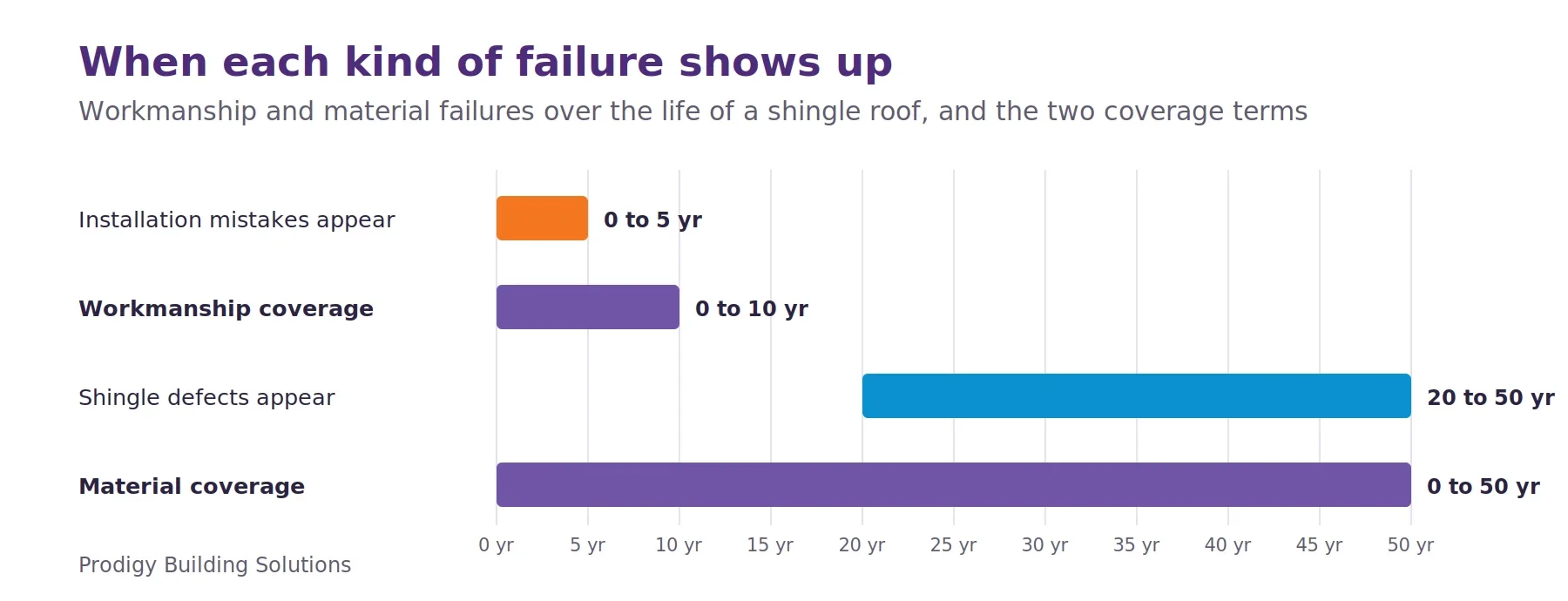
Figure 1 — Ten years is not the small number. It covers the window in which workmanship actually fails.
The two failures also arrive on different clocks. Installation mistakes show themselves early: a high nail or an unsealed tab lets go in the first strong wind, and a reused flashing weeps at the first ice dam, almost always inside the first five years. Manufacturing defects in a modern laminated shingle are rare and tend to appear late, as granule loss or cracking in the second or third decade. A 10-year workmanship term therefore covers nearly the whole window in which workmanship risk actually lives, and a 50-year material term covers the window in which the shingle itself is the question.
There is a money reason those ten years matter too. If a shingle defect is found, a material warranty pays you in material — it gets you shingles. Taking the old roof off and putting the new one back on is the expensive half of a roof, and material coverage on its own does not touch it. Coverage that includes the labor is coverage that pays for the part of the repair you would actually feel.
Which brings up the part homeowners rarely see: a manufacturer will not underwrite labor performed by just anyone. Before it will stand behind someone else's work, it certifies the contractor — vetting the business, checking the record, requiring training, and requiring that the roof be installed to its specification. The manufacturer is taking on the risk of the labor, so it decides who is allowed to create that risk in the first place. The coverage is not a certificate handed over at the end of the job. It is a consequence of who did the work and how they did it, and it cannot be added afterwards.
So when a quote says lifetime warranty, there are two questions worth asking before you compare prices. How many years of labor are covered, and who is on the hook for them — the contractor, or the manufacturer? A contractor's own workmanship guarantee lasts exactly as long as that contractor stays in business. One registered through the manufacturer does not depend on it.