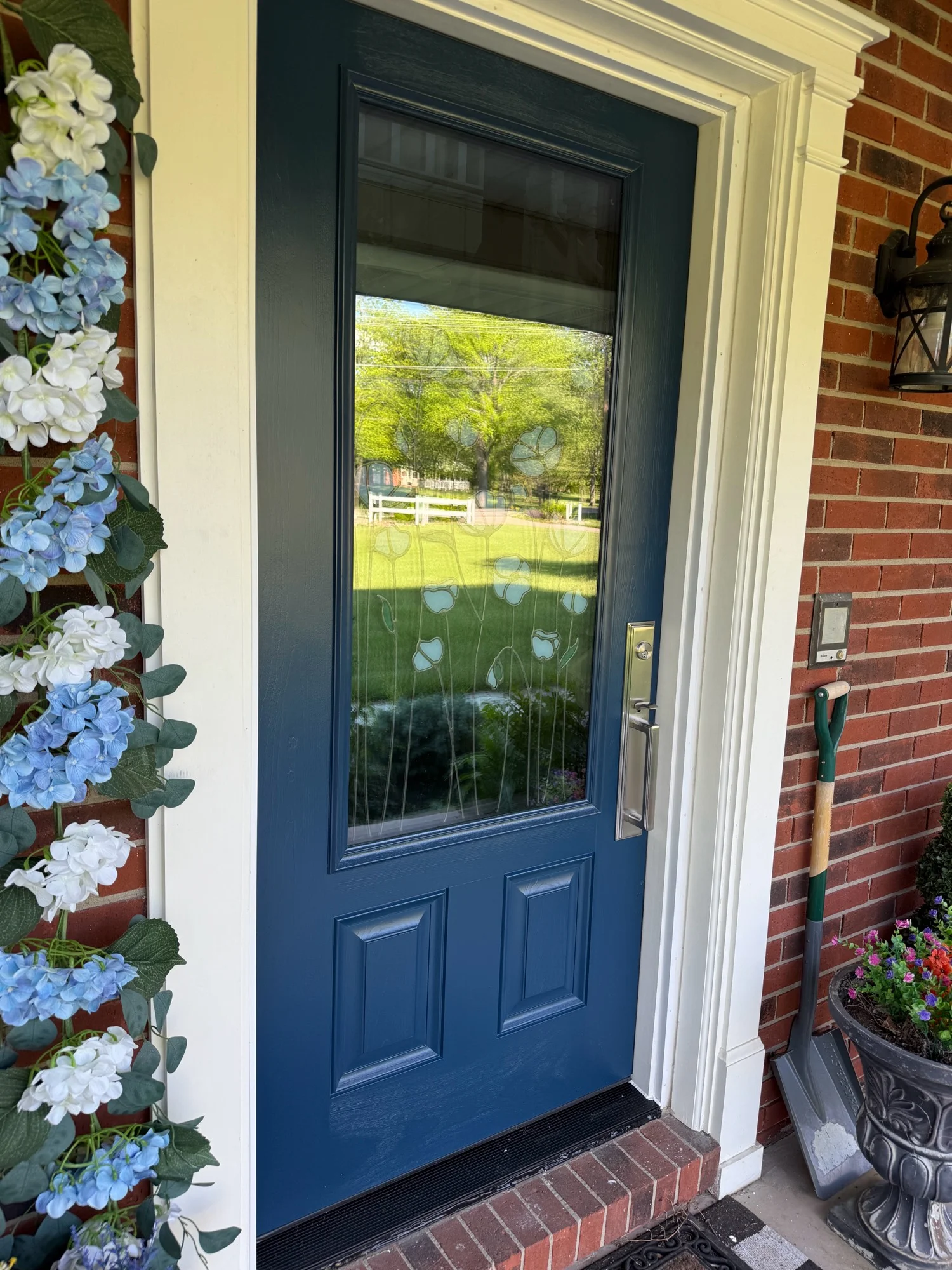
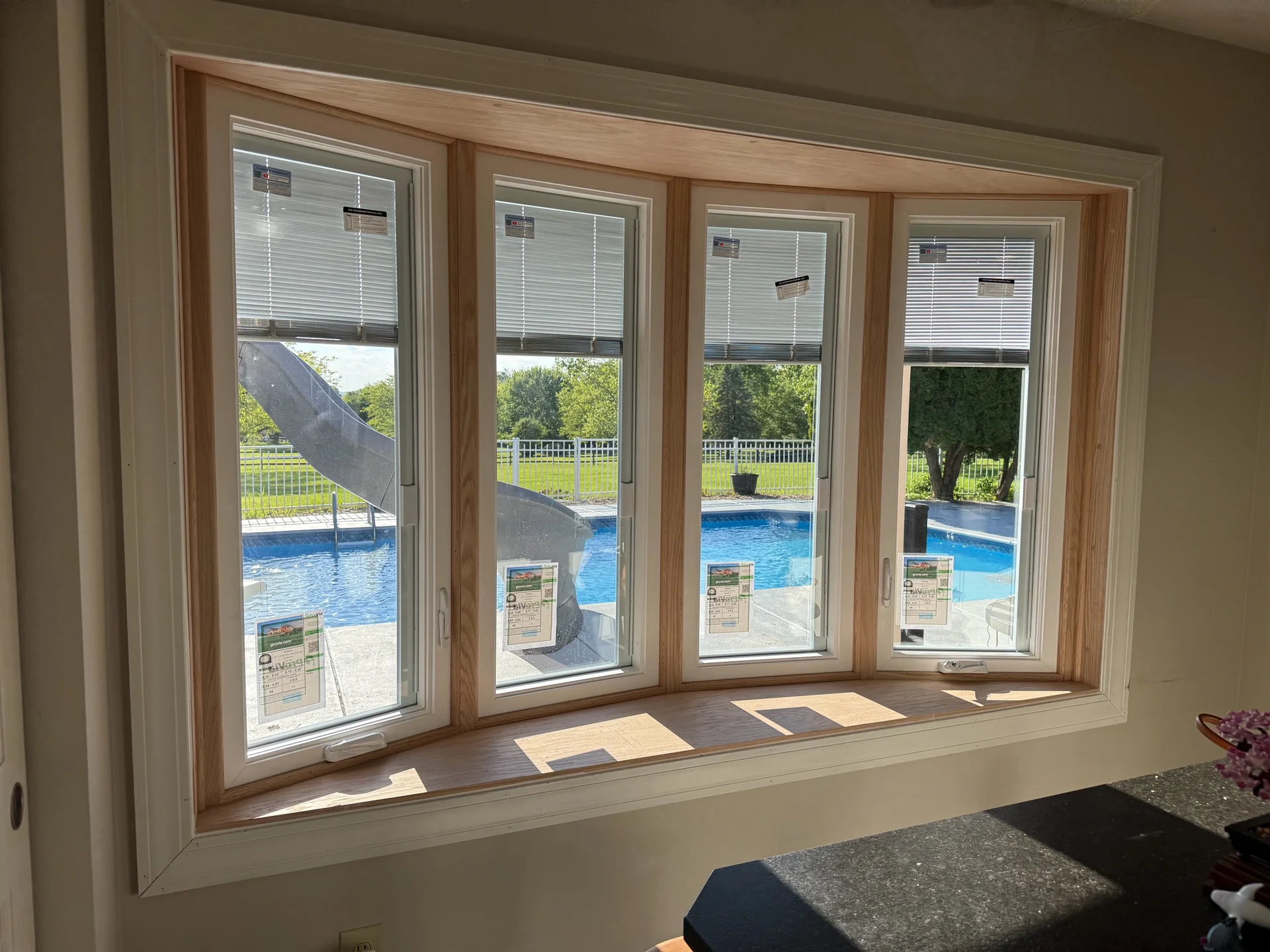
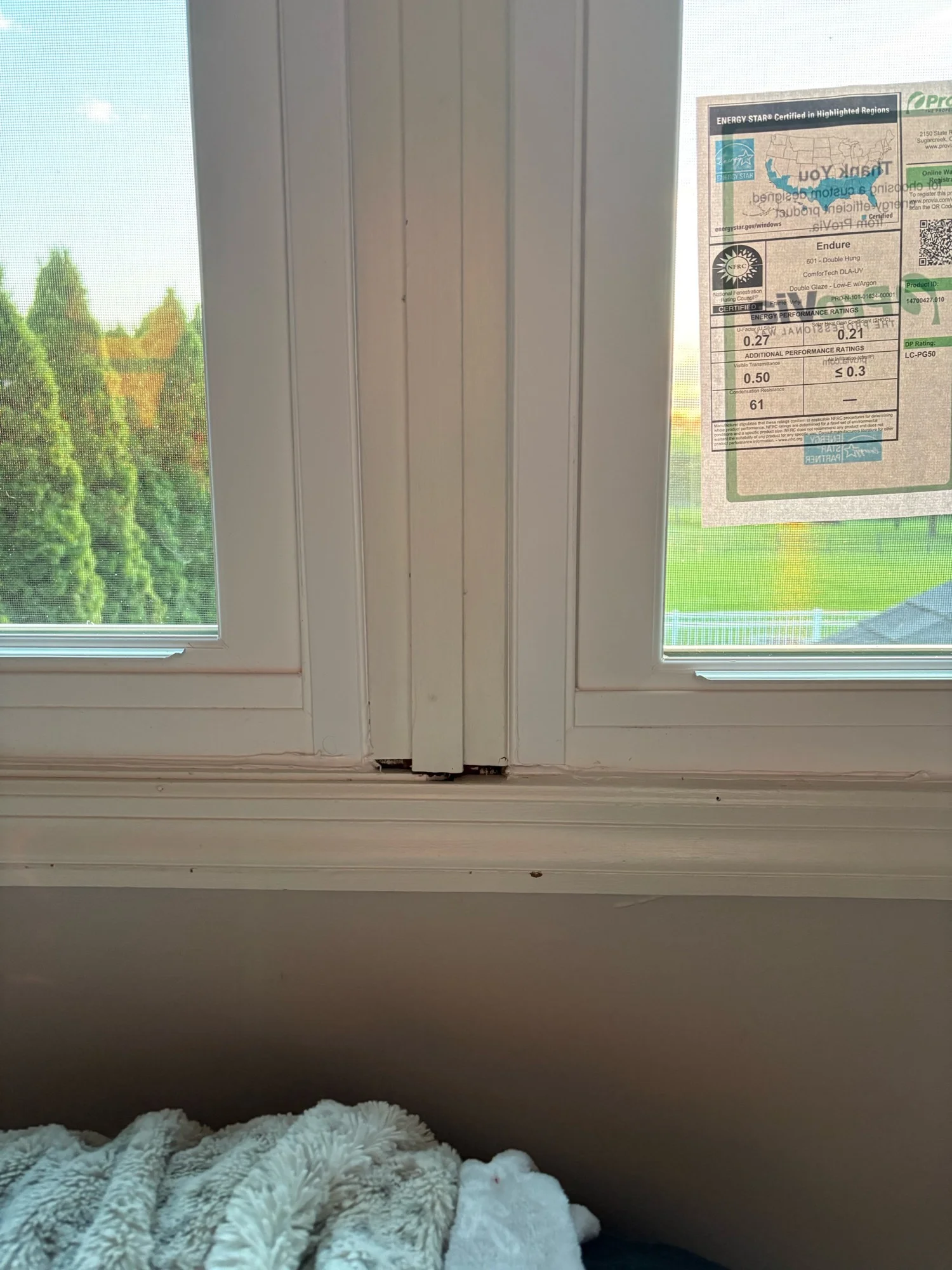
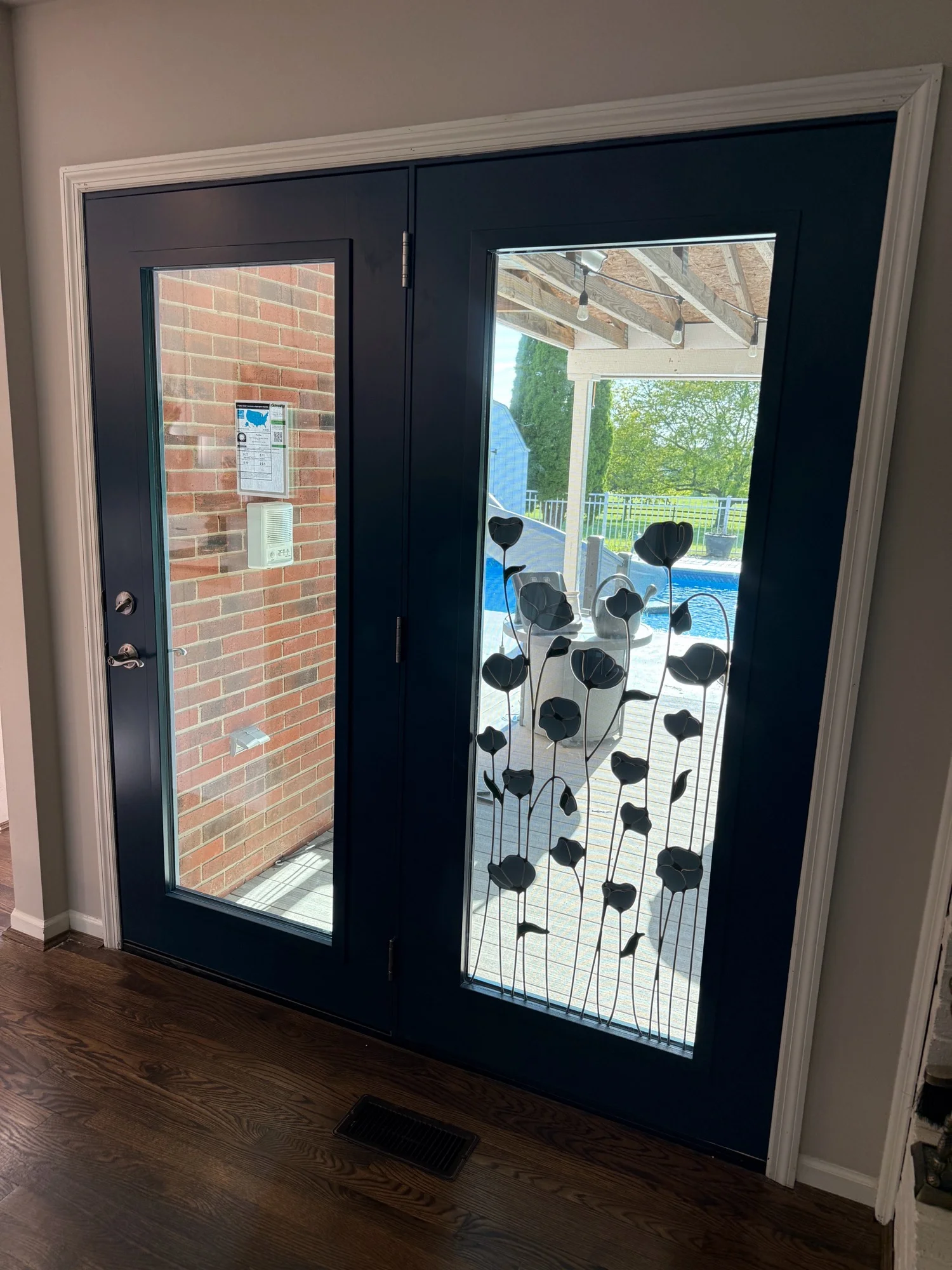
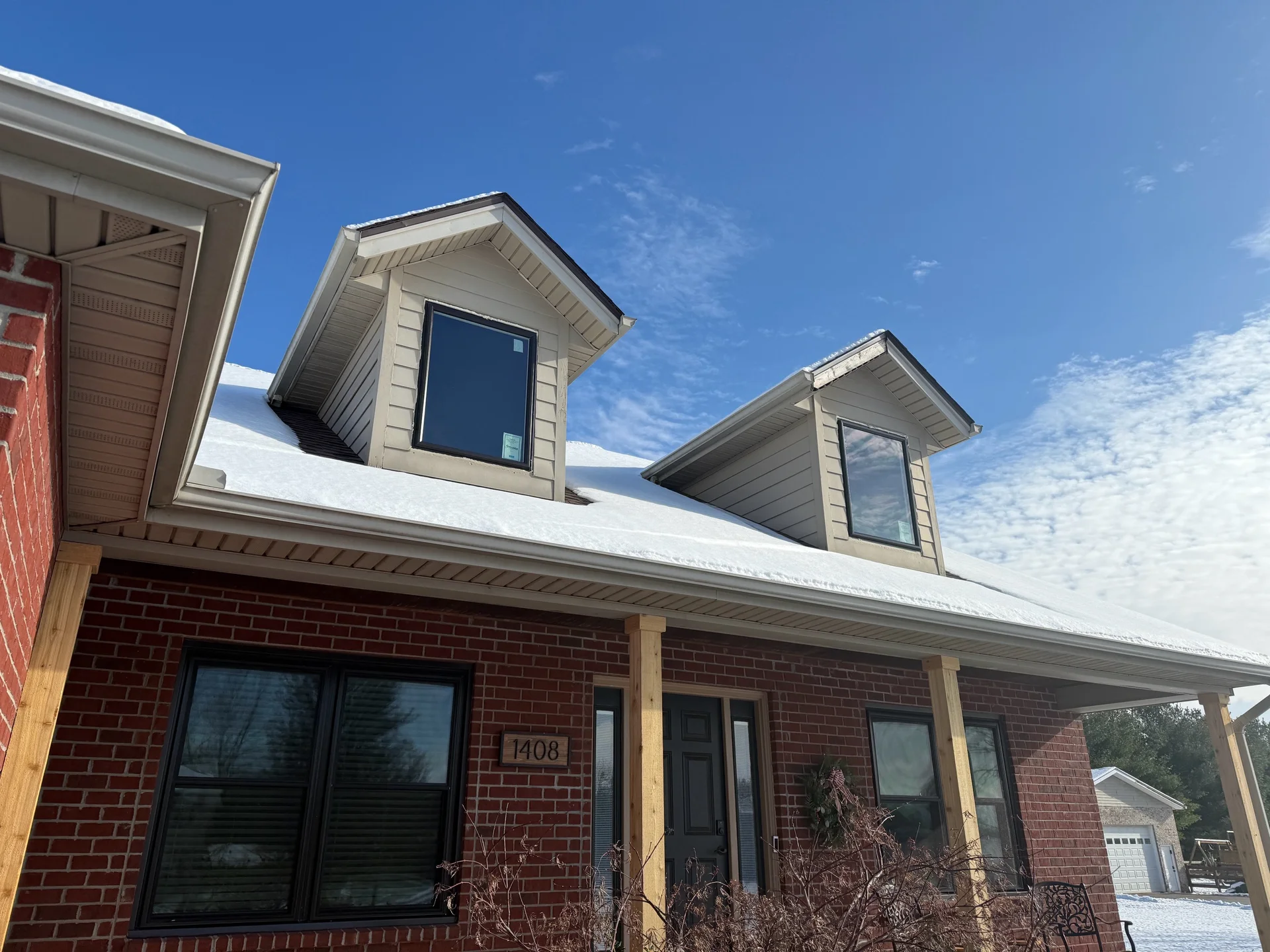
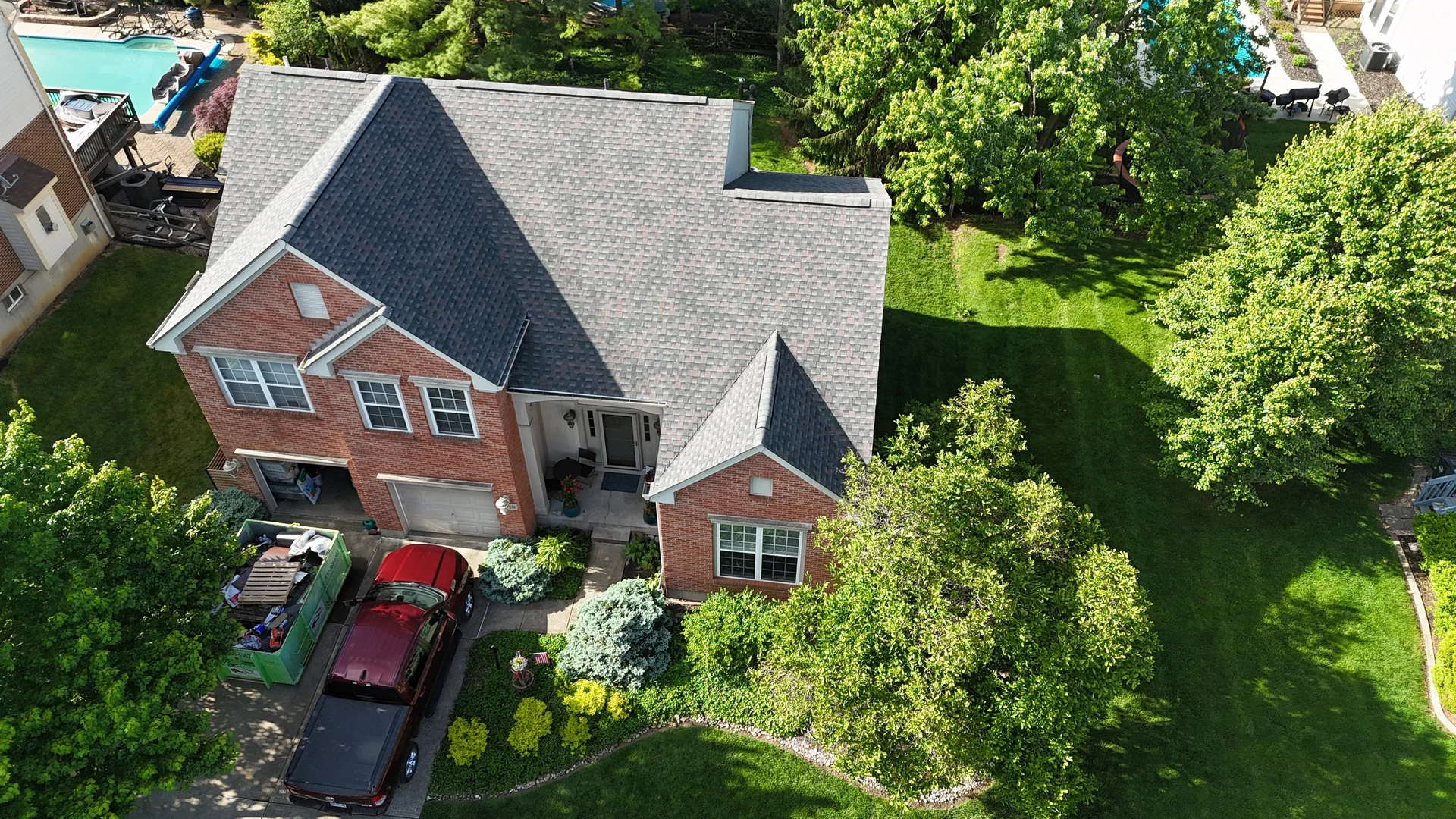
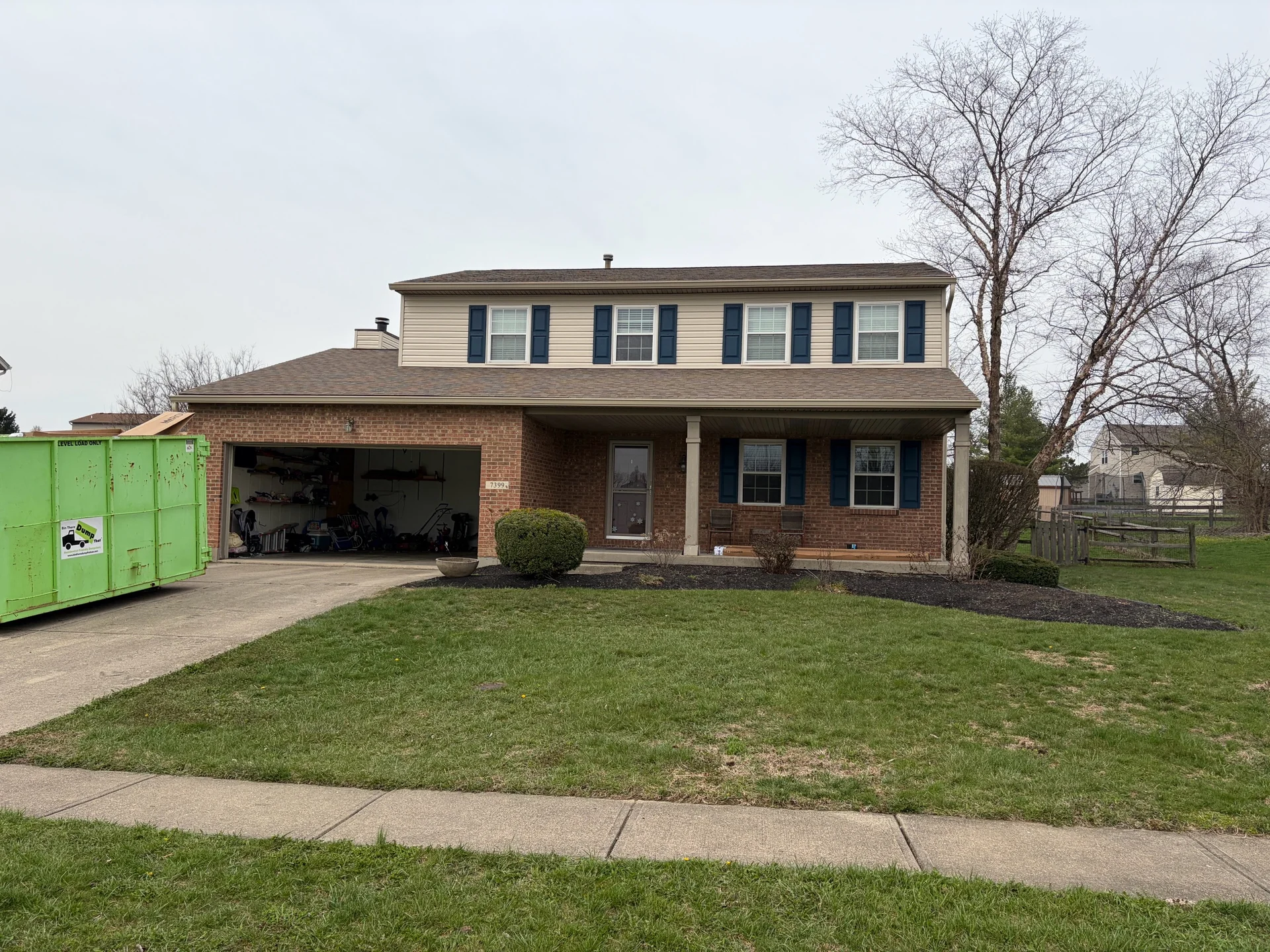
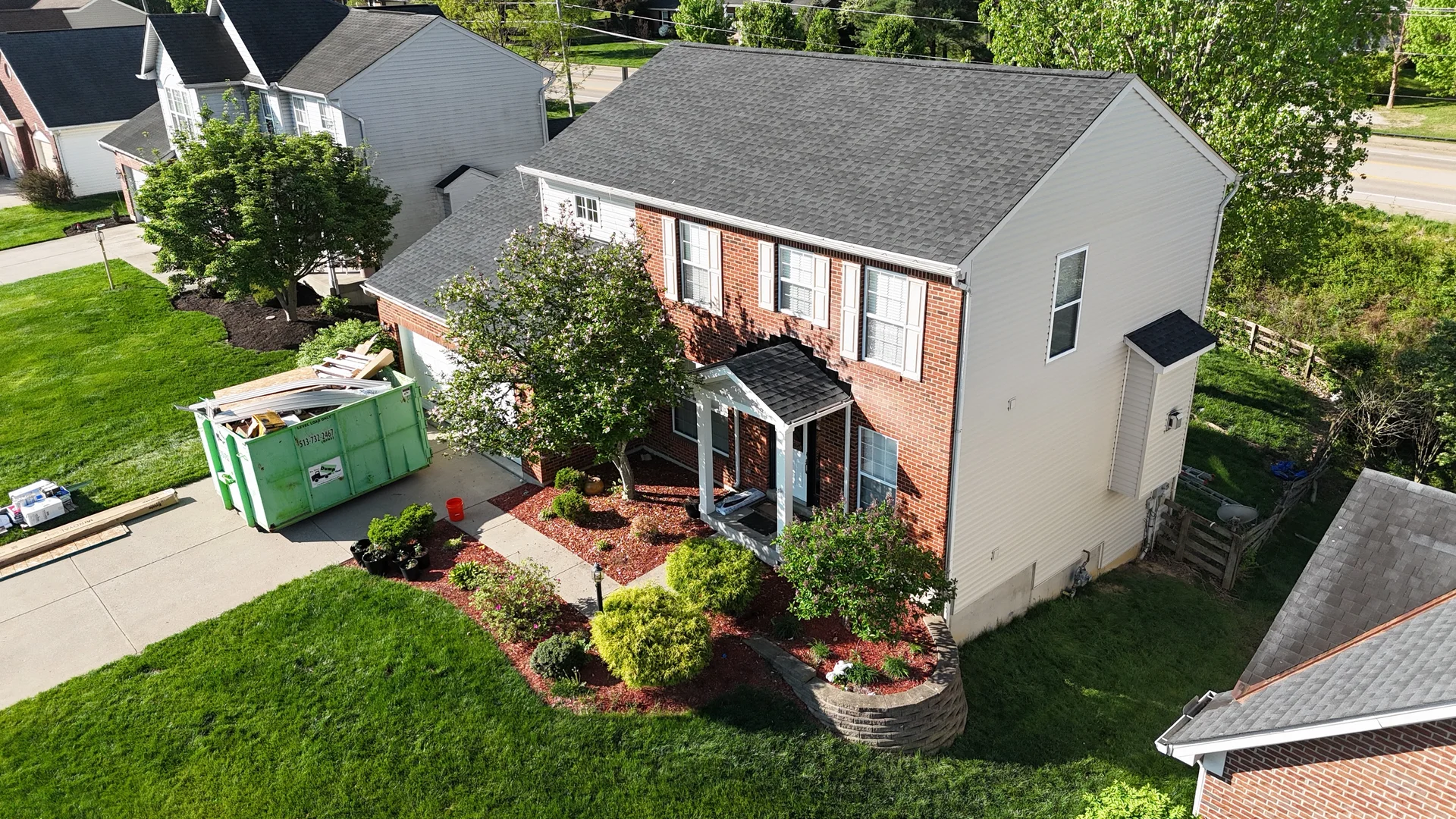
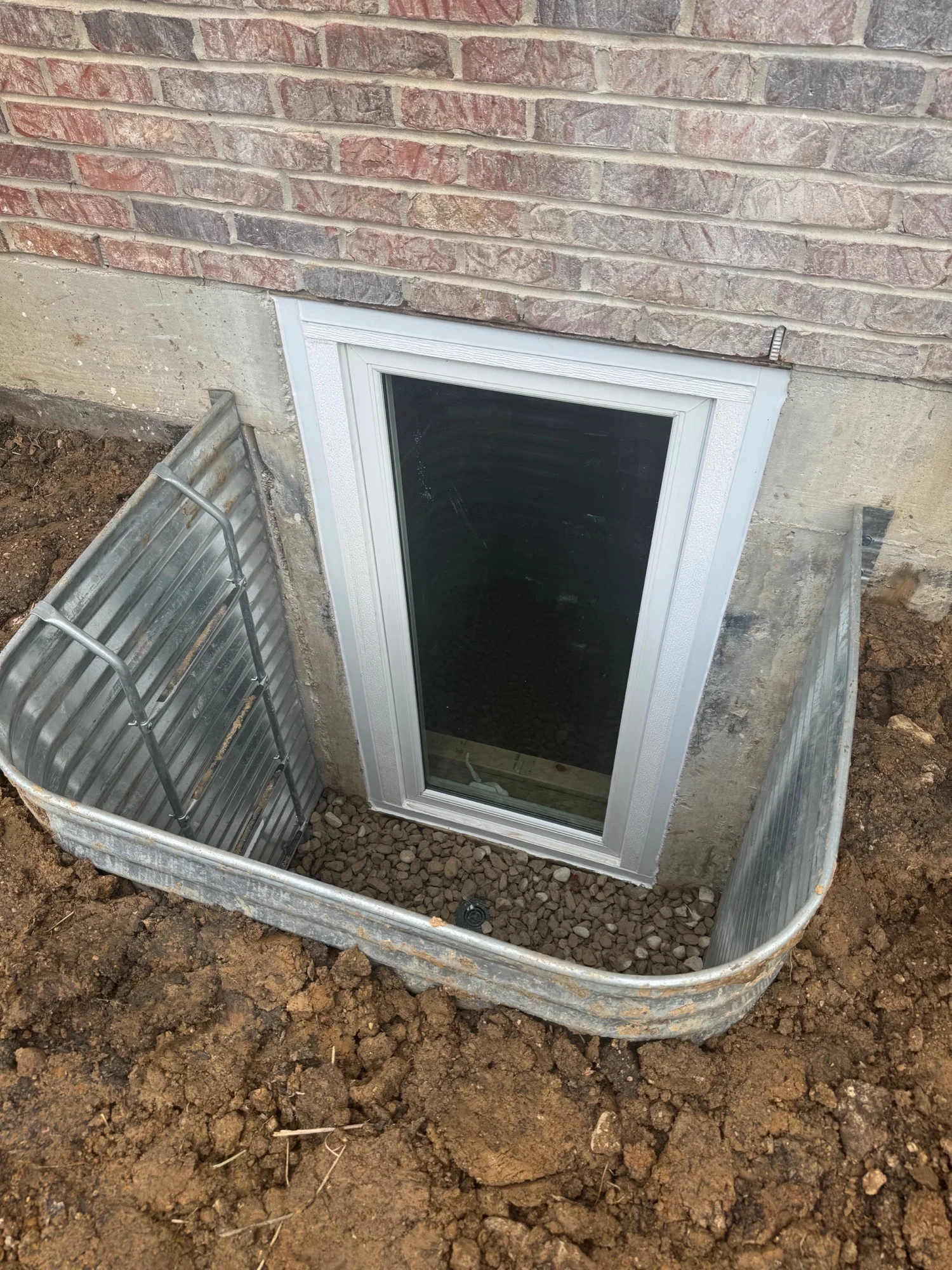
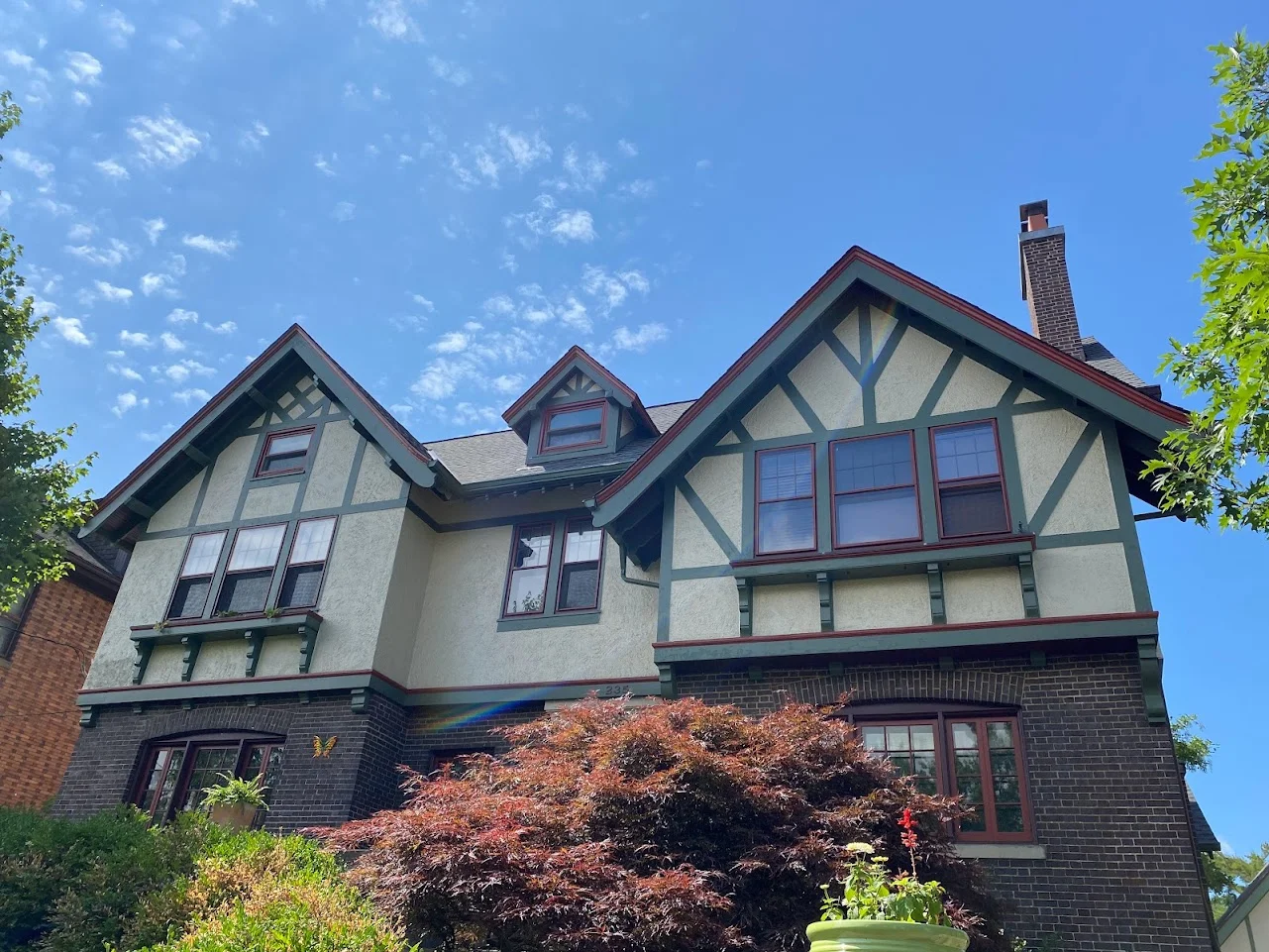
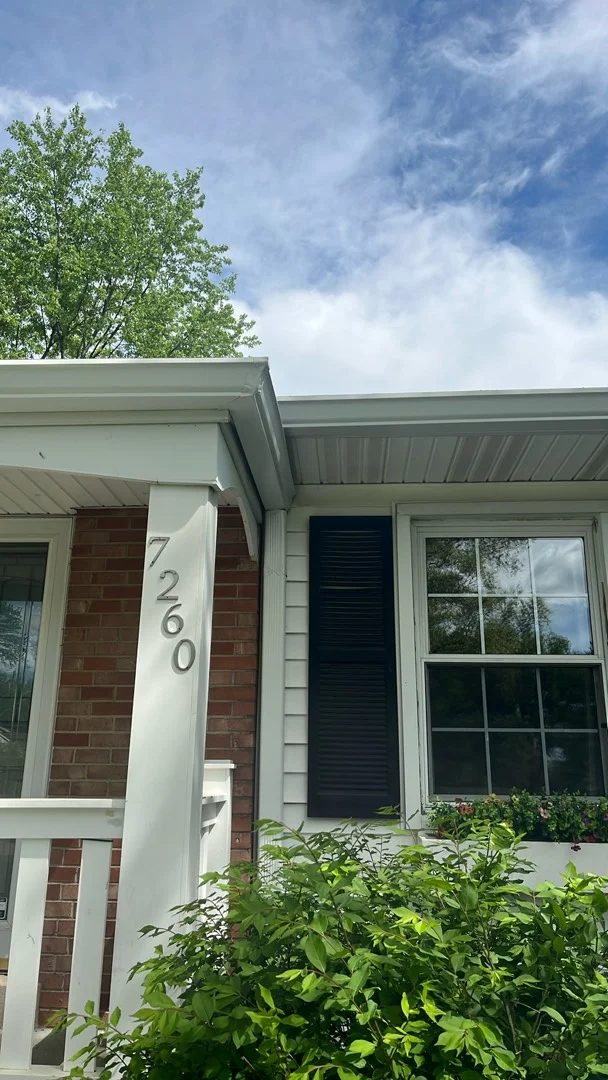
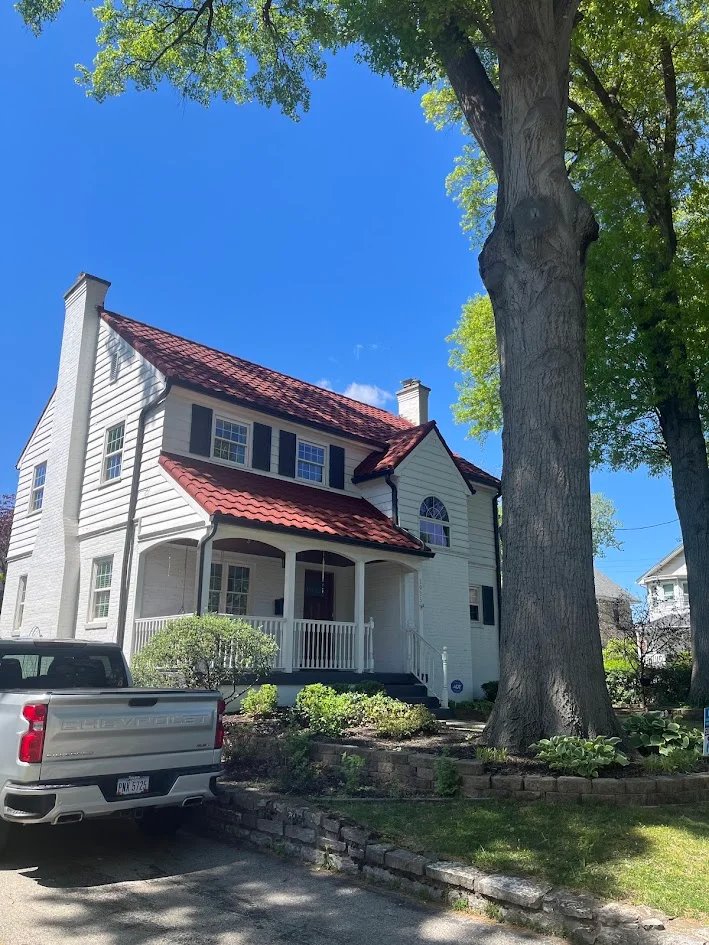
The windows on this Hamilton home were replaced with ProVia units in 2026.
Window work is quieter than a roof, and most of what makes it good or bad happens before the truck arrives. Each opening is looked at on its own: the sill is probed and the frame checked for rot and for square, the opening is measured in several places rather than one, and only then does anyone decide what to order. Two windows in the same wall of the same house can call for two different approaches, and the reason has nothing to do with what they cost.
That decision — whether the existing frame stays and the new window goes inside it, or whether everything comes out back to the framing — is the one worth understanding before you buy replacement windows for your own house.
The windows on this Hamilton home were replaced with ProVia units in 2026.
Window work is quieter than a roof, and most of what makes it good or bad happens before the truck arrives. Each opening is looked at on its own: the sill is probed and the frame checked for rot and for square, the opening is measured in several places rather than one, and only then does anyone decide what to order. Two windows in the same wall of the same house can call for two different approaches, and the reason has nothing to do with what they cost.
That decision — whether the existing frame stays and the new window goes inside it, or whether everything comes out back to the framing — is the one worth understanding before you buy replacement windows for your own house.
Technical Discussion
Insert or full-frame
There are two ways a replacement window goes into a house, and they are different enough that calling them both 'window replacement' hides more than it explains.
The first is an insert, sometimes called a pocket replacement. The old sashes, the balances and the stops come out, and the existing frame — the wood box built into the wall when the house was built — stays exactly where it is. A new fully framed window is set inside that box, fastened, insulated at the perimeter and sealed. The interior trim is usually undisturbed. The exterior siding, brick mold or masonry opening is undisturbed too. It is a clean, fast operation, it makes very little mess inside the room, and on a brick house it avoids opening up masonry that is perfectly sound.
The second is a full-frame replacement. Everything comes out: sashes, frame, sill, down to the rough opening in the framing. What goes back is a complete new window with its own sill and nailing flange, flashed and integrated into the wall, with new interior and exterior trim to finish it. More work, more mess, more carpentry, and the only way to do several things that matter.
The price list is not what chooses between them. The condition of what is already there is. An insert is the right answer when the existing frame and sill are sound, dry, reasonably square and firmly attached — because in that case the frame is still doing its job and tearing it out buys nothing. A full-frame is the right answer when the frame or the sill has rot in it, when the opening has racked far enough that an insert would be fighting it, when there is water damage or staining that means the flashing has been failing for years, or when you want to change the size or the shape of the opening. It is also the only method that lets anyone see and correct what is behind the trim, which on a wall that has been leaking is the whole point.
The trade-off with an insert is glass. The new frame sits inside the old one, so you lose a bit of width and a bit of height at every window — usually an inch or so on each dimension, sometimes more. On a large window nobody notices. On a small window, or on a house where the openings are already modest, that loss is visible and permanent, and it is worth looking at a sample before agreeing to it. The trade-off with full-frame is everything else: cost, time, disturbed trim, and exterior work that has to be flashed and finished properly or you have introduced the leak you were trying to prevent.
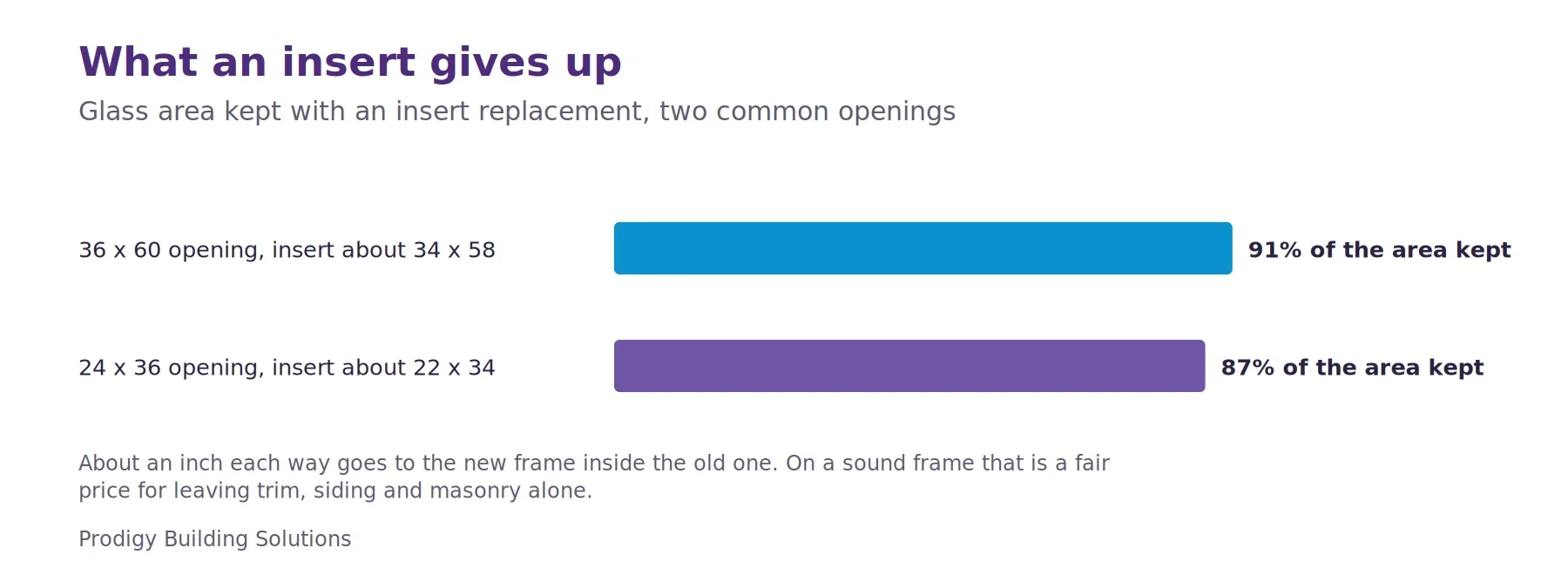
Figure 1 — The smaller the window, the larger the share an insert gives up.
Put numbers on the trade. An insert frame is typically about an inch thick on each side, so a 36-by-60-inch opening becomes roughly a 34-by-58 window and gives up about 9 percent of its area. On a 24-by-36 bedroom window the same inch each way is closer to 13 percent. That is the price of leaving the trim, the siding and the masonry alone, and on a sound frame it is usually worth paying. On a rotted sill it buys nothing, because the frame the insert depends on is the part that has failed.
The important thing is that this is not a house-wide decision. It is an opening-by-opening one. The window over a kitchen sink, or the one on the weather side under a short overhang, is far more likely to have a soft sill than the one in a sheltered bedroom. A perfectly ordinary outcome on an older house is most openings taking inserts and two or three getting a full tear-out, with the difference decided by what a screwdriver finds in the sill rather than by what is convenient to quote.
So when someone prices your windows, ask which method they are quoting and why, and ask what happens if a sill turns out to be rotten once the sash is out. A quote that names one method for the whole house without anyone having touched a sill is a quote written from a spreadsheet. And if you are given an insert price, ask how much glass you lose — it is a fair trade, but you should be the one making it.