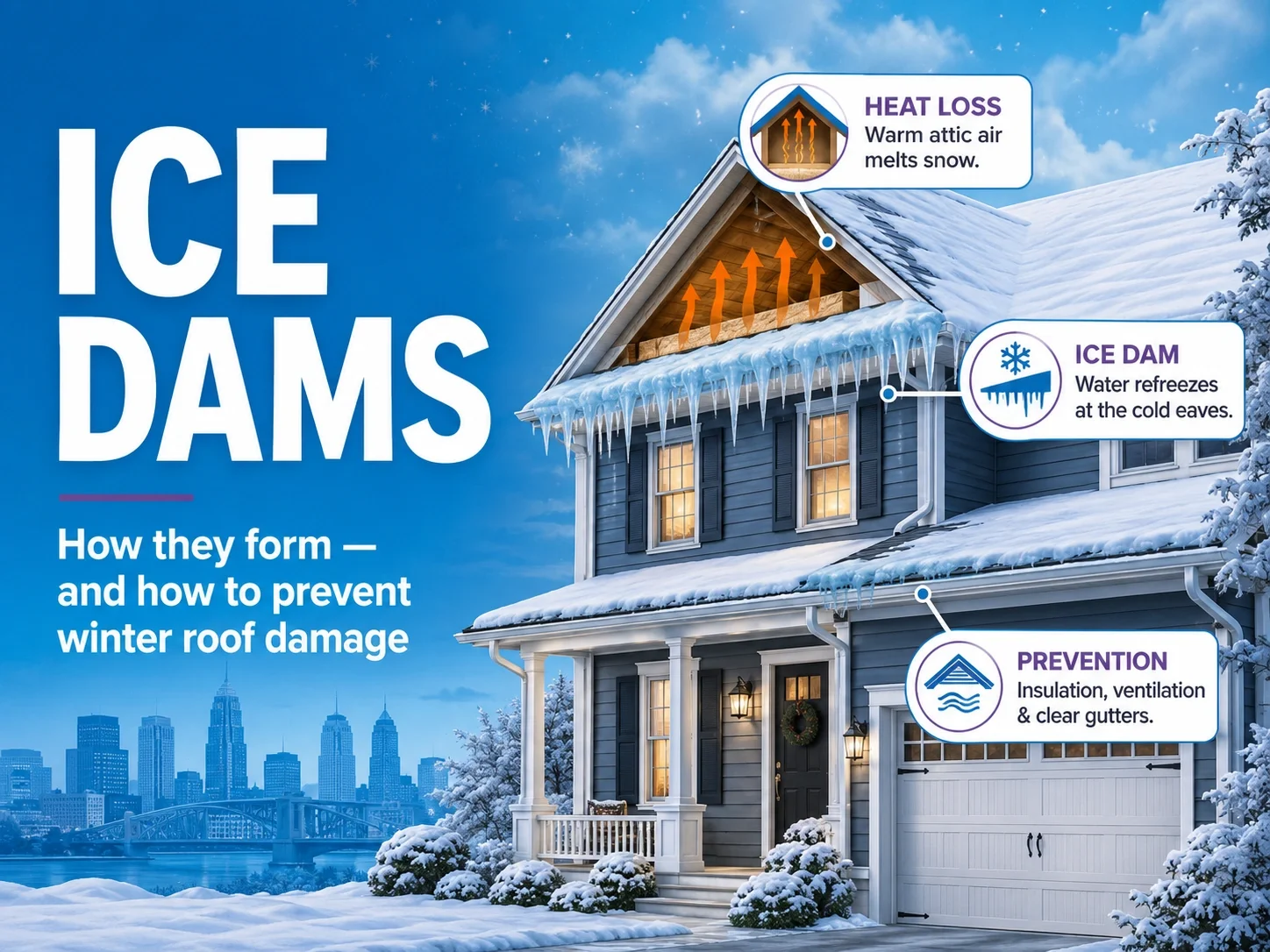
Ice Dams in Cincinnati: Causes, Damage, and Real Prevention
Ice dams destroy Cincinnati roofs, ceilings, and gutters every winter — and most homeowners misunderstand what causes them. It isn't the snow; it's heat escaping into your attic. This guide walks through how dams actually form in our freeze-thaw climate, the damage they cause from roof deck to drywall, the three-part attic fix that prevents them, what's safe to do yourself, and what your insurance will and won't cover.
Why the icicles on your gutter line are a warning, not a decoration.
Every January, the same scene repeats across Greater Cincinnati: a homeowner notices a row of thick icicles along the gutter line, thinks it looks like a postcard, and three weeks later is staring at a brown water stain spreading across the upstairs ceiling. The icicles were never decoration. They were a warning — the visible edge of an ice dam, one of the most damaging and most misunderstood things that happens to roofs in our climate.
Here's the part most homeowners get wrong: an ice dam is not really a roof problem, and it isn't caused by bad weather alone. It's caused by your house — specifically, by heat escaping into your attic. Which is good news, because it means ice dams are preventable, and the prevention costs a fraction of the damage.
What Is an Ice Dam?
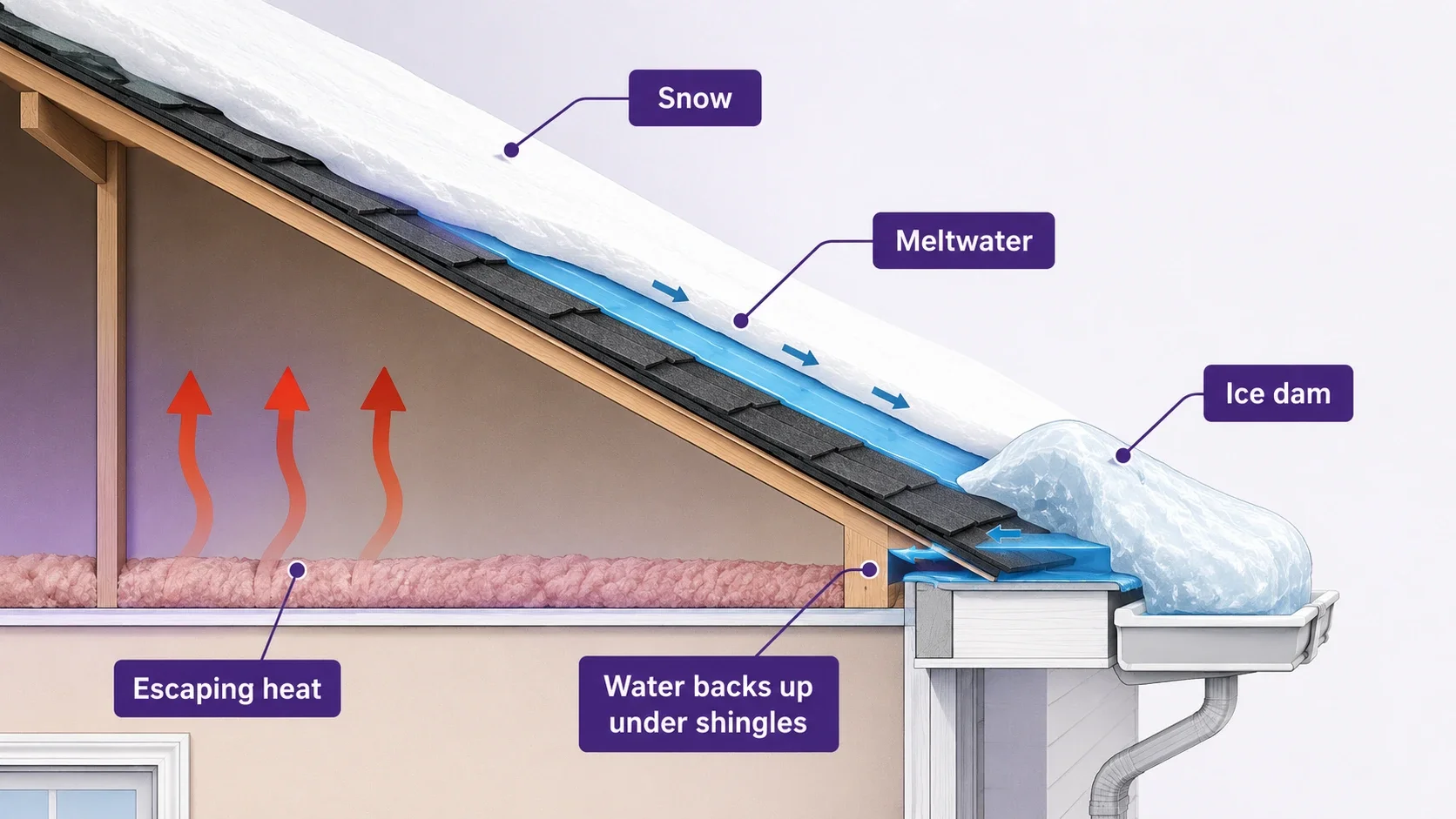
An ice dam is a ridge of solid ice that forms along the edge of a roof — at the eaves and gutters — and blocks melting snow from draining off. As more meltwater runs down and hits the dam, it pools behind it. That pooled water has nowhere to go but sideways and up — under the shingles.
Shingles are designed to shed water flowing down. They have no defense against standing water pushing up beneath them. Once water gets under the shingle layer, it finds the roof deck, then the insulation, then your ceiling drywall.
How One Forms: A Chain Reaction Starting in Your Attic
The recipe requires three ingredients, and Cincinnati winters supply all of them regularly:
1. Snow on the roof. The fuel supply.
2. A warm upper roof. Heat from your living space escapes through the ceiling into the attic — through thin insulation, unsealed gaps around light fixtures and attic hatches, and uninsulated ductwork. That heat warms the roof deck from below and melts the snow sitting on it, even when the outdoor temperature is well below freezing.
3. A cold roof edge. The eaves — the part of the roof that overhangs your walls — sit outside the heated footprint of the house. They stay at outdoor temperature. When meltwater from the warm upper roof reaches the frigid eave, it refreezes on contact.
Repeat that cycle for a few days — melt during the day, refreeze at the edge, layer upon layer — and the ice ridge grows into a dam several inches thick. Cincinnati's winters are almost purpose-built for this: we cross the freezing line dozens of times per season, which is exactly the melt-refreeze rhythm dams need. A single sustained deep freeze is actually safer than our typical pattern of 35-degree days and 20-degree nights following a snowfall.
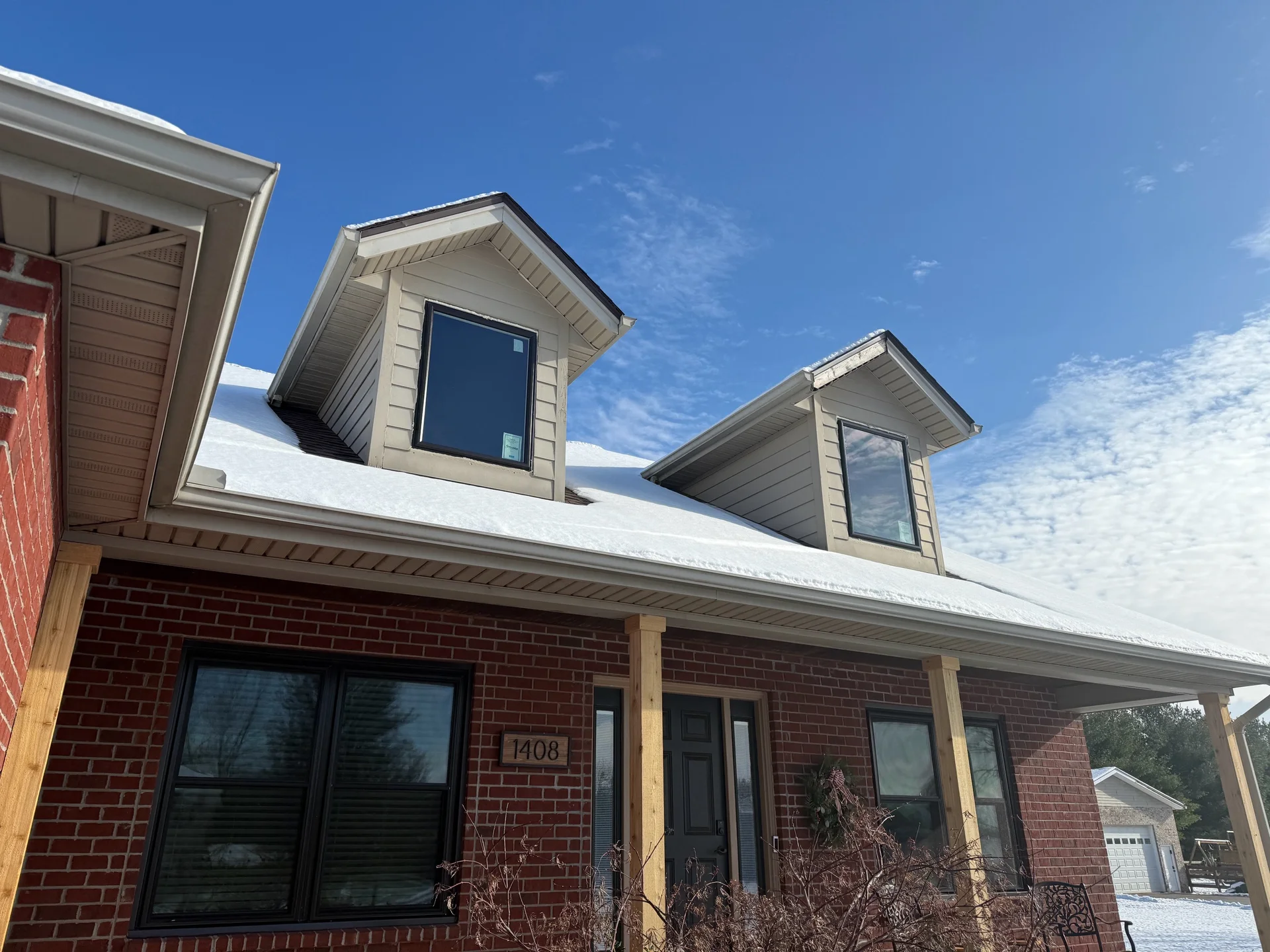
The tell-tale confirmation: thick icicles in continuous rows along the eaves. A few small icicles after a sunny day are normal physics. Heavy, fat icicles spanning the gutter line mean meaningful amounts of water are melting and refreezing — the dam process in motion.
What Ice Dams Destroy
The damage list is long because the water touches everything on its way down:
Roof deck and shingles. Water forced under shingles saturates the wood decking. Repeated soaking rots it, and the freeze-thaw action lifts and cracks the shingles above — so the roof enters spring measurably older than it entered winter.
Insulation. Wet insulation loses much of its R-value, and it doesn't fully recover when it dries. This creates a vicious cycle: the water the dam pushed in degrades the very insulation whose weakness caused the dam, making next year's dam worse.
Ceilings and walls. The visible stage — stains, peeling paint, sagging drywall. By the time you see a ceiling stain, water has already passed through the roof layers above it.
Mold. Wet insulation and framing in a poorly ventilated attic is a mold incubator, and remediation costs routinely exceed the roof repair itself.
Gutters. A fully loaded ice dam is enormously heavy. Every winter we see gutters torn from fascia boards or bent beyond use by ice loading — and a detached gutter then dumps water at your foundation all spring.
Prevention: Fix the House, Not the Weather
Because the root cause is heat escaping into the attic, real prevention happens inside, and it's a three-part fix:
Air sealing first. Before adding any insulation, the gaps that leak warm air into the attic need to be closed: around ceiling light fixtures (especially older recessed cans), plumbing and wiring penetrations, the attic hatch, and chimney chases. Insulation slows heat; it doesn't stop moving air. Sealing is the cheapest step and the most commonly skipped.
Insulation to the right depth. Recommendations for Cincinnati's climate zone run R-38 to R-49 — roughly 12 to 18 inches of blown insulation, with R-49 the target when topping up. Many area homes built before the 1990s carry half that or less. Uniform depth matters as much as total depth: thin spots over bathroom fans or at the eaves become the melt zones.
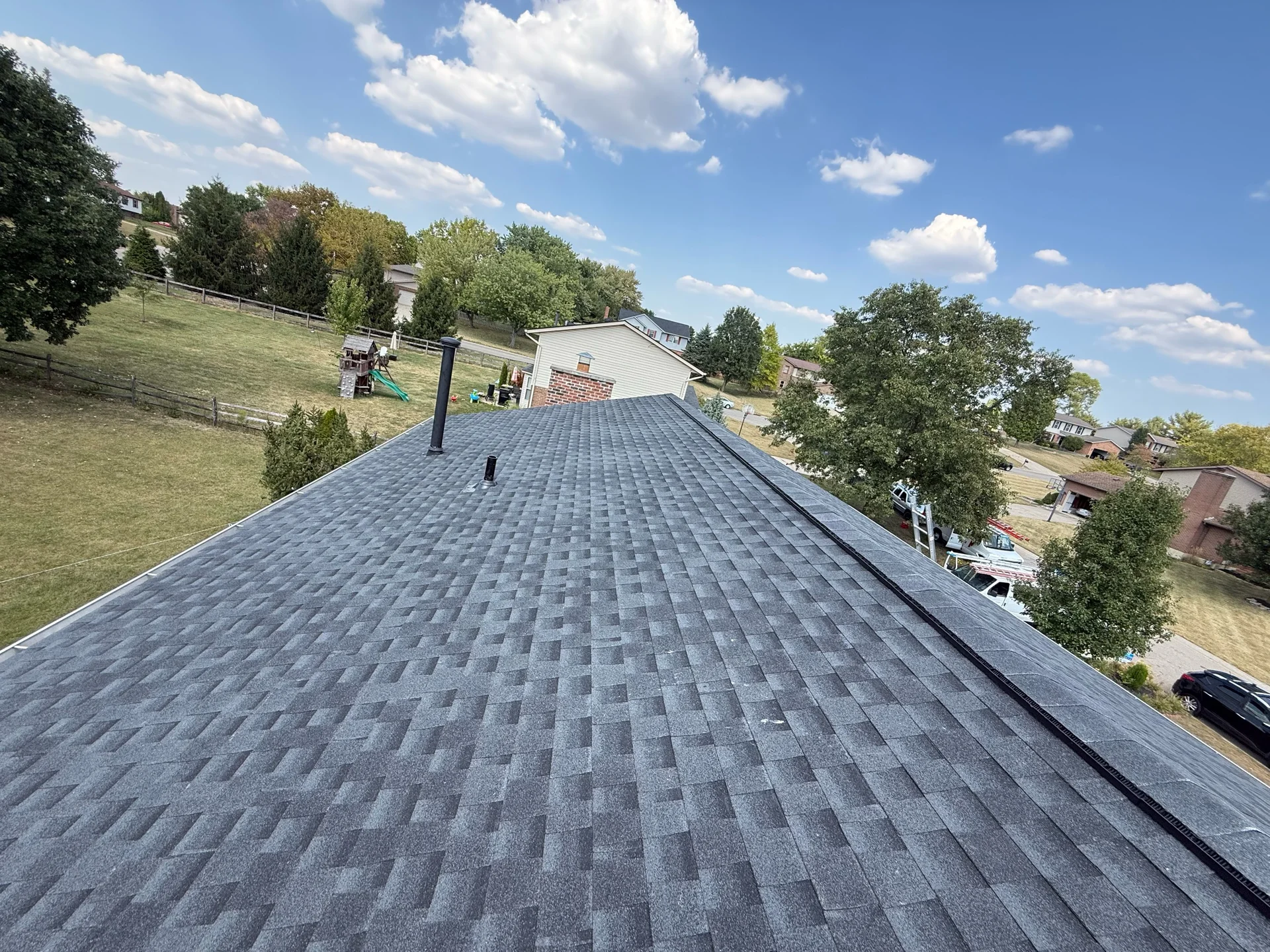
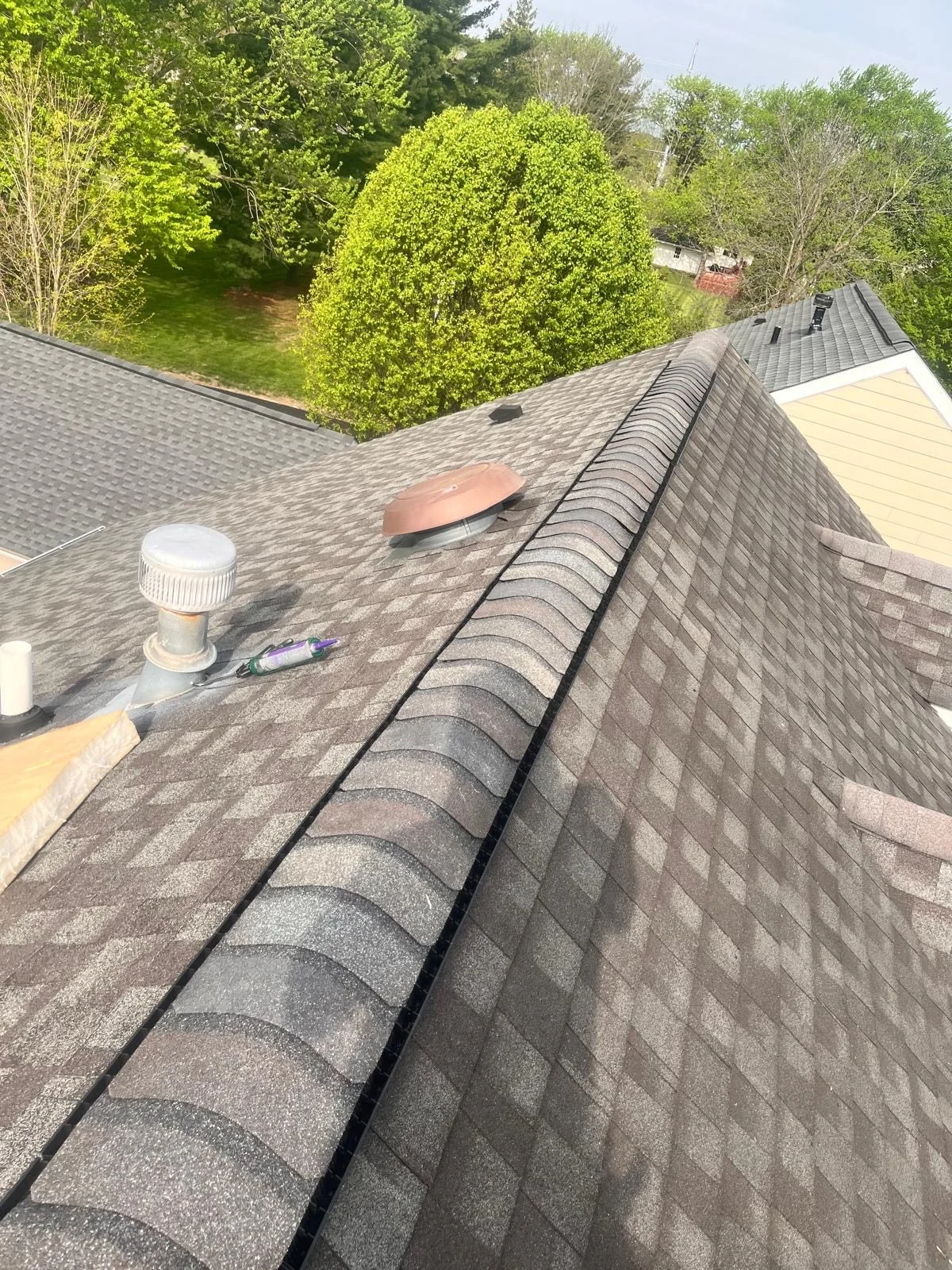
Ventilation to flush the heat. Even well-insulated attics receive some heat; ventilation carries it out before it warms the roof deck. The system needs both intake (soffit vents at the eaves, unblocked by insulation) and exhaust (ridge or roof vents at the top) to keep air moving. We covered the mechanics in our attic ventilation guide, and projects like this Centerville ridge vent replacement and this Maineville deck air vent upgrade show what the fix looks like in practice.
Done together, these keep the entire roof deck close to outdoor temperature — cold roof, no melt, no dam. When a roof is being replaced anyway, it's also the moment to add ice and water shield, a self-sealing membrane installed under the shingles along the eaves. Ohio code requires it in new roof installations for exactly this reason; older roofs often don't have it. It's the backstop layer: if a dam ever forms anyway, the membrane keeps the backed-up water out of the house.
Managing the Snow That's Already Up There
Prevention is the long game; snow management is what you can do this week.
Roof raking works. A roof rake — a wide blade on a telescoping pole, used from the ground — removes snow from the lower few feet of the roof after heavy storms. No snow at the eave means no raw material for the dam. Rake gently and leave a thin layer; scraping to bare shingles damages them.
What not to do — this list prevents more damage than the rake:
Don't chip, hack, or hammer ice on the roof or in gutters. You will destroy shingles and gutters long before you meaningfully remove the dam.
Don't climb onto a snowy or icy roof. Emergency rooms see this one every winter. Nothing on your roof in January is worth the fall.
Don't throw rock salt on the roof. It corrodes shingles, kills the landscaping below, and barely touches the dam.
Be skeptical of heat cables as a "solution." Zigzag heating cables along the eaves can melt drainage channels through a dam, but they treat the symptom while consuming electricity all winter — and they signal that the attic underneath still has the problem. They have a place on stubborn trouble spots, but they're a workaround, not a fix.
If water is actively entering the house: that's a same-day professional call. A roofing crew can steam-cut drainage channels through the dam safely — steam removes ice without the destruction that mechanical chipping causes. In the meantime, a box fan aimed at the leak point from inside the attic can refreeze the entry point and slow the intrusion.
The Insurance Question
Homeowner's policies commonly cover sudden interior damage from an ice dam — the ruined ceiling and flooring — but typically not the roof wear itself or preventive work, and carriers expect reasonable maintenance. Document everything with photos (the dam, the icicles, the interior damage, dates), report promptly, and keep your receipts. If the damage is substantial, have an inspection done before repairs erase the evidence. We regularly document winter damage for area homeowners as part of the free inspection — worth doing even if you end up not filing.
Frequently Asked Questions
Are icicles always a sign of an ice dam?
No — small icicles after sunny days are normal. The warning sign is thick icicles in continuous rows along the eaves, especially on the home's north side or above heated rooms, and any icicles forming behind the gutter against the fascia.
Why does my neighbor's identical house have no ice dams?
Almost always: better attic insulation and sealing. Two identical roofs in the same weather form dams differently because the houses under them leak different amounts of heat. A roof that stays snow-covered evenly after a storm is the healthy one — bare melt stripes mean escaping heat.
Do gutters cause ice dams?
No — dams form with or without gutters. Gutters just give the early ice a convenient shelf, and they take the damage. Keeping gutters clean matters (clogged gutters freeze solid faster), but clean gutters alone won't prevent a dam.
Will a new roof stop ice dams?
Not by itself. A new roof with ice and water shield protects the house when dams form, but the dam-forming mechanism lives in the attic. The complete fix is roof underlayment protection plus air sealing, insulation, and ventilation — which is why we evaluate the attic on every roof replacement.
How much snow on a roof is too much?
Most Cincinnati snowfalls pose no structural risk. The concern is heavy, wet snow above roughly a foot, or repeated storms without melt. If interior doors upstairs start sticking after a major snow, that can indicate structural stress — call a professional promptly.
The Bottom Line
Ice dams look like a weather problem, but they're a building problem with a weather trigger — and building problems can be fixed. Seal the attic, insulate to R-38–R-49, ventilate the deck, rake the eaves after big storms, and the January postcard icicles stay small and harmless.
If your home shows the warning signs — heavy icicle rows, melt stripes through roof snow, or past ceiling stains — schedule a free inspection. We'll trace where the heat is escaping and tell you whether the fix is a simple air-sealing afternoon or something more.
Our Work