
Gutter Guards in Cincinnati: What Works and What Doesn't
Four technologies, one name — and the difference between the homeowners who love their guards and the ones who clean around them.
Gutter guards inspire two camps: homeowners who ended gutter cleaning forever, and homeowners who paid thousands for guards they now clean around. The difference is the technology. This guide compares screens, micro-mesh, reverse-curve, and foam systems against Cincinnati's real debris load — maple seeds, leaf drop, and shingle grit — plus what guards can't do, when the math favors them, and the questions to ask any installer.
Gutter Guards in Cincinnati: What Works, What Doesn't, and What Nobody Tells You
Ask ten Cincinnati homeowners about gutter guards and you'll get two camps: people who swear they ended gutter cleaning forever, and people who paid thousands for guards they now clean around. Both are telling the truth — because "gutter guards" isn't one product. It's four fundamentally different technologies sold under one name, and the difference between the right one and the wrong one for your trees is the difference between the two camps.
Here's an honest walkthrough: how each type actually works, what our climate and tree cover do to them, and the questions to ask before anyone installs anything.
Why Cincinnati Gutters Fill Up Faster Than Most
Greater Cincinnati's older neighborhoods are blessed with mature tree canopy — and gutters pay for it. The debris load here comes in waves: maple "helicopter" seeds in late spring, cottonwood fluff and pollen clumps through early summer, the main leaf drop in October and November, and — the one homeowners forget — shingle grit washing down year-round, especially from aging roofs. Add our spring downpours, and a clogged gutter doesn't just overflow; it backs water against the fascia, dumps it at the foundation, and in winter becomes the frozen shelf an ice dam builds on.
That's the real case for guards: not convenience, but keeping water moving during the exact storms when it matters. Whether guards deliver depends entirely on which type meets which debris.
The Four Types, Explained and Rated
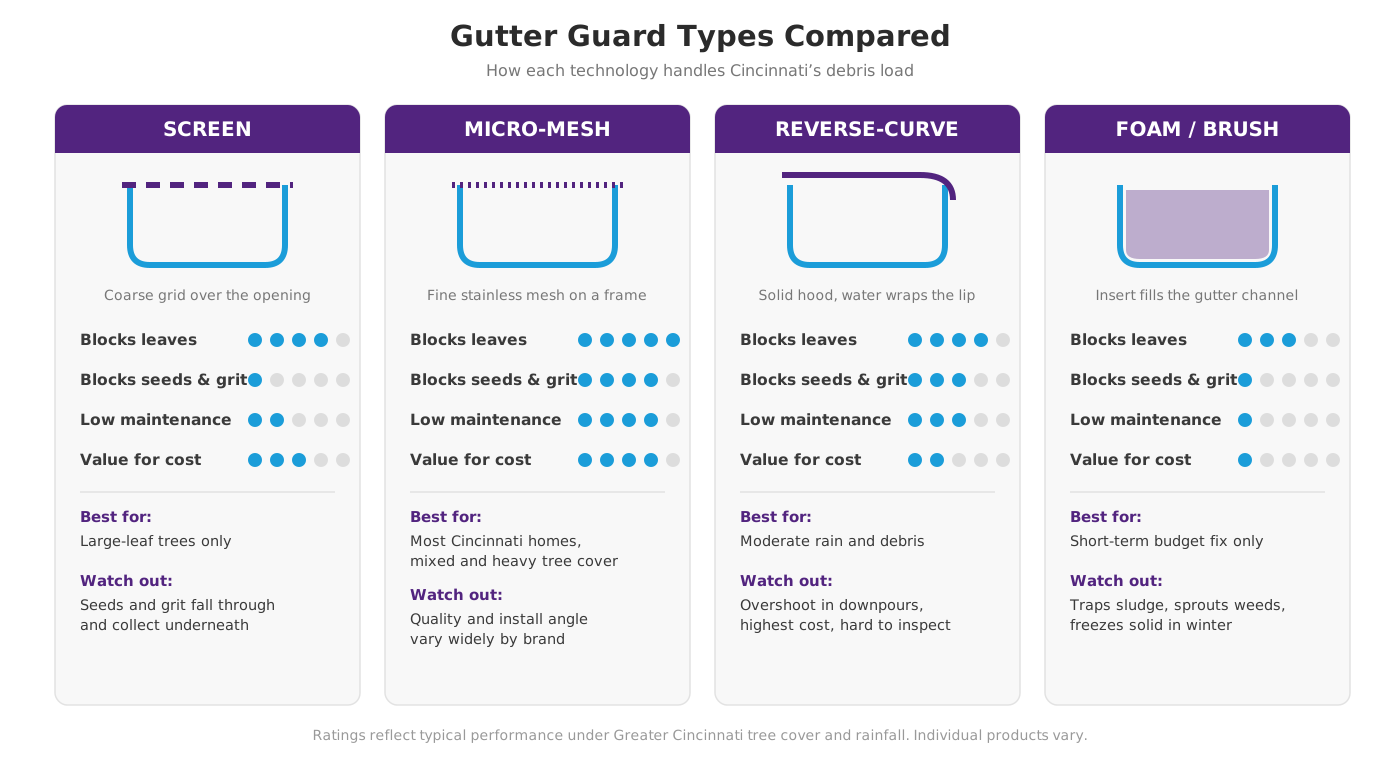
Screen guards — a coarse metal or plastic grid over the gutter opening. They stop whole leaves reliably and they're the cheapest option. What they don't stop: maple seeds, needles, and grit, which fall through the openings and accumulate under the screen — where cleaning now requires removing the screens first. Fine for a yard with only large-leaf deciduous trees; frustrating under maples and pines.
Micro-mesh guards — a fine stainless-steel mesh on a rigid frame. This is the category that earns the strongest results in independent testing: the mesh is tight enough to shed seeds, needles, and most grit while passing heavy rain. The honest caveats: quality varies enormously between brands, installation angle matters (installed too flat, debris sits on top; too steep, heavy rain can overshoot), and even good mesh needs an occasional brush-off as pollen film and grit slowly blind the surface. This is the type we'd point most Cincinnati homes toward.
Reverse-curve (surface-tension) guards — a solid hood that directs water around a curved lip into the gutter while debris slides off the edge. These are the heavily advertised, dealer-installed systems, and they do work in moderate conditions. Their weaknesses matter here, though: in our intense downpours water can overshoot the curve entirely, small debris rides the water film around the lip, they're usually the most expensive option, and the hood makes the gutter interior hard to inspect or clean when something does get in. They can also raise the effective roof edge in ways that complicate shingle warranties — worth checking against your roof manufacturer's terms.
Foam inserts and brush guards — a foam wedge or bottle-brush filling the gutter channel. Cheap, DIY-friendly, and the honest verdict is: skip them. In our climate they trap grit and organic sludge inside themselves, seedlings literally sprout in them by the second season, foam degrades in UV, and both types freeze into a solid debris-block in winter. They convert "clean the gutter" into "wrestle out and clean a filthy foam log, then the gutter."
What Guards Don't Do
Three honest limits, because overselling is how the disappointed camp gets created:
Guards don't prevent ice dams. Ice dams are caused by attic heat melting roof snow — a mechanism that starts above the gutter, not in it. Guards keep the gutter itself from freezing around trapped debris, which helps at the margins, but a home with an ice dam problem needs the attic fix, not a gutter product. (We cover the full mechanism in our ice dam guide.)
Guards don't fix undersized gutters. If your gutters overflow in heavy rain even when clean, the problem is capacity, not clogs — common on older homes with 5" gutters. Adding guards to an undersized gutter can actually make overflow worse by slightly restricting intake. The fix is upsizing to a 6" system, like this Mason 6" gutter upgrade or this Fairfield 6" system — and if you're doing that anyway, that's the ideal moment to add guards, since the labor overlaps.
"Never clean again" is marketing, not physics. Good guards turn gutter maintenance from a twice-a-year chore into an occasional visual check and rare brush-off. That's a genuinely great trade. It's not zero.
What Guards Are Actually Worth
Run the honest math. Professional gutter cleaning in this area typically runs a few hundred dollars a year for an average two-story home — more with heavy tree cover — or it costs you two ladder afternoons, which carry their own risk (ladder falls are among the most common serious homeowner injuries, and gutter cleaning is a leading cause). Quality micro-mesh guards on an average home are a one-time cost that usually pays back within several years against professional cleaning, faster if guards prevent even one fascia-rot or foundation-water repair. The payback case is strongest exactly where the chore is worst: tall homes, heavy canopy, homeowners who shouldn't be on ladders.
Where the math gets thin: single-story homes with light tree cover and easy ladder access. If cleaning your gutters takes twenty safe minutes twice a year, premium guards are a comfort purchase, not a necessity — and we'd rather tell you that than sell you them.
Questions to Ask Any Installer
Which type is this, exactly? If the answer is a brand name instead of a technology (screen, micro-mesh, reverse-curve), keep asking.
How does it handle maple seeds and shingle grit? The Cincinnati-specific stress test.
What's the fastener method? Guards should attach to the gutter or fascia — not by lifting and nailing under your shingles, which can void roof warranties.
What does the warranty actually cover? "Lifetime" often means the material, not clog-free performance. Get the performance terms in writing.
What happens when the gutters need service? If the guard system makes downspout clogs or gutter repairs harder to access, that cost belongs in your comparison.
Frequently Asked Questions
Do gutter guards work in heavy rain?
Quality micro-mesh handles our typical downpours well when installed at the correct angle. Reverse-curve systems are the type most prone to overshooting in intense rain. Any guard on an undersized 5" gutter will still overflow — capacity comes first.
Can I install gutter guards myself?
Screen and foam products are sold DIY, but the failure mode of DIY installs is fastening and angle — the two things that determine whether mesh sheds or collects. Given that the ladder time is most of the job's risk anyway, professional installation is usually worth the difference on any guard worth having.
Do gutter guards cause problems in winter?
Guards themselves don't cause ice dams, but any guard can carry surface icing in freeze-thaw weather, and foam/brush types genuinely do freeze into blockages. Metal mesh and screens shed ice as it melts. If you see heavy icicle rows along guarded gutters, that's an attic heat symptom — see our ice dam guide.
Will guards work with my existing gutters?
Usually, if the gutters are sound and properly pitched. Installation is the right moment to correct pitch, reseal seams, and evaluate whether 5" gutters should become 6" — bundling those fixes costs far less than doing them separately later.
The Bottom Line
The gutter guard question isn't "do they work" — it's "which technology matches your trees, your roof, and your rain." For most Cincinnati homes under mature canopy, quality micro-mesh professionally installed is the answer that ends up in the happy camp; foam and brush inserts are how you join the other one. And guards are step two: gutters that are the right size, properly pitched, and sound come first.
Not sure which camp your setup falls in? Schedule a free estimate — we'll look at your trees, your gutters, and your roof line and tell you honestly whether guards make sense, and which kind.
Our Work